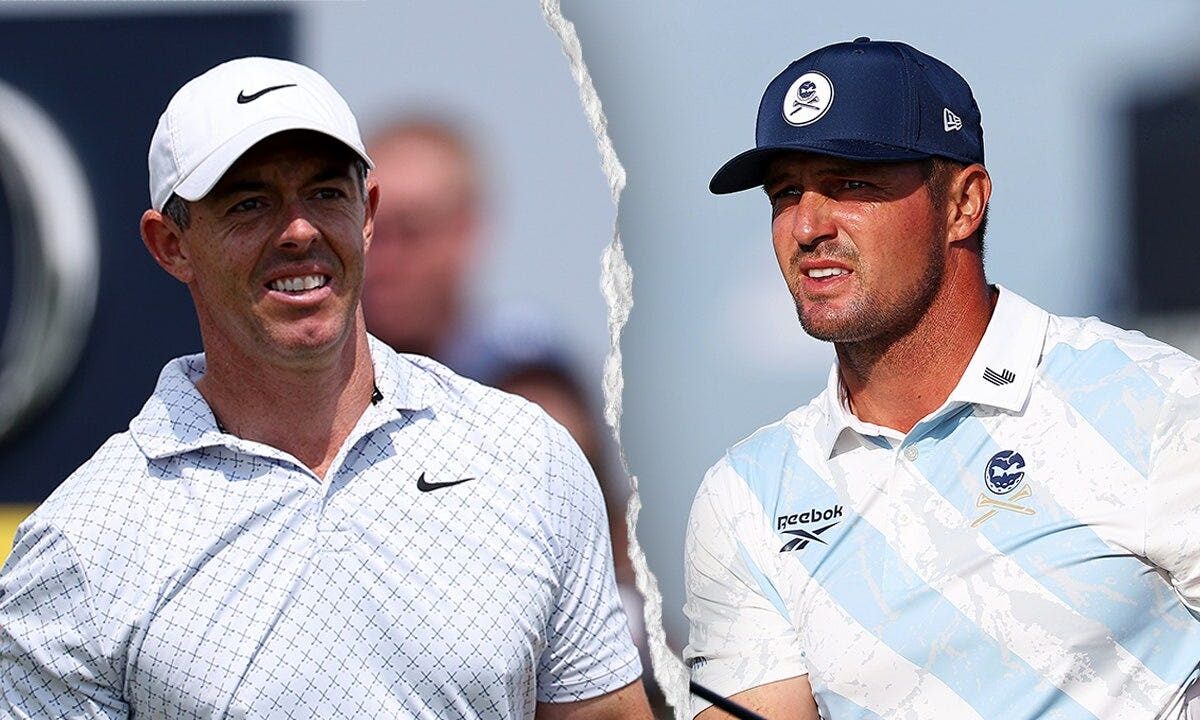
Rory McIlroy blasts Bryson DeChambeau on Saturday after the 32-year-old was assessed a two-stroke penalty at The Open, calling the episode “performative” and saying it “held the tournament hostage.” The dispute over the ruling produced a lengthy on-course review and left players and volunteers waiting as officials examined the situation.
Rory McIlroy blasts Bryson DeChambeau
“I won’t pretend to be up here and defend Bryson,” McIlroy told reporters. “I’m not particularly fond of him. I think a lot of it is performative. I think a lot of it’s for attention.” Those comments were among the sharpest in a field that otherwise expressed mixed views.
McIlroy, who shot a 1-under 69 in the third round and sits at 2-under for the championship, said the delay created by the review “didn’t feel like it was a great look” for the tournament, noting volunteers and fellow competitors were left waiting while officials conducted their review.
Penalty timeline and ruling
Rules officials assessed the two-stroke penalty after a lengthy interaction on Friday, according to on-site reports. The exchange extended beyond the completion of play as officials reviewed video and discussed the application of the rules before announcing the penalty.
Reporting indicates the assessment followed the officials’ determination that an element of DeChambeau’s swing had altered a line that officials considered under the rules being applied. Tournament authorities announced the ruling after the on-course exchange and confirmed the two-stroke penalty was applied to DeChambeau’s score for that round.
Officials did not publicly declare any finding about deliberate intent when they announced the ruling, and the question of intent remains unconfirmed. Multiple players and commentators offered differing interpretations, but intent has not been established by officials and should be treated as an unproven claim rather than fact.
How the ruling affected the leaderboard
The two-stroke penalty altered DeChambeau’s standing but did not prevent him from posting a solid third round. He carded a 1-under on Saturday to finish the day at 6-under for the tournament, four strokes behind leader Sam Burns.
Sam Burns leads at 10-under after shooting 5-under in the third round. McIlroy sits tied for 30th at 2-under, meaning he shot well but remains well off the lead and would need a near-perfect final round — and help from others — to move into true contention.
Statistically the penalty tightened DeChambeau’s margin for error, but he remains within reach on paper. With two rounds remaining, the leaderboard still leaves room for shifts, particularly if leaders falter or scoring conditions change.
Player reactions and context
Reactions in the locker room were mixed. McIlroy was among the most critical voices, calling the incident “performative” and saying it affected players and volunteers who were left waiting. He also suggested the change in the backswing line looked deliberate to him — a characterization he offered as his view rather than as an established fact.
Xander Schauffele took a more sympathetic tone, calling the situation “unfortunate” and relaying that DeChambeau told him he did not do it intentionally. “He said he didn’t do it intentionally, and it’s unfortunate that he got penalized because he was playing incredibly well,” Schauffele said.
Those remarks underline a split view inside the field: some players see gamesmanship or deliberate action, while others emphasize the possibility of a careless mistake. Observers warned against drawing conclusions about intent; officials’ statements did not attribute intent and on-site reporting treated intent as disputed.
Beyond immediate reaction, some players and commentators discussed the broader implications for pace of play and how prolonged reviews affect the field. Several competitors noted that extended deliberations can disrupt concentration late in rounds, particularly when volunteer marshals and players are waiting on the green or tee boxes.
What comes next for DeChambeau and McIlroy
There are two days left in the championship, and each player faces a different path to contention. DeChambeau needs steady, high-quality scoring and perhaps a few breaks from pin placements or winds to close the four-stroke gap to Burns; consistency and clean execution will be essential.
McIlroy, at 2-under, faces a steeper climb. To contend he will need near-flawless rounds and a significant movement from the leaders. While a dramatic come-from-behind charge is possible in golf, it would require exceptional play combined with slips from those ahead of him.
Both players must also manage the narrative if DeChambeau climbs toward the lead. Observers noted that if he finishes close to the winner, debate over the penalty and whether it affected the final outcome could persist — even if the rules were applied as officials determined. For now, on-course performance over the final rounds will largely decide whether the controversy remains a central storyline.
This account draws on on-site reporting and statements released at the event, including on-the-ground coverage by Fox News and contributed reporting from the Associated Press. Tournament statements and officials’ announcements were used for details about the penalty and its timing. Officials did not publicly state that intent was a factor in the ruling; any references to intent in this article are claims reported from players and commentators, not findings by tournament authorities.
Reporting sources: on-site reporting by Fox News and contributed reporting from the Associated Press; tournament officials’ announcements used for penalty details. For the Fox News original report, see: Rory McIlroy blasts Bryson DeChambeau for holding The Open ‘hostage’ over penalty chaos.