
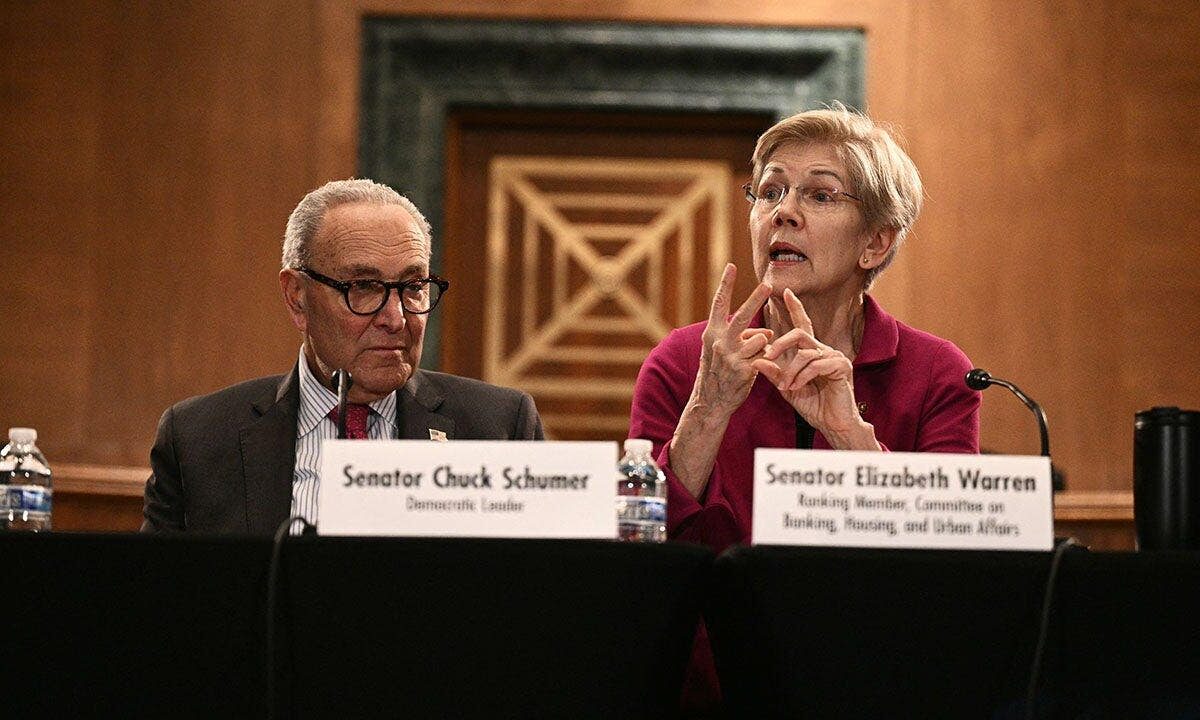
Abdul El-Sayed endorsement headlines a widening rift in the Democratic Party after Sen. Elizabeth Warren released an endorsement video backing the progressive Michigan candidate. In that video, Warren framed El-Sayed as “the only candidate in this race not taking corporate money,” urging voters to build the grassroots effort she says is needed to win in November (Fox News).
Warren’s public backing breaks with Senate Minority Leader Chuck Schumer, who has endorsed Rep. Haley Stevens — a split that has become a clear marker of intra-party strategy debates (Fox News). The disagreement centers not just on personalities but on competing theories of how Democrats should win competitive general-election races.
Warren and the Abdul El-Sayed endorsement
Warren’s endorsement video centers El-Sayed’s refusal to accept corporate donations and stresses small-dollar organizing as the path to November. In the clip she says El-Sayed can build the volunteer base and small-donor infrastructure needed for a November victory, framing his approach as part of a broader push to get “money out of politics altogether” (Fox News).
The campaign has amplified those themes: El-Sayed emphasizes Medicare expansion, campaign finance reform and grassroots fundraising as core tenets of his platform. Those policy and fundraising choices are central to Warren’s calculus in endorsing him, according to media reporting (Politico; Fox News).
Where other top Democrats landed
Schumer’s public backing of Rep. Haley Stevens has been covered as part of an effort by some Senate leaders to coalesce around candidates they assess as most competitive in the general election (Fox News). Punchbowl News quoted Schumer as saying he believes Stevens “has the best chance to win,” a line subsequently repeated in broader coverage (reported by Fox News).
Fox News has also cataloged other Senate endorsements for Stevens, including support from Sens. Ruben Gallego, Chris Coons and Michigan Sen. Gary Peters (Fox News). Those endorsements reflect institutional backing and relationships many establishment figures view as important for November.
On the other side, El-Sayed has attracted progressive allies and high-profile campaign appearances from figures aligned with the left wing of the party. Media coverage has noted endorsements and campaign events tied to progressive leaders, framing the primary as a proxy fight over party direction (Fox News).
The clash over money and messaging
The debate in Michigan has become shorthand for a larger Democratic argument: should the party prioritize rejecting corporate money and energizing small-dollar donors, or should it focus on centralized fundraising and relationships with institutional backers who can deploy large-scale resources? Warren and El-Sayed clearly favor the former; Schumer and several Senate colleagues favor the latter (Fox News; Politico).
Sensitivities around El-Sayed’s record and past social posts have also entered the conversation. Fox News reported on archived posts and clips in which El-Sayed was linked to calls to “defund the police” in past contexts; those items have been used by critics and discussed in coverage as reported material. Campaign spokespeople and El-Sayed have disputed some characterizations and stressed context, and those disputes are reflected in reporting (Fox News).
Politico’s reporting adds another dimension: El-Sayed told Politico that some party leaders “are freaking out” about his policy agenda and fundraising model, a remark the outlet attributed to the candidate as his assessment of establishment concerns (Politico). That quote underlines how much of the fight is about perceived threats to traditional fundraising and power structures within the party.
What the split means for the Michigan Senate primary
Practically speaking, the endorsement split matters for fundraising, field operations and messaging. Warren’s backing can boost small-dollar contributions and volunteer recruitment for El-Sayed by signaling to progressive networks that he is a national priority (Fox News). Conversely, Stevens’ backing by Schumer and other Senate figures channels institutional resources and coordinated support that can be decisive in close primaries (Fox News).
The outcome will influence broader Democratic strategy. If El-Sayed wins primarily through grassroots mobilization and small donors, it could validate a template for progressives in other swing states. If Stevens prevails with establishment support, that will reinforce the argument for centralized endorsements and traditional fundraising in competitive general-election contexts (Fox News; Politico).
Observers should watch a few concrete metrics: shifts in small-donor numbers, fundraising haul disclosures as they become public, early voter engagement in key Michigan counties, and whether national progressive groups or Senate-aligned organizations move significant ground resources into the state (Fox News).
Source attribution and reactions
Reporting on these developments draws primarily from Fox News coverage of Warren’s endorsement and the resulting split with Schumer, and from Politico’s reporting on El-Sayed’s comments about party leaders and corporate money (Fox News; Politico). Fox News detailed the endorsement video, listed endorsements on both sides and flagged past social posts that critics have cited. Politico published interviews and quotes from El-Sayed, including his comment that party leaders “are freaking out” over his fundraising model (Politico).
Campaign statements quoted in reporting make differing claims: Warren and El-Sayed emphasize a refusal of corporate money and a small-dollar strategy (reported by Fox News and referenced in the endorsement video), while Schumer and establishment backers emphasize electability and institutional coordination in the general election (reported by Fox News).
For readers tracking the Michigan Senate primary, the endorsements and subsequent coverage point to clear next steps: monitor campaign finance filings, small-donor trends, endorsement roll calls and ground mobilization in early-turnout counties. Those indicators will show whether the contest is decided by grassroots energy or by coordinated institutional support (Fox News; Politico).
FAQ
Who endorsed Abdul El-Sayed?
Sen. Elizabeth Warren publicly endorsed Abdul El-Sayed in an endorsement video; Fox News and other outlets also note progressive support from figures aligned with the left wing of the party (Fox News).
Why did Warren break with Chuck Schumer?
Warren’s endorsement departs from Schumer’s choice of Rep. Haley Stevens. Media coverage frames the disagreement as a debate over rejecting corporate donations and building small-donor grassroots power (Warren’s position) versus prioritizing centralized fundraising and perceived electability (Schumer’s position) (Fox News; Politico).
Does El-Sayed accept corporate donations?
Warren and El-Sayed say he is not taking corporate money; that claim was made in Warren’s endorsement video and reported by outlets including Fox News. Campaign disclosure records are the definitive source for verifying donation practices as filings become available.


