
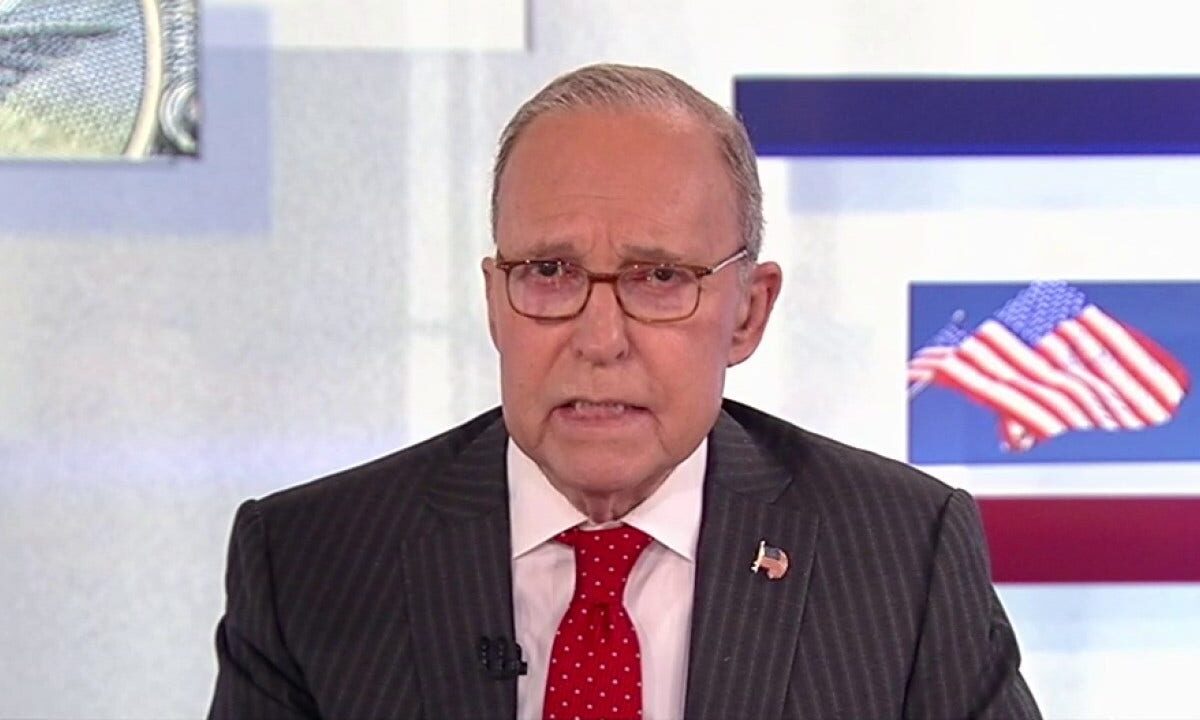
“And I believe the absolute worst part of those victories yesterday, was the sheer unity message of antisemitism, hatred, and bigotry aimed at Jewish people that animates and unites this Mamdani Socialist movement,” Larry Kudlow wrote in a Fox Business column. In that opinion piece, Kudlow ties antisemitism directly to a political agenda he labels “Mamdani socialism” and warns it is damaging New York City.
The column mixes political argument and personal observation: Kudlow notes he has lived and worked in New York City for much of the last 50 years and offers both a list of policies he attributes to the faction he criticizes and a voter-survey claim about declining quality of life in the city.
Kudlow on antisemitism and Mamdani socialism
Kudlow’s central claim is that antisemitism is a unifying force for a left-wing movement he describes as the “Mamdani socialists.” He writes that the “sheer unity message of antisemitism…animates and unites” the movement and argues that the combination of cultural hostility and certain policy positions is harming New York’s civic and business environment.
It is important to note explicitly that this Fox Business piece is opinion commentary. The phrase “Mamdani socialists” is Kudlow’s framing and not an established academic or widely adopted label; the article attributes that term and the associated characterizations to the columnist rather than presenting it as neutral reportage.
Policies Kudlow ties to the Mamdani socialists
Kudlow lists several policy items he attributes to the movement he criticizes and presents them as a package that could discourage investment and spur out-migration. The items he names include:
- Taxing wealth
- Rent control and housing takeover
- Open borders and abolishing ICE
- Blaming police and limiting law enforcement
- Green New Deal–style programs and broad government spending
- Packing the Supreme Court
- Alienating businesses
These points are presented in the column as Kudlow’s characterization of the policies associated with the people he criticizes. The piece does not point to a single manifesto or unified platform that lists these items under one organizational banner; they are attributed to a political tendency as framed by the columnist.
Evidence cited and limits
Kudlow supports part of his argument with a voter-survey claim, writing that “half the people said life in the city feels worse than it did just a year ago.” The column itself does not provide a citation, sample size, methodology, polling organization, or date for that survey result.
We searched for a publicly documented poll matching the quoted language and were not able to locate a directly corresponding, sourced survey as of June 25, 2026. Because the column does not link to or name a pollster, the survey claim remains unverified: there is no independently cited sample size, margin of error, population surveyed, or fielding dates provided in the piece. Readers should treat the specific numeric survey claim as unconfirmed until a named pollster or dataset is published.
More broadly, many of the causal connections Kudlow asserts—linking antisemitism, the listed policy items, and measurable economic decline—are presented as the columnist’s interpretation rather than conclusions supported by independently cited empirical studies in the column. Kudlow’s long familiarity with New York is invoked as context, but personal experience does not substitute for sourced, reproducible data when weighing claims about trends or public opinion.
Local context and potential impact
The column names Zohran Mamdani in connection with the political trend Kudlow criticizes and uses New York City as the primary setting for his analysis. Kudlow frames the argument to address voters concerned about crime, cost of living, and the city’s business climate, suggesting that a mix of ideological rhetoric and policy changes could amplify out-migration and investor caution.
How persuasive that framing becomes will depend on several factors: whether local elected officials and community leaders accept or reject the characterization; whether the specific policy items Kudlow lists align with platforms of candidates and officeholders; and how other news organizations and public-opinion research assess the underlying trends. The column itself does not supply the corroborating data needed to confirm that antisemitism is a primary driver of economic or demographic shifts in the city.
What comes next
Short-term follow-up is likely to take three forms. First, named individuals and groups—those Kudlow calls out by name or by political label—may issue responses or denials. Second, other outlets and local reporters may attempt to locate or replicate the voter-survey result Kudlow cites and will report whether an attributable poll exists. Third, political messaging from opponents and allies will probably amplify or contest the linkage between cultural rhetoric (including antisemitism) and policy outcomes.
Key developments to watch include: any release of the underlying poll data Kudlow references; statements from New York City leaders and community groups addressing the allegations of antisemitism; and whether specific policy proposals resembling Kudlow’s list are advanced by candidates or passed into law.
FAQ
What did Larry Kudlow say about antisemitism and Mamdani socialism?
He wrote that antisemitism “animates and unites” what he called the Mamdani Socialist movement and argued that this hatred, combined with certain economic policies, is harming New York City. The column is opinion commentary and presents those assertions as the author’s interpretation.
Is there independent proof that antisemitism is causing NYC decline?
Kudlow cites a voter survey in the column but does not provide a source, sample size, methodology, or date. We were unable to locate a publicly documented poll matching that specific claim as of June 25, 2026, so the survey result remains unverified and the causal claim is not demonstrated in the column itself.
Who is Zohran Mamdani and why is he mentioned?
Kudlow names Zohran Mamdani as a focal point of his argument, using the name to personify the trends he criticizes in New York City politics. The column treats Mamdani as emblematic of the political tendency Kudlow calls the “Mamdani socialists.”
Source: Original Fox Business column by Larry Kudlow — https://www.foxbusiness.com/politics/larry-kudlow-antisemitism-root-mamdani-socialism-its-destroying-new-york-city