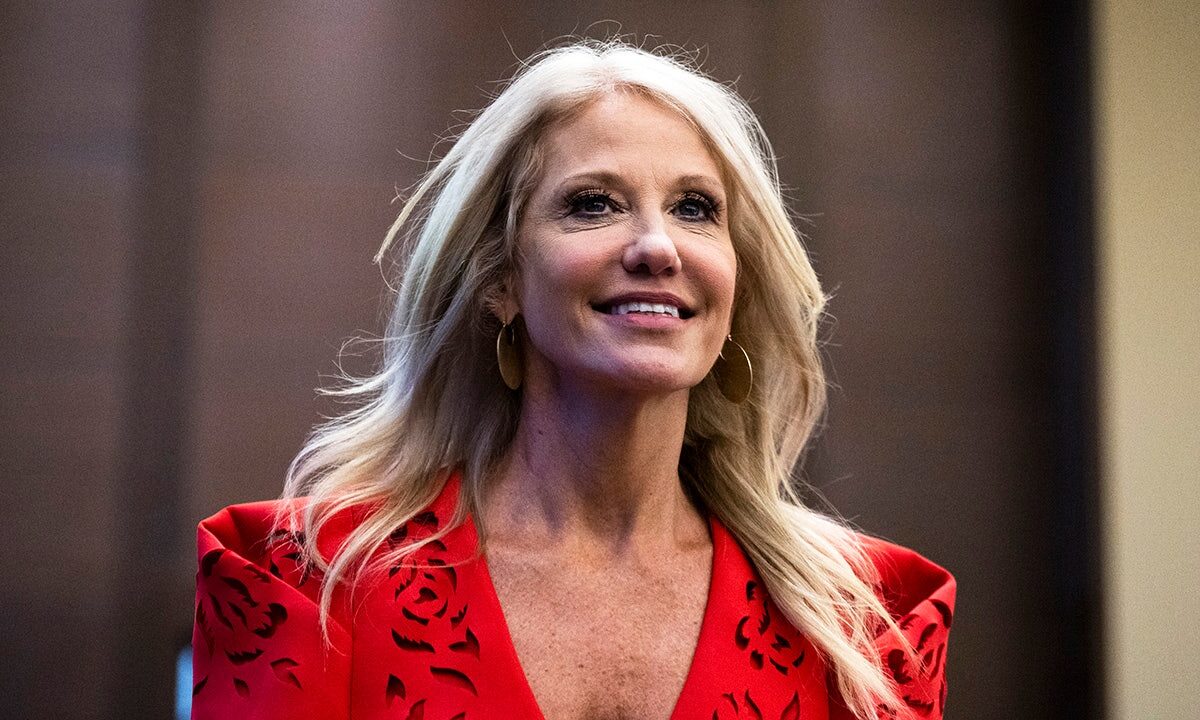
Kellyanne Conway told Fox News Digital on Tuesday that the recent wave of progressive and self-described socialist primary victories does not signal a nationwide political shift. Speaking at a Capitol Hill time capsule ceremony tied to the nation’s upcoming 250th anniversary, Conway framed the results as jurisdictional — successes confined to a small number of districts rather than a broader movement sweeping the country.
Conway’s comments were forceful and opinionated. She described some primary winners as out of step with mainstream values, saying, “I don’t think that plays everywhere,” and adding, “That’s not aligned with the values of this country. It’ll happen in very curated, specific districts, but it won’t happen everywhere.” Those characterizations are Conway’s viewpoint and should be treated as opinion rather than incontrovertible fact.
Kellyanne Conway remarks at Capitol Hill
At the Capitol Hill event, Conway framed recent primary outcomes as local political phenomena amplified by niche electorates and high-activation turnout. She linked those dynamics to what she described as broader differences in patriotic sentiment across partisan lines.
Conway said she was particularly “very disturbed” by a poll figure cited during the event that showed a wide gap in self-reported pride in being American between Republicans and Democrats. She used that statistic to help explain why she believes the progressive surge is uneven and concentrated in particular places.
What Tuesday primaries actually showed
Tuesday’s contests produced several high-profile wins for progressive and socialist-aligned candidates in targeted districts. Media coverage described “a slate of progressive and socialist candidates” scoring notable victories in primaries where activist patrons and turnout patterns favored them.
The same coverage noted the primary defeat of George Conway — the conservative attorney and former counselor’s ex-husband — in his bid to replace retiring Rep. Jerry Nadler in New York. That result illustrates how different dynamics can play out even among candidates with national name recognition.
These outcomes illustrate two points: first, organized and energized local campaigns can carry the day in specific electorates; second, a primary victory in a district defined by particular demographics or activist networks does not by itself indicate broader statewide or national appeal.
Poll data cited and methodological caution
Conway referenced a patriotism poll during her remarks, saying she was “very disturbed” by findings that the Fox News report presented as showing 90% of Republicans versus 29% of Democrats saying they are proud to be American. That statistic was used as part of her argument about cultural and value differences between partisan groups.
Importantly, the Fox News piece cited that percentage without publishing the poll’s full methodology in the story: the sample size, exact question wording, field dates and margin of error were not included. Without those details, the figure should be treated as a single data point rather than definitive proof of a broad national trend.
Polls can offer useful snapshots, but their reliability depends on how questions are asked, who is sampled, when the survey was conducted and how nonresponse was handled. Analysts and readers should therefore apply caution when extrapolating a single poll finding to explain complex electoral behavior.
National implications and analysis
Conway argued that while progressive and socialist candidates may prevail in “curated” districts, those victories are unlikely to herald a nationwide realignment. That conclusion is an opinion that sits alongside competing views from political analysts who note that trends can evolve between cycles.
From an analytical perspective, translating primary momentum into broader electoral success usually requires expanding beyond the activist base to reach moderate and independent voters, building fundraising capacity, and achieving wider name recognition. Those conditions do not automatically follow from a narrow primary win.
Local factors such as district lines, turnout rules, and candidate quality can create results that look dramatic but remain geographically limited. Conversely, sustained national shifts often show up across many regions and races over time, not only in isolated primaries.
Implications for the 2026 midterm elections
Conway tied her reading of the primaries to potential implications for the 2026 midterms, saying she does not expect the activists who prevailed in certain primaries to “win the country at large.” That view suggests a strategic takeaway: parties and candidates should consider whether primary successes can be broadened into general-election coalitions or whether they will remain localized phenomena.
Campaign strategists will watch whether activist-backed winners can broaden appeal in swing districts, whether national parties will invest to defend or challenge those seats, and whether opponents seize on primary outcomes to frame electability narratives in general-election contests.
At the same time, pundits and operatives will study whether these primary outcomes change recruitment, messaging or resource allocation ahead of the 2026 cycle. Local victories can prompt imitation, but imitation requires testing in different electoral contexts.
What comes next
Expect attention to shift from primary-versus-primary narratives to how winners perform in general-election settings. Observers should look for evidence that progressive or socialist nominees can expand their voter coalitions or whether they remain anchored to districts with unusually favorable conditions.
Source attribution
This article summarizes remarks and reporting originally published by Fox News. For the full report and video, see: WATCH: Kellyanne Conway insists socialist primary victories don’t reflect American values nationwide — Fox News.
Conway’s comments are her viewpoint as a former White House counselor and Fox News contributor. The patriotism poll figure she cited was reported in the Fox News piece without accompanying methodological details; readers should interpret poll-based assertions with that limitation in mind. Reporting here is based on the Fox News story linked above.