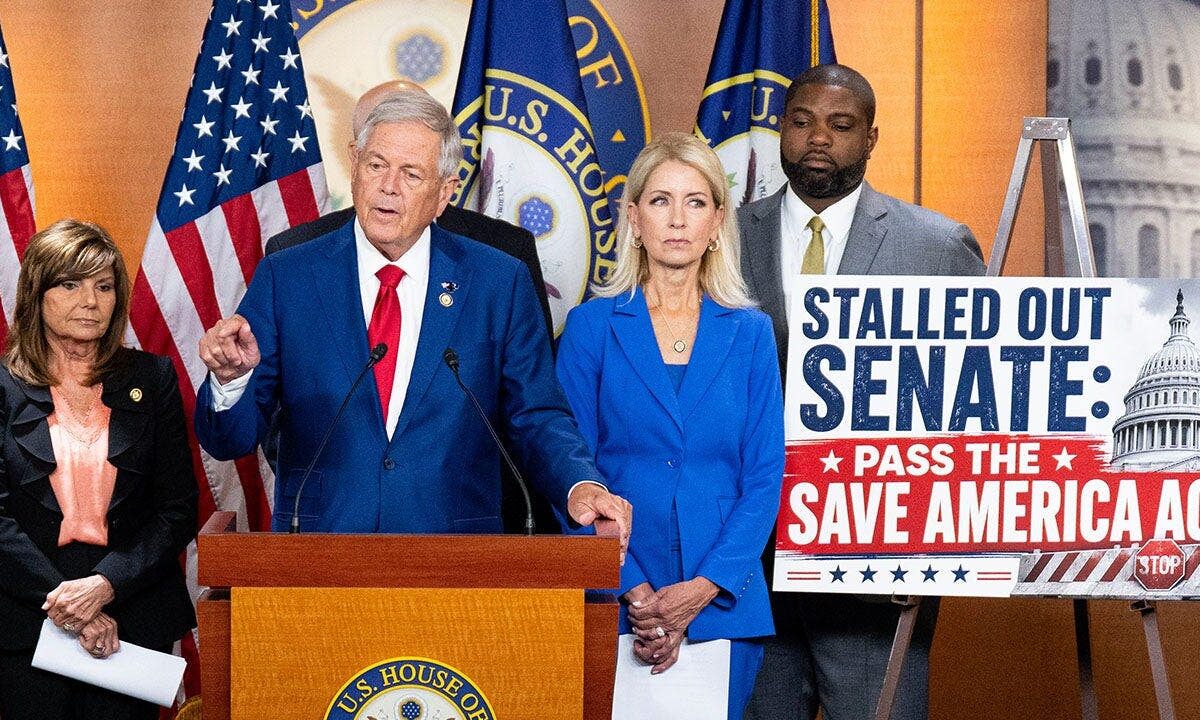
The SAVE America Act led this week’s confrontation on the House floor, as conservative Republicans used routine procedural tactics to press the Senate to take up the election and voting measure. The move left the House at a temporary standstill while the Senate departed Washington for a planned recess, highlighting sharp intraparty disagreements and raising fresh questions about the defense bill and the party’s midterm strategy.
What happened on the House floor
On the House floor, members of the conservative flank used a procedural mechanism to force a series of motions that effectively paused other business. The maneuver was designed to spotlight the SAVE America Act and to try to compel the Senate into action. Because the Senate went into a scheduled recess, the tactic did not produce an immediate interchamber response and left leadership weighing next steps.
Members and staff described the session as tense and procedural, with the standoff delaying several planned votes and slowing the chamber’s ability to move on priority legislation. Leadership aides said the delay consumed valuable floor time and complicated plans to advance appropriations and other must-pass measures in the final stretch before the election calendar tightens.
How the SAVE America Act fits GOP strategy
The SAVE America Act is a conservative-backed voting and elections proposal that some House Republicans see as a top priority heading into the midterms. Supporters have repeatedly sought ways to secure consideration in the Senate, including attempts to attach provisions of SAVE to larger, must-pass measures.
The Senate has held votes on SAVE and similar voting measures in recent months but has not mustered the votes to clear the upper chamber. Rep. Anna Paulina Luna and other hard-line conservatives in the House have advocated for attaching SAVE to high-profile bills, most notably the annual defense policy bill, arguing that links to must-pass measures could force a Senate decision.
Critics inside and outside the conference warn that attaching the SAVE America Act to the defense bill or other must-pass packages risks imperiling those larger priorities and could provoke a Senate rejection that frustrates both chambers.
House leaders and intra-party criticism
The blockade drew pointed criticism from Republican leaders and many rank-and-file members, exposing growing fissures within the GOP. Rep. Nick Langworthy, the House Republican Conference chair, told reporters on the floor, “It’s a mess,” arguing the chamber must be able to “continue to function.”
President Donald Trump, speaking after a meeting with Speaker Mike Johnson, urged critics to “stop grandstanding” in a Truth Social post, while Rep. Mariannette Miller-Meeks warned colleagues: “We win when we work and function as a team,” urging cooperation to preserve the majority heading into the midterms.
A senior Republican aide told reporters the blockade was “creating more inaction” and sapping momentum on other priorities. Multiple lawmakers said they were frustrated that floor time was being consumed by procedural fights rather than substantive debate on appropriations and national security measures.
Why this matters for the defense bill and midterms
The dispute matters because pairing the SAVE America Act with the annual defense bill could imperil a cornerstone piece of national security legislation. House leaders and defense hawks fear that adding a contentious, party-line voting measure to the defense policy package could prompt a Senate rebuke or force a prolonged negotiation that eats into an already compressed calendar.
House Republicans face fewer than 30 scheduled legislative days before the midterm elections, a scarcity that heightens the risk of delay. Leaders are also trying to assemble a broader, third party-line megabill in some form; any sustained floor standoff reduces flexibility to negotiate large packages and to move government funding bills in time.
Other priorities at risk include renewing a lapsed surveillance authority that targets foreigners overseas and moving appropriations bills that fund the military and federal agencies. A prolonged standoff would narrow the margin for error, forcing leaders to choose between pressing the SAVE America Act now or protecting must-pass items ahead of November.
What comes next
In the short term, the Senate recess limits the ability to force an immediate interchamber resolution. House leaders are expected to press forward with government funding bills and other top priorities when the chamber reconvenes after the Senate returns, while also weighing procedural responses to the conservative bloc’s tactic.
Likely paths include a negotiated compromise that restores normal floor business, House leaders using privileged procedures to override the blockade, or renewed attempts to attach SAVE provisions to must-pass legislation — a move that could accelerate conflict with the Senate and complicate the defense bill’s chances.
Calendar specifics will be critical: leaders must calibrate timing around the Senate’s return, the House schedule of votes, and the fewer-than-30 remaining legislative days before the midterms. That compressed timeline makes rapid decisions and tactical concessions more likely as each side weighs risks to policy goals and the 2026 campaign calendar.
Background
House Republicans have passed different versions of SAVE and related measures in the past, seeking to change federal election rules and voting procedures. The Senate has considered similar bills multiple times without final passage. Advocates for attaching voting legislation to larger packages argue it may be the only path to a floor vote in the upper chamber, while opponents caution such tactics can backfire and threaten must-pass legislation.
Frequently asked questions
What is the SAVE America Act?
The SAVE America Act is a GOP-backed voting and elections bill supported by many conservative House members. Versions of the bill have included changes to voting procedures and other election-adjacent provisions; supporters want federal consideration while opponents say the measure lacks Senate support as written.
Will the SAVE America Act pass the Senate?
Senate leaders have indicated the votes are not there for the SAVE America Act in its current form. Passage would likely require substantial changes, bipartisan support, or successful attachment to another measure that alters the dynamics in the upper chamber.
Could SAVE be attached to the defense bill?
Some House conservatives, including Rep. Anna Paulina Luna, have pushed to attach SAVE to the annual defense policy bill. Leaders and some analysts warn that pairing a contentious voting bill with the defense package risks losing both priorities and could prompt a Senate rejection of the combined measure.
Next steps: Watch for the House schedule when the Senate reconvenes, competing procedural moves from leadership and the conservative bloc, and negotiation signals on whether SAVE provisions will be folded into must-pass funding or defense legislation.
Source: Fox News — It’s a mess: GOP turns on House conservatives as voter ID blockade stalls Trump’s agenda; additional reporting and context: Associated Press.