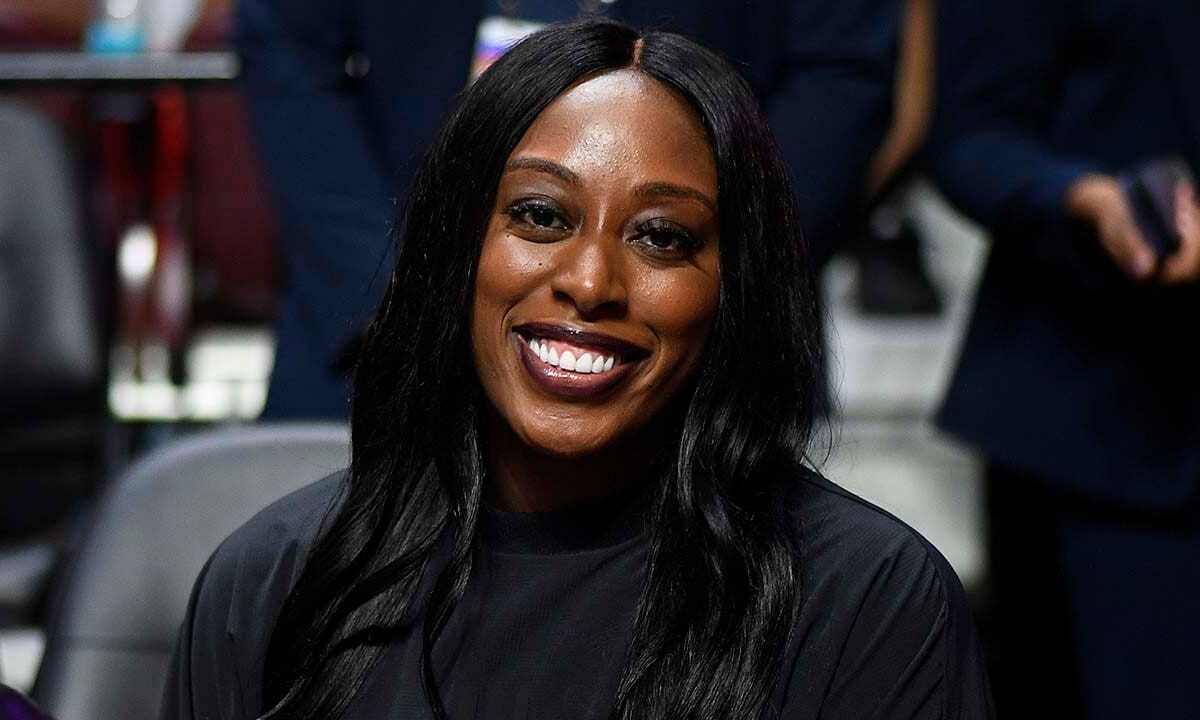
The WNBA upgraded the play involving Alyssa Thomas and Caitlin Clark to a Flagrant 2 and issued a one-game suspension for Thomas, a ruling that quickly provoked debate about officiating, consistency and media framing. Chiney Ogwumike appears early in that debate: the former WNBA star and current ESPN analyst questioned how much the league’s response was shaped by viral images and social-media narratives rather than only by the live sequence of contact.
What Chiney Ogwumike said
As reported by Outkick/Fox News, Chiney Ogwumike — identified in coverage as a former WNBA standout and ESPN analyst — said the league may have been reacting in part to the optics of a freeze-frame rather than the full play in motion. Outkick summarized Ogwumike’s remarks as observing that the visual shorthand created by a single image can change how a sequence is interpreted and therefore how the public and the league respond.
Ogwumike also commented on the two players’ styles, noting that Caitlin Clark can sometimes appear to embellish contact and that such perceptions factor into how moments are discussed on social platforms. Those characterizations were reported by Outkick (Fox News) and have been central to the criticism of Ogwumike’s comments because they mix interpretation of behavior with a broader point about narrative formation.
Media framing and optics
Labeling the episode an “optics” issue redirects scrutiny away from the physical contact itself and toward how images and clips amplify certain readings. That shift matters: a discipline decision grounded in the play’s safety implications reinforces on-court standards, while one discussed primarily as a reaction to a perceived image suggests a reputational management element to enforcement.
Supporters of Ogwumike’s framing argue that modern sports governance does not occur in a vacuum; real-time replay, broadcast freeze-frames and social platforms all compress complex sequences into singular moments that pressure leagues to act visibly and quickly. Critics counter that emphasizing optics risks minimizing the safety and consistency rationale that should drive disciplinary action.
Fan and analyst reaction
Reaction on X and other public forums was fast and polarized. Many fans directed sharp criticism at Ogwumike for appearing to excuse or minimize the contact. Others defended her as raising a legitimate meta-point: that social-media amplification is a new variable in how sports leagues and audiences process incidents.
Some posts framed the disagreement as part of a longer-running divide over how commentators treat Caitlin Clark versus other WNBA players. Other analysts used the moment to call for clearer officiating standards, saying the conversation should focus less on post-hoc narrative and more on consistency from referees during the game.
Why it matters
There are three overlapping stakes: competitive fairness, player safety and media trust. If fans believe disciplinary outcomes are driven by image management or by favoritism, confidence in league fairness can decline. If incidents that involve potentially dangerous contact are discussed chiefly as reputation problems, the safety imperative can seem diminished.
Conversely, ignoring the role that social media plays in shaping public perception is unrealistic. Leagues now face pressure to be both procedurally consistent and responsive to a fast-moving media ecosystem. The central challenge is balancing those demands without letting one undercut the other.
Where accountability sits
Accountability in this dispute is multi-layered. On-court officials make initial calls; the league’s review office can upgrade or downgrade reviewable plays; and commentators and analysts shape public understanding of both the sequence and the discipline. Each layer has its own standards and incentives.
The WNBA’s decision to upgrade the play to a Flagrant 2 and issue a one-game suspension underscores that the league’s review process can alter outcomes after the fact. That mechanism can enhance safety and correct missed calls, but it also invites scrutiny about frequency, transparency and whether public reaction plays any role in timing or severity.
Context and next steps
For viewers and stakeholders, the practical takeaway is modest but important: leagues should continue to clarify review standards, and analysts should label interpretive remarks as opinion when they go beyond observable fact. Fans and commentators also benefit from distinguishing between what the rulebook prescribes and how social perception influences debate.
Ultimately, this episode is less about a single commentator than about how modern sports adjudication operates in an environment where a still image or thirty-second clip can alter conversation and catalyze administrative review. That reality requires deliberate communication from the league and caution from public voices that mix analysis with characterization.
Source attribution
This piece summarizes reporting and public commentary. Key sources consulted:
- Outkick / Fox News: original reporting on Chiney Ogwumike’s comments and subsequent fan reaction — Outkick (Fox News) coverage (referenced for Ogwumike quotes and reactions).
- WNBA official news hub: for league announcements and review procedures — WNBA News.
- ESPN WNBA coverage: broader game context and media analysis — ESPN WNBA.