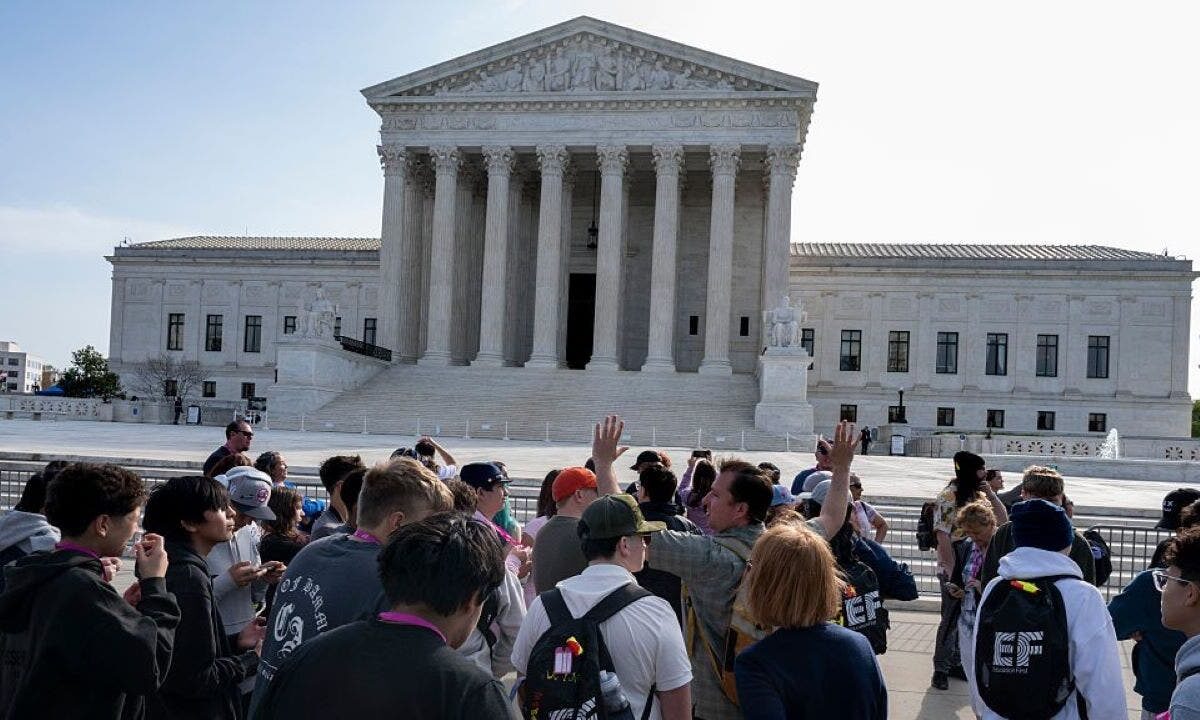
The U.S. Supreme Court ruled Monday that Mississippi may count some mail-in ballots received after Election Day, in a sharply divided 5-4 decision. The majority, led by Justice Amy Coney Barrett, concluded that federal election statutes set Election Day as the deadline for when voters must cast their votes but do not prescribe when ballots must be received.
“The electorate’s choice is made when voting is complete, not when ballots are received,” Barrett wrote, framing the case as a matter of statutory text and interpretation and setting the tone for the majority’s approach.
Mail-in ballots: What the court decided
The court’s ruling holds that Mississippi law can permit the counting of some late-arriving mail-in ballots without violating the federal statutes at issue. The decision was split 5-4, with Chief Justice John Roberts and Justices Sonia Sotomayor, Elena Kagan and Ketanji Brown Jackson joining Barrett’s opinion to form the majority.
The majority concluded that while Election Day establishes when a voter must cast a ballot, the federal election statutes relied upon by challengers do not expressly impose a separate receipt deadline. Because the text the court reviewed does not mention when a mailed ballot must arrive to be counted, the majority declined to read a receipt deadline into the statute.
Majority reasoning
Barrett’s opinion emphasized a textualist reading of the federal statutes. The majority said that where Congress speaks to the timing of casting a vote but remains silent on receipt timing, courts should not supply unspoken rules. Barrett wrote that “Election-day statutes say nothing about ballot receipt, and we cannot add to the words Congress chose.”
The opinion framed the dispute narrowly: the question was not whether states may adopt receipt deadlines, but whether the federal statute the challengers cited forbids the particular Mississippi practice at issue. The majority found no such prohibition in the statute’s text and therefore left room for state law choices regarding how to handle postal delays and validation processes.
The majority also noted the practical separation between the moment a voter casts a ballot and the realities of mail delivery, processing, and verification. That separation, the opinion said, allows states to establish their own receipt windows and procedures so long as those rules do not conflict with the federal statute before the court.
Dissent and counterarguments
Justice Samuel Alito authored the dissent, arguing that permitting ballots received after Election Day to be counted effectively shifts when the electorate’s choice is made. Alito warned that counting late-arriving ballots could postpone the date when an election’s outcome is determined and undermine finality and predictability for voters and candidates.
In his dissent he wrote, “If ballots received after election day are added to the set of ballots that dictate the election’s outcome, the electorate’s choice does not occur on election day.” He expressed concern about administrative burdens, potential strategic behavior, and the public expectation that Election Day marks the end of voting for a given contest.
Alito also raised objections grounded in the practical implications for election administration: extended receipt windows, variable postal performance, and differing state rules could create uncertainty and uneven treatment across jurisdictions if the decision is read broadly.
What this means for voters and states
For Mississippi, the ruling affirms that, under the federal statute the court reviewed, state law mechanisms that allow counting certain late-arriving mail-in ballots can stand. The decision’s immediate effect depends on Mississippi’s specific statutory language and administrative rules for validating and accepting ballots received after Election Day.
Importantly, the majority did not announce a uniform national standard for all states. The holding turned on the particular federal text and the Mississippi statute at issue; states with different laws, deadlines or constitutional provisions may reach different outcomes if litigants raise similar challenges.
Practically, election officials should continue to focus on clear instructions about postmarking, receipt windows and verification steps like signature review. Voters should follow state guidance about when ballots must be cast or postmarked and any deadlines for receipt to ensure their ballots are counted under existing state rules.
What comes next
This remains a developing story. The ruling could prompt additional litigation in other states attempting to apply or distinguish the decision based on differences in state and federal statutory language. Lawmakers in some states may consider clarifying statutory deadlines or adopting uniform receipt windows to reduce future disputes.
Election administrators may also review procedures to reduce ambiguity around when a mailed ballot is treated as timely cast, including clearer public guidance and improved coordination with postal services. Observers will watch for follow-on filings that test the decision’s limits in different statutory and factual settings.
Frequently asked questions
What happened with mail-in ballots?
The Supreme Court ruled 5-4 that Mississippi may count certain mail-in ballots received after Election Day because the federal statutes the court considered set Election Day as the deadline to cast a ballot but do not specify a separate receipt deadline.
Why does mail-in ballots matter?
When mailed ballots are counted affects the timing of election results, administrative procedures and voter expectations. The case highlights the tension between ensuring access for voters using the mail and preserving finality for election outcomes.
What happens next?
The decision could lead to more litigation in other states, possible clarifying legislation, and administrative changes by election officials. Parties will likely test how broadly the ruling applies based on variations in state and federal law.
Source: Reporting and analysis based on Fox News coverage of the decision: Fox News, and opinions from the U.S. Supreme Court: U.S. Supreme Court. Majority and dissenting language are cited from the published opinions and reporting on the case.