When modern Marathi theatre began to favour pared-back visuals, ensemble precision and formally adventurous stagings, commentators frequently pointed to one director: Vijaya Mehta. The BBC has explicitly credited Mehta with modernising Marathi theatre in the 1960s and 70s; this piece treats that statement as an attribution and places it alongside theatre-archive commentary and a short chronology of her work and influence.
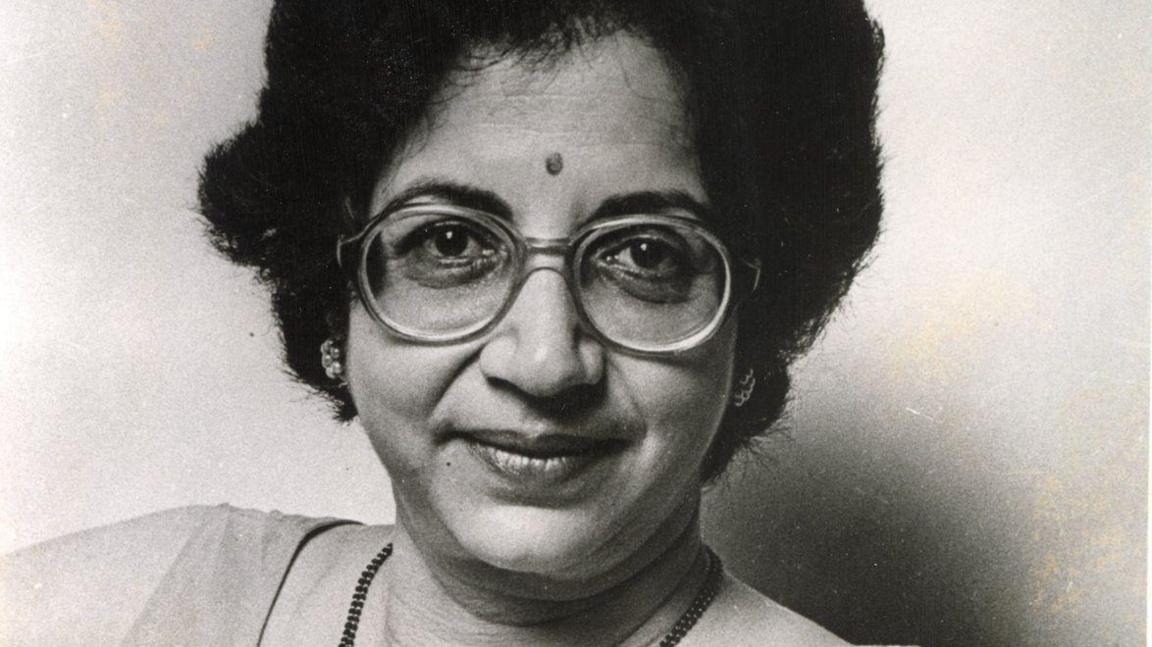
A short portrait of Vijaya Mehta
Vijaya Mehta emerged as a leading director and theatre-maker in Marathi-language theatre at a moment when regional stages were rethinking how Indian plays could be presented. Her practice moved away from straightforward naturalism toward a stage language that privileged composition, rhythm and collective discipline.
Rather than offering a conventional life-story, this profile focuses on the pattern of Mehta’s choices: clear ensemble work, visual staging that made space itself expressive, and rehearsal techniques that foregrounded gesture and tempo. These recurring features are the basis for the claim attributed to the BBC and noted in theatre records and institutional archives.
Key plays and stage experiments
Across the 1960s and 70s Mehta produced a string of works and directorial projects that observers describe as experimental plays. Critics and colleagues noted changes in set economy, lighting as a structural device, and actor movement used to create meaning rather than simply illustrate text.
Her experiments often involved treating the stage as a sculptural volume: playing with depth, isolating actors in pools of light, and using silence and stillness as compositional tools. Rehearsal methods emphasised listening and ensemble timing, producing performances where spatial relationships and rhythmic interplay were as crucial as dialogue.
Because many retrospective accounts summarise rather than catalogue every production, the emphasis here is on the nature of those experiments and their timing: the 1960s and 70s are repeatedly cited as the decades during which Mehta’s approach became most visible on Marathi stages.
Concise chronology: 1960s–70s
Early 1960s — Transition and experimentation. Mehta began working with ensembles that tested reduced scenery and focused on movement and timing. This period saw a move away from proscenium-bound realism.
Mid-1960s — Formal consolidation. Productions from this time are described in contemporary reviews as using lighting and spatial design as narrative devices; the emphasis on visual composition and ensemble coordination became more pronounced.
Late 1960s to early 1970s — Wider recognition. Theatre writers and peers increasingly referenced Mehta’s stagings as exemplars of a new directorial vocabulary in Marathi theatre; similar experiments appeared in other regional theatres as part of a broader mid-century modernist impulse.
Mid-1970s — Pedagogy and influence. Techniques associated with Mehta — rehearsal rigor, design-led staging and an economy of props — appear in the work of directors who trained with or watched her productions, extending her approach into dramatic pedagogy.
How Vijaya Mehta influenced Marathi and Indian theatre
Observers argue that Mehta helped shift expectations about what Marathi theatre could be. Her reported influence includes encouraging directors to prioritise visual and rhythmic coherence over illusionistic naturalism, and to treat production elements as part of an integrated expressive strategy.
Within Indian theatre more broadly, Mehta is often mentioned alongside a group of mid-20th-century practitioners who expanded the director’s role and the stage vocabulary. The claim that she “modernised” Marathi theatre is presented here as an attribution: it comes from secondary accounts and institutional commentary that evaluate patterns of practice rather than offering a single causal document.
Legacy and continuing relevance
Traces of Mehta’s priorities—visual clarity, disciplined ensemble work, experiments with space and silence—are visible in many contemporary Marathi productions. Directors and teachers who emphasise rehearsal rigor and design-led staging still point to the mid-century shift as formative.
Her legacy is best seen as a distributed influence: students, collaborators and critics absorbed elements of her practice and adapted them. The formal questions she foregrounded—about how space, movement and silence shape meaning—remain central as Marathi theatre addresses new audiences and technologies.
Sources and attribution
This article treats the BBC statement that “Vijaya Mehta is widely credited with modernising Marathi theatre in 1960s and 70s with her experimental plays” as an attribution. See the BBC report for the original phrasing and context: https://www.bbc.co.uk/news/articles/cnv986rvvjyo?at_medium=RSS&at_campaign=rss.
Additional institutional commentary and archival listings (for example, material and directories held by national theatre organisations such as the Sangeet Natak Akademi) also note Mehta’s contributions to Marathi theatre practice and to mid-century directorial experimentation: https://sangeetnatak.gov.in. These sources support the attribution while reminding readers that broad claims of cultural change reflect multiple contributors and regional developments.
Short conclusion: Whether described as the single driver of change or as a leading figure among many innovators, Vijaya Mehta’s work remains a touchstone for directors who prioritise visual design, ensemble discipline and formal experimentation in Marathi theatre.