
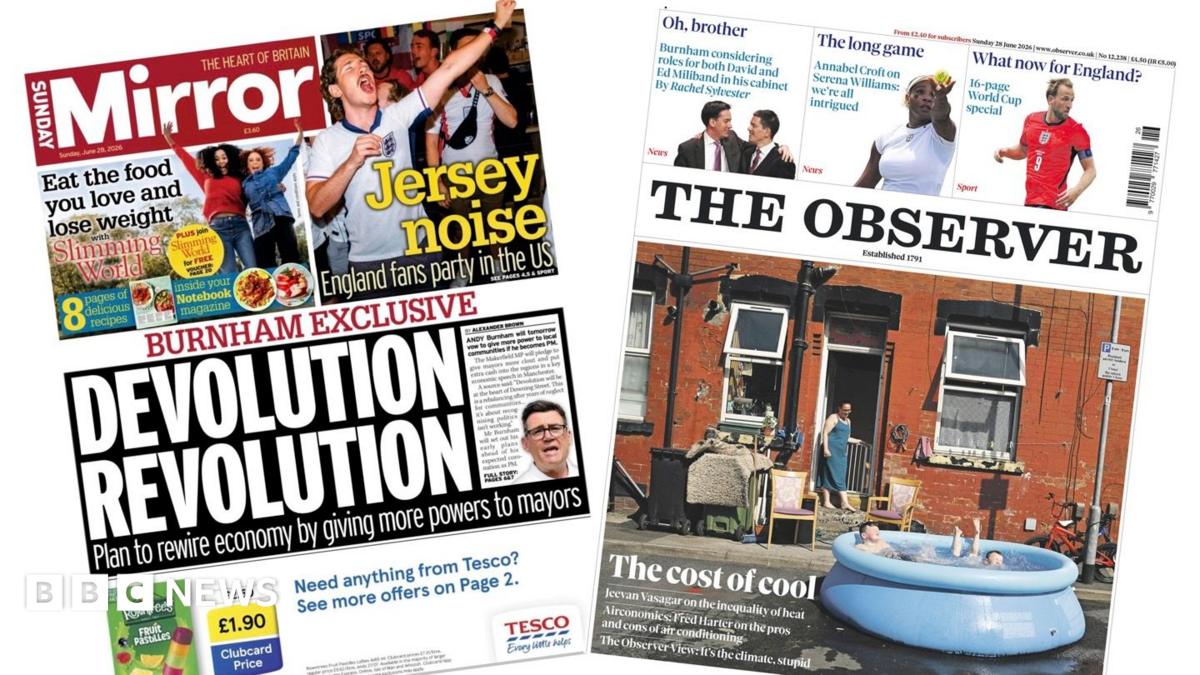
Andy Burnham and a record heatwave lead many Sunday front pages, with editors pairing a forthcoming economic policy speech with intense coverage of rising temperatures. Papers use headline shorthand such as “Devolution revolution” and “the cost of cool” to frame this weekend’s themes.
The coverage presents two linked strands: political manoeuvring around regional powers and the immediate strains that extreme heat places on services and households. Below is a quick update on how the Sunday editions treated both stories and what to watch for next week.
What the Sunday papers are saying
Editors this weekend foregrounded regional politics and climate impacts. Many front pages framed policy debate as a push for greater local control, often labelled in headlines as a “Devolution revolution.” That phrase appears across splash pages as shorthand for arguments about shifting power and money from central government to regional authorities.
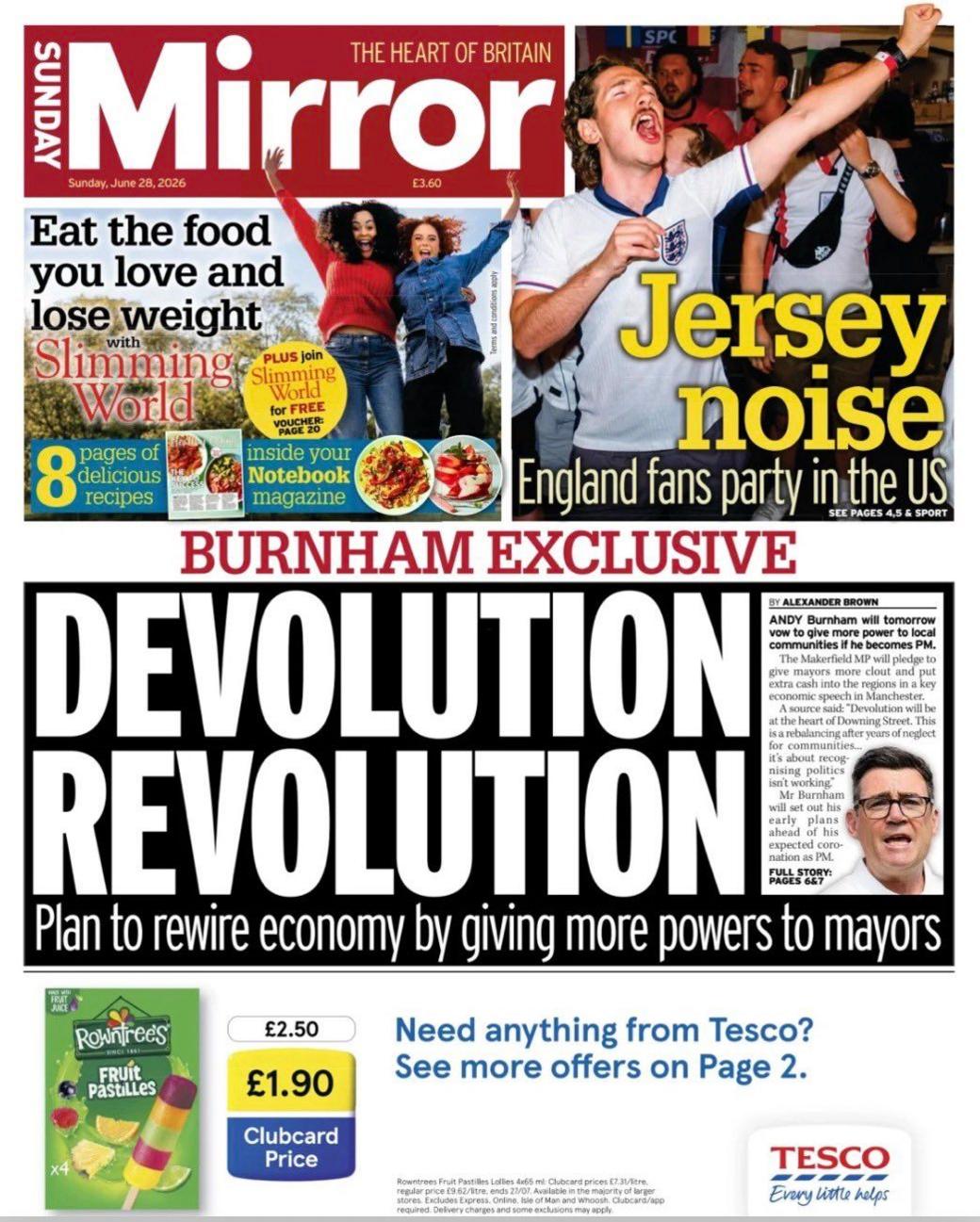
Alongside that theme, editorial coverage emphasised the practical consequences of hotter weather. Papers used the neatly phrased line “the cost of cool” to bundle stories about higher household bills, pressure on public services and the immediate outlays required to cope with high temperatures.
Across stories and leader columns, editors linked the two themes. Headlines suggested a crossroads: debates over who holds spending power — and whether regions have the authority or budgets needed to adapt to more frequent extreme weather events.
Andy Burnham: the planned economic policy speech
BBC reports that Andy Burnham will give an economic policy speech next week. The Sunday editions treated the announcement as a lead national story, flagging the timing and the wider political context rather than publishing detailed excerpts of the planned text.
Coverage framed the speech as a chance for Burnham to set out priorities on regional and economic strategy. Papers noted that the address will be watched for signals on devolution, spending priorities and how regional leaders propose to respond to local challenges.
Comment pieces and front‑page summaries presented the speech as part of a broader conversation about who controls budgets and policy levers at regional level. Many papers positioned Burnham’s remarks as an attempt to influence public debate on those issues in the coming weeks.
The reporting emphasised timing: with the speech scheduled for next week, outlets said readers should expect further analysis and extracts as journalists receive the full text and any follow-up announcements.
Record heatwave coverage and immediate impacts
Alongside politics, the record heatwave featured prominently. Papers described immediate impacts on transport, health advice and energy use, and used the phrase “the cost of cool” to capture stories about increased household cooling costs and pressure on public services.
Weekend articles focused on near-term effects: travel disruptions, guidance for vulnerable people, and strains on infrastructure. Many pieces combined practical reporting — what people should do now to stay safe — with commentary on how public services and local authorities are coping.
Opinion and analysis columns in several papers used the heatwave to argue for greater investment in resilience and adaptation. Editors suggested this could become a longer-running policy conversation, tying back to the devolution debate over who makes and funds those decisions.
Where coverage moves beyond immediate impacts, papers tended to raise questions rather than offer detailed plans, asking whether current funding, planning and local powers are adequate to meet recurring extreme weather.
What comes next
The main immediate developments to watch are straightforward. First, the full text of Andy Burnham’s speech next week will be published and analysed; that is likely to prompt more detailed coverage about any specific proposals on devolution or regional spending that he puts forward.
Second, follow-up reporting on the heatwave will focus on public safety and short-term disruption. Expect updates on transport timetables, official health advice and any assessments of how well infrastructure coped with the conditions.
Editors this weekend signalled two linked storylines to follow: whether regional leaders can press for greater powers and money in response to practical pressures, and how households and services bear the immediate and economic costs of hotter weather — the “cost of cool” that many front pages highlighted.
Source: BBC News – Top Stories — https://www.bbc.co.uk/news/articles/c7vymj03drno?at_medium=RSS&at_campaign=rss


