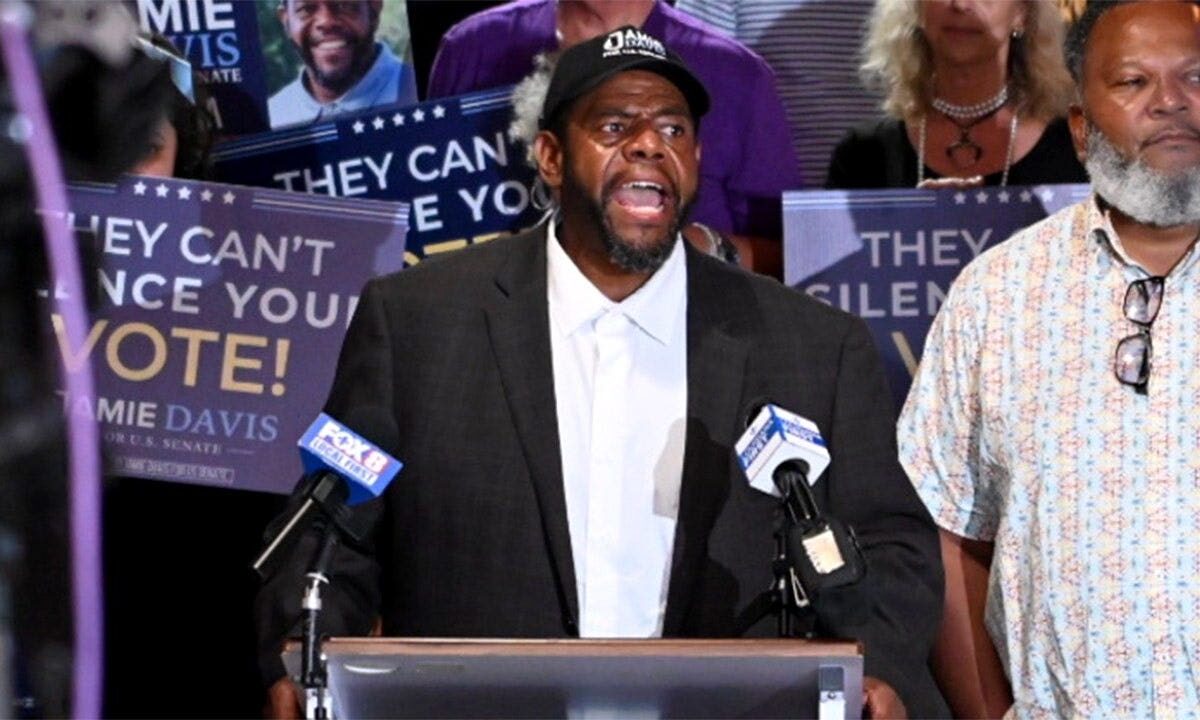
Jamie Davis has secured the Democratic nomination for the U.S. Senate in Louisiana, the Associated Press reported, defeating Gary Crockett in the party’s runoff and positioning himself for a November contest in a state that leans strongly Republican.
The rural farmer and former parish official from northeast Louisiana entered the runoff as the favorite and carried that position into a clear win, according to AP returns. His victory ends the party’s intra-Democratic contest and hands Democrats a nominee to compete in November, even as the statewide terrain remains difficult for his party.
Jamie Davis wins the Democratic runoff
The Associated Press called the Democratic runoff for Jamie Davis after he outpaced Gary Crockett in the head-to-head contest. With Davis becoming the party’s nominee, Democrats will put forward a candidate to challenge the eventual Republican nominee for the seat now open for the November general election.
Davis’s campaign framed the runoff win as proof of grassroots organizing across rural parishes and consolidating party support when it mattered most. The result delivers Democrats a single contender to focus messaging and fundraising ahead of a fall campaign that will likely be dominated by national themes and heavy outside spending.
How Davis built the edge
State Democratic leaders moved early to support Davis in the runoff, directing staff and resources to his campaign. That organizational boost translated into paid field organizers and broader outreach in rural precincts where retail campaigning can move votes.
Davis’s background as a farmer and former parish official helped him connect with voters in northeast Louisiana. Campaign strategists and local volunteers emphasized face-to-face contact, local endorsements and a consistent presence at community events — tactics that matter in sparsely populated areas where personal familiarity can outweigh name recognition alone.
While exact fundraising totals varied over the cycle, the combination of party backing and an active field operation gave Davis an operational advantage over Crockett in the runoff period. That allowed him to increase turnout in key parishes and sustain messaging about local concerns and economic issues important to rural voters.
GOP runoff and likely opponents
No Republican candidate reached the 50% threshold in the primary, sending Rep. Julia Letlow and former Rep. John Fleming into a separate GOP runoff. Letlow finished first in the initial primary by double digits over Fleming but did not secure an outright majority.
Letlow enters the runoff with a high-profile endorsement from former President Donald Trump and backing from state Republican leaders. Fleming has sought to position himself to the right of Letlow, leaning into conservative credentials from his time in Congress and public life.
The Republican runoff will decide Davis’s November opponent. National attention and endorsements on the GOP side suggest the general election will attract outside spending and heightened media coverage, intensifying the contest once the Republican nominee is set.
The general election challenge in Louisiana
Louisiana remains reliably Republican in federal contests, and Davis faces a steep climb to win statewide office. Democrats have not captured a U.S. Senate seat in Louisiana in nearly two decades at the federal level, and the state’s partisan lean will be a central hurdle for any Democratic nominee.
Winning statewide will require Davis to expand name recognition beyond his northeast base, raise substantial funds to compete in advertising and outreach, and persuade moderate and independent voters in suburban and exurban areas. Political observers note that success will depend on both turnout from core Democratic voters and limited defections among centrist Republicans and independents.
What comes next
With the Democratic runoff concluded, Davis’s campaign will pivot to the general election phase. The immediate calendar focuses on the GOP runoff between Letlow and Fleming; once that contest produces a Republican nominee, both parties will accelerate fundraising, ad buys and field operations ahead of November.
In practical terms, Davis needs to broaden his statewide outreach, boost fundraising to match likely Republican spending, and maintain or grow the volunteer network that helped him in the runoff. National groups may also weigh whether to invest in the race depending on the Republican nominee and the broader map.
Local reaction
Following his primary defeat, Sen. Bill Cassidy reflected on the electoral process and supporters. “When you participate in democracy, sometimes it doesn’t turn out the way you want it to,” Cassidy said, urging acceptance of the outcome.
Local strategists say endorsements, outside spending and turnout will shape the race as campaigns shift from nominating fights to general-election persuasion and mobilization.
FAQ
Who is Jamie Davis and what is his background?
Jamie Davis is a farmer and former parish official from northeast Louisiana who won the Democratic runoff and will be his party’s nominee for U.S. Senate this fall.
Who did Davis beat in the Democratic runoff?
He defeated Gary Crockett in the Democratic runoff, according to Associated Press reporting.
What are Davis’s chances in the general election?
Louisiana is considered reliably Republican at the federal level, so Davis faces an uphill race. His path depends on increasing statewide name recognition, fundraising, voter turnout and who emerges from the Republican runoff to be his opponent.
Source: Reporting adapted from the Associated Press and Fox News coverage of the race.