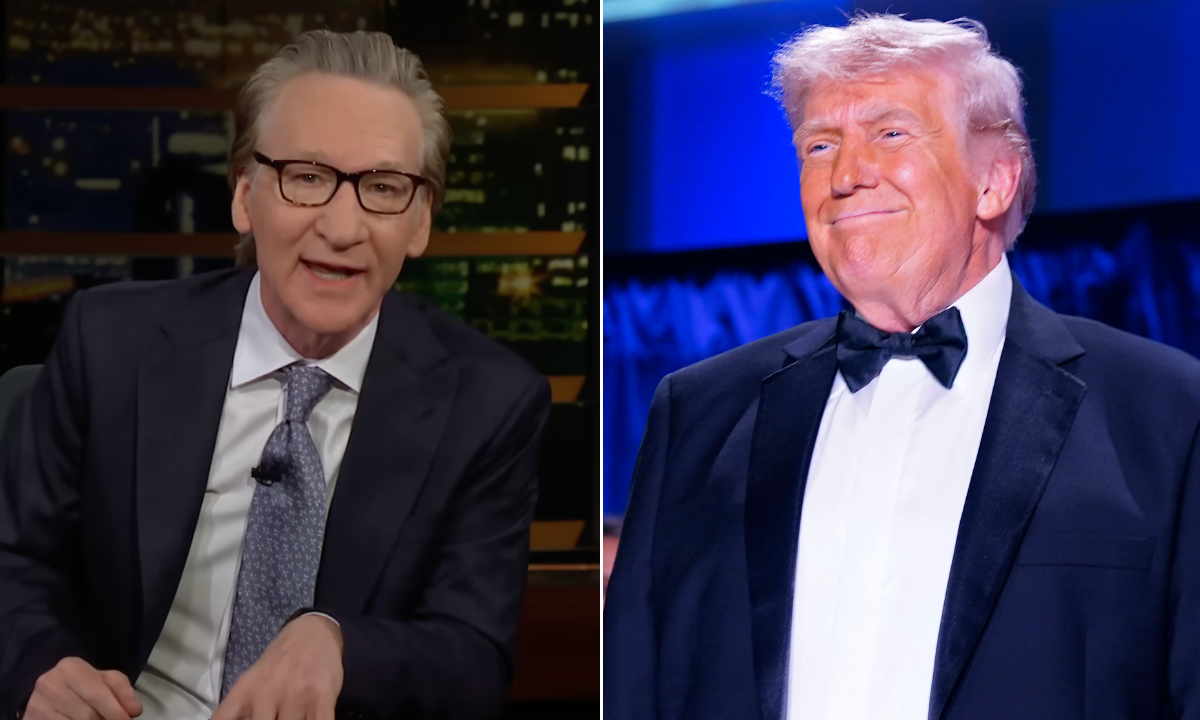
Bill Maher said he enjoys watching Donald Trump confront journalists, telling listeners on his Club Random podcast that he sometimes feels a vicarious pleasure when politicians push back in tense interviews. Those remarks, first reported by Fox News, resurfaced as Maher accepted the Mark Twain prize at the Kennedy Center, where the program included a Trump impression that drew additional notice.
Bill Maher on Trump and the press
On Club Random, Maher described a recognizable impulse among viewers: the desire to snap back at a reporter whose tone or line of questioning feels disingenuous. As Fox News reported, Maher said he admires the way Trump sometimes “speaks his complete internal monologue” in interviews and recalled moments when he imagined a blunt retort. Maher said he has thought, in similar situations, phrases such as “It’s not a sincere question,” “It’s a gotcha thing,” “It’s a virtue-signaling thing,” and the blunt line, “You’re a terrible person!”
Those comments were framed as Maher’s account of his reactions rather than as verified verbatim transcripts of particular interviews. Reporters and media analysts distinguish between Maher’s personal, opinionated remarks and the factual record of any specific exchange. Fox News’ report attributed the Club Random comments to Maher and noted that the outlet’s coverage included contribution from reporter Hanna Panreck.
Mark Twain award moment at the Kennedy Center
The remarks circulated the same week Maher accepted the Kennedy Center’s Mark Twain Prize for American Humor. The prize, given to comedians and satirists whose work has had a major impact on American society, traditionally features both an acceptance speech and tribute material from peers. At the ceremony, Maher delivered remarks that blended personal anecdotes, political commentary and the comic framing he has used throughout his career.
Maher has long occupied a space as a commentator who mixes satire with political critique. At the Kennedy Center, his references to press dynamics and public confrontation built on that pattern—using a stage audience and the language of comedy to reflect on how public figures and journalists spar in high-profile settings. Coverage of the event emphasized the performative context of the awards program and the ways comic timing and exaggeration shape how audiences hear political commentary.
Event reaction and impersonation
During the program impressionist Matt Friend performed a Trump impersonation that The Washington Post reported included the quip, “Why are we giving this low-ratings lightweight jerk the Mark Twain Award.” The Post’s account identified Friend as the performer and described the line as part of a satirical bit, underscoring that the words were theatrical and tied to an impersonation rather than a direct statement from any public official.
Media accounts treated the moment as a blend of roast-style comedy and commentary about fame and media attention. Observers noted that impersonations at such events aim to land laughs and to comment on public perception rather than to serve as literal reportage. Both the Fox News and Washington Post pieces made that distinction clear in their coverage of the ceremony.
Why it matters
Maher’s comments matter because they illustrate how influential media figures talk about journalists and the norms of public accountability. When a longtime host speaks of taking “vicarious joy” from confrontations between politicians and reporters, it can normalize adversarial frames and shape audience expectations about acceptable interactions with the press.
That dynamic has implications for media politics and public trust. Supporters of combative approaches argue that pushing back on perceived bad-faith questions can expose bias and hold journalists accountable. Critics counter that celebrating aggressive exchanges risks eroding norms that enable journalists to ask probing questions without fear of personal attacks. The Kennedy Center moment and Maher’s Club Random remarks are notable because they fold those debates into a cultural moment—an awards show—where satire and commentary mix, and where audiences may receive perspectives on journalism through entertainment lenses.
Reporting and sources
This article synthesizes reporting from Fox News and The Washington Post. Fox News reported on Maher’s Club Random comments and noted contribution to its coverage from Hanna Panreck; The Washington Post covered the Kennedy Center ceremony and described Matt Friend’s impersonation. Where quotes are cited, they reflect Maher’s own descriptions of his reactions on Club Random or the impersonator’s lines as reported by outlets, and they are presented as opinion or performance rather than as documentary quotations from other public figures.
Readers should note the distinction between Maher’s opinion and the factual record of any specific interview between Trump and a journalist. Performance lines from the ceremony, including the impersonation’s remarks, were theatrical and intended as satire.
Sources: Fox News (reporting includes contribution from Hanna Panreck) and The Washington Post.
FAQ
What happened with Bill Maher?
Maher told listeners on his Club Random podcast that he sometimes takes vicarious pleasure when Donald Trump spars with journalists. He accepted the Mark Twain Prize at the Kennedy Center the same week, and the ceremony included a Trump impersonation that received additional attention in media coverage.
Why does Bill Maher matter?
Maher is a long-standing media figure whose commentary can influence cultural conversations about politics and journalism. His remarks are part of broader debates about how public figures and the press interact and how audiences interpret journalistic questioning.
What happens next?
No formal follow-up is expected beyond continued coverage and commentary. Media outlets will likely continue to report on reactions to Maher’s remarks and the Kennedy Center program as part of ongoing cultural and media coverage.
Reporting and original coverage cited above.