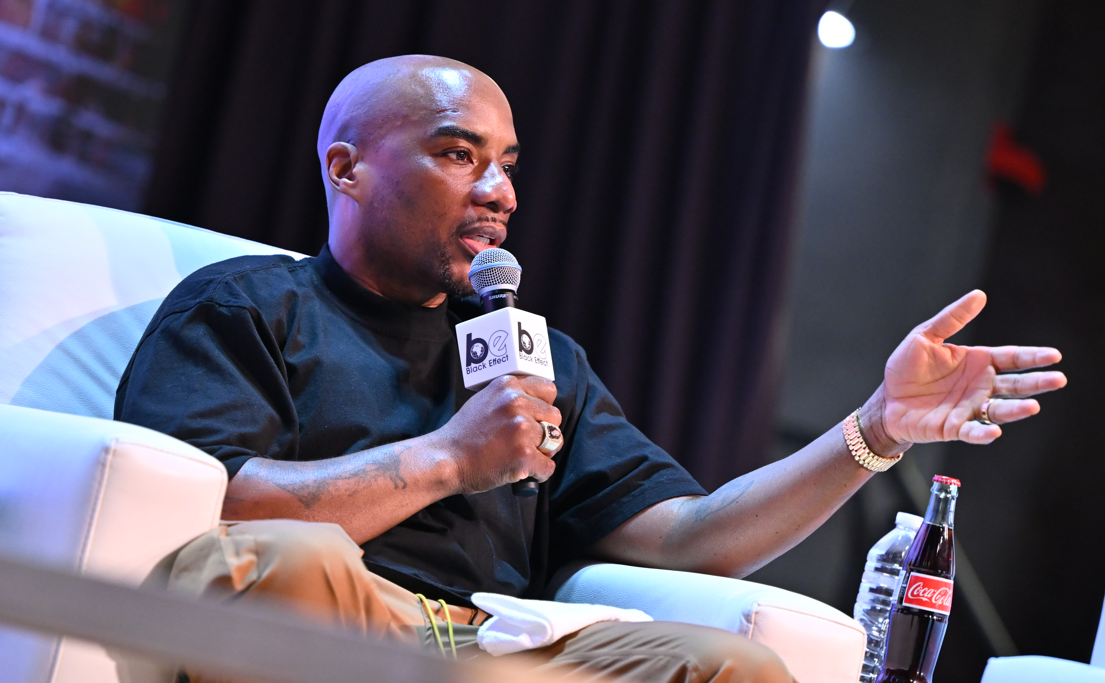
“So I just didn’t understand what he meant unless he was talking about the kiki they had at the [Jimmy] Carter funeral,” radio host Charlamagne tha God said on his program, challenging former President Barack Obama’s recent remarks that Donald Trump is different in private than he appears publicly.
Charlamagne tha God responds
Charlamagne tha God opened his rebuke by repeating the reference to a “kiki,” a slang term he used to describe what he characterized as a relaxed, convivial exchange between Obama and Trump at the funeral. He framed the moment as evidence that Obama’s podcast comments — which suggest Trump can be more congenial in private — deserve closer scrutiny when public interactions appear to tell a different story.
“But to me, that goes both ways,” Charlamagne said, noting he found it hard to reconcile Obama’s description of Trump with the cordial scene he described. He added, “You kikiing in his face too, ’cause by the way, Trump has been saying wild stuff about you and your wife, but you was just right there kikiing with him at the President Carter funeral.” That phrasing and the “kiki” characterization come from Charlamagne’s on-air commentary and reflect his interpretation of the interaction, not an independent verification of private intent.
What Obama said on All the Smoke
Obama made the comments on the All the Smoke podcast with hosts Matt Barnes and Stephen Jackson. In the episode, he argued that Trump can present a different side in personal settings and said, in part, “I obviously have a room in his head, a suite in his head,” describing a lingering obsession Trump holds with him. The conversation explored how public figures may perform differently in private conversations versus public rhetoric; the full episode provides the complete context for those remarks (All the Smoke).
Obama’s observation — that public performance and private behavior can diverge — is a common media framing for political personalities. Charlamagne’s critique does not dispute that possibility in general, but questions whether specific public moments undermine the broader claim when they appear cordial.
The Carter funeral moment in focus
Charlamagne specifically pointed to the exchange at former President Jimmy Carter’s funeral as a counterexample. He described seeing Obama and Trump speak and said the interaction looked relaxed; he used the term “kiki” to capture that impression. That description is Charlamagne’s interpretation of what he or others observed around the event.
Reporting on the Carter funeral day focused largely on protocol, solemnity and the gathering of numerous current and former officials. Different outlets and observers highlighted brief conversations among attendees; where commentators draw broader inferences from those moments depends on interpretation and the availability of corroborating video or contemporaneous reports.
Why the exchange matters
The back-and-forth matters because it illustrates how a single public remark can spark broader questions about authenticity and consistency. When a former president characterizes an opponent in a certain way and a prominent media figure points to an allegedly inconsistent public interaction, it creates a public dispute that media outlets and partisan audiences can amplify.
For voters and media consumers, these exchanges shape perceptions of credibility more than policy debate. Charlamagne’s critique is less about substance and more about whether public images align with private realities — a theme that often drives cultural and political commentary.
Analysts and reporters will likely treat this as a media-side dispute unless new evidence or clarifications appear: either Obama could elaborate on his meaning in the podcast interview, or Charlamagne and others could point to clearer contemporaneous footage or accounts of the funeral interaction to support their reading.
Source and next steps
This story is based on coverage of Charlamagne tha God’s on-air remarks and Barack Obama’s interview on the All the Smoke podcast. The Fox News report summarized Charlamagne’s comments and connected them to Obama’s podcast statements (Fox News), and the original podcast episode provides full context for Obama’s words (All the Smoke).
What is verified: the quotes from Charlamagne and the remarks Obama made on the All the Smoke episode are on the record and linked above. What is interpretive or anticipated: Charlamagne’s labeling of the funeral interaction as a “kiki” and his inference that it undercuts Obama’s point are his on-air characterizations; they are not independent evidence of private intent. Possible next steps include requests for clarifying comments from both Charlamagne and Obama, searches for fuller footage or transcripts of the Carter funeral interactions, and further reporting if either party expands on the exchange.
Source attribution: Fox News coverage of Charlamagne’s remarks and the All the Smoke podcast episode with Matt Barnes and Stephen Jackson.
FAQ
What happened with Charlamagne tha God?
He publicly criticized President Obama after Obama’s All the Smoke comments about Trump, pointing to a cordial exchange between Obama and Trump at the Carter funeral as a perceived contradiction. Charlamagne’s wording and the “kiki” label reflect his interpretation.
Why does Charlamagne tha God matter?
Charlamagne is a widely heard radio and podcast host whose commentary can influence conversations about politics and culture. His critiques often draw attention because of his high-profile platform.
What happens next?
Reporters may seek additional context: clearer footage or eyewitness accounts of the funeral exchange, or clarifying remarks from Obama or Charlamagne. Absent new evidence, this is likely to remain a media-driven debate about interpretation and image.