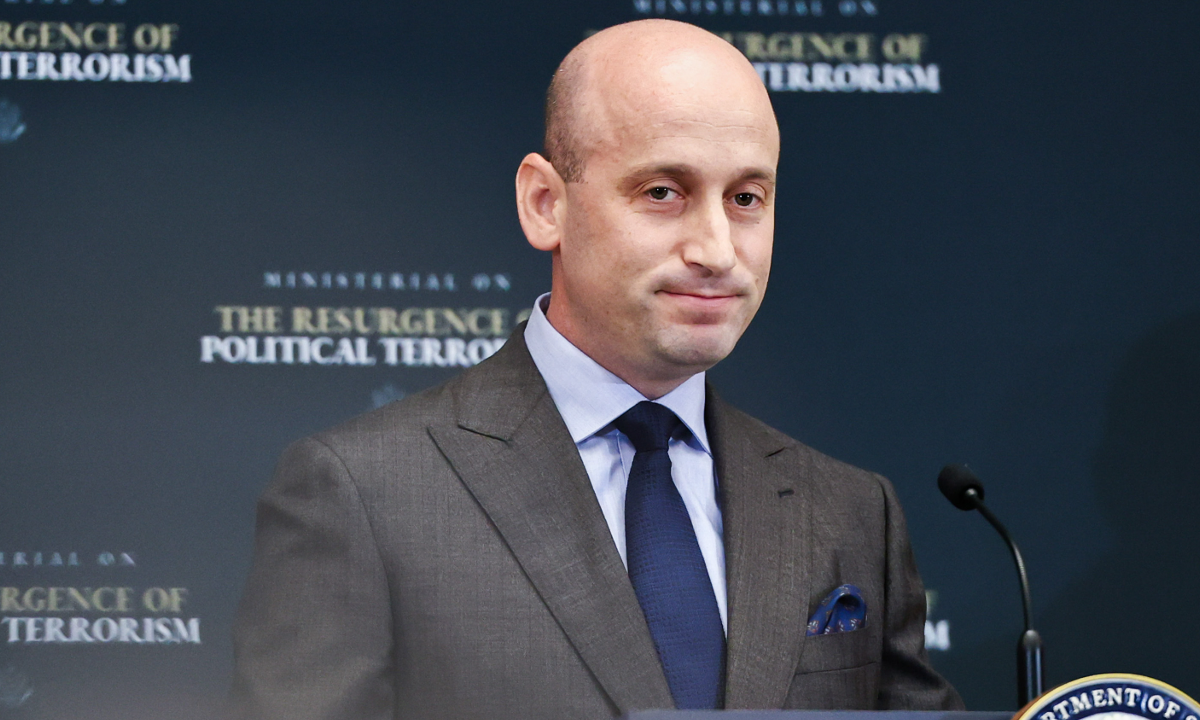
“President Trump signed an executive order a few weeks ago saying that we are not going to allow illegal aliens to use banking services in this country,” Stephen Miller said in a recent interview, framing the administration’s intent to debank illegal immigrants as a policy lever. The interview and the May 19 order are described in Fox News Digital’s reporting (Fox News Digital).
The May 19 executive order directed federal agencies to review how banking rules apply to people without lawful presence or work authorization and to recommend steps regulators and supervised institutions could take. The order emphasized scrutiny and risk assessment; it did not explicitly instruct banks to refuse accounts or universal access to basic services.
What Stephen Miller said
On the Clay Travis & Buck Sexton show, Miller described the White House objective as removing routine participation in commercial finance — including bank accounts, credit cards and direct deposit — for people in the country without lawful status. He presented that approach as a tool to encourage self-deportation rather than a technical explanation of regulatory mechanics.
Tighter attribution: Miller’s remarks and the White House reference to the May 19 order are reported in Fox News Digital’s story, which quotes the adviser and summarizes the administration’s stated aim (source).
Administration plan to debank illegal immigrants
The May 19 executive order asks agencies to examine whether existing banking supervision and consumer-finance rules adequately account for borrowers or depositors who lack work authorization. It uses language about heightened scrutiny and supervisory review rather than a categorical ban on account access.
Implementation therefore depends on how regulators translate the order into guidance, examination priorities, or rulemaking and how banks weigh compliance, legal and reputational risks.
How regulators could enable banks to debank illegal immigrants
The Consumer Financial Protection Bureau issued guidance in early June saying lenders may — and in some circumstances must — consider applicants’ immigration status and work authorization when assessing ability to repay and underwriting. That guidance signals immigration status can factor into credit decisions even where it is not the sole determinant.
On July 13, three federal agencies issued an advisory reminding supervised financial institutions to apply safe-and-sound credit risk management practices when lending to borrowers not legally authorized to work. The agencies emphasized supervisory expectations and risk assessment rather than creating new criminal penalties or an explicit prohibition on deposit accounts.
Taken together, these actions give banks regulatory cover to treat certain undocumented borrowers as higher credit risk, but they do not on their face compel banks to close deposit accounts or universally deny basic banking services. Banks remain subject to other federal laws, including anti-discrimination and anti–money laundering obligations.
What regulators and banks have done so far
Since the advisories, some lenders and banks have signaled they may tighten underwriting, documentation and identity-verification practices. Institutions that lean heavily on employment verification may increase proof requirements for income and work authorization.
But many banks balance compliance with business and reputational concerns. Broadly closing deposit accounts could generate legal challenges, consumer-protection scrutiny and operational disruption, so most institutions are likely to calibrate changes narrowly to specific risk categories.
Why it matters
Limiting access to banking services can have wide effects. For immigrants, losing the ability to hold bank accounts or receive wages via direct deposit can increase reliance on cash, heighten safety risks, and complicate ordinary transactions like paying rent or receiving benefits.
For banks, the shift could mean more compliance work, altered underwriting, and increased litigation or supervisory scrutiny if policies are applied inconsistently.
What comes next and open questions
Possible implementation paths include clearer regulatory rules, targeted supervisory guidance for particular credit products, or continued reliance on advisories that stop short of deposit-account prohibitions. Banks may adopt conservative policies to limit supervisory risk, or they may push back on measures that threaten customer relationships and legal exposure.
Key open questions: Will supervisors require additional documentation to open basic accounts? Will anti–money laundering and deposit-insurance frameworks limit aggressive account closures? Could litigation or consumer-protection enforcement curb broad exclusions based on immigration status?
Expert reaction and context
Analysts and compliance experts say the current shift is primarily about underwriting and supervisory emphasis, not an immediate, systemwide ban on basic banking services. Advisories from the CFPB and the July 13 agency guidance create room for banks to treat some borrowers as higher risk while leaving substantial discretion to institutions and supervisors.
Observers also note that political advisers’ statements about policy goals are not the same as final regulatory or legal requirements; claims that the administration will “debank illegal immigrants” describe intent and direction rather than a completed regulatory outcome.
FAQ
Will banks be forced to close accounts of illegal immigrants?
No. Current guidance and the May 19 executive order emphasize scrutiny and supervisory focus but do not impose a blanket legal requirement for banks to close deposit accounts. Banks could choose to change policies, but broad forced account closures would raise legal and supervisory questions.
Does the May 19 executive order legally ban banking services for illegal immigrants?
No. The order directs agencies to review rules and risk management practices; it does not, by itself, enact a statutory ban on banking services. Any enforceable prohibition would require further regulatory or statutory action.
How could changes affect immigrants paid by direct deposit?
If banks narrow access to deposit accounts or require additional documentation tied to work authorization, some immigrants could lose direct-deposit options and rely more on cash or alternative payment methods, complicating everyday transactions and financial security.
Source attribution
This analysis is based on Fox News Digital’s reporting of Stephen Miller’s interview and the May 19 executive order (Fox News Digital). The May 19 executive order is the action referenced by reporters; the White House’s presidential-actions archive lists that day’s materials (whitehouse.gov presidential actions). Fox News Digital reached out to the White House for comment.