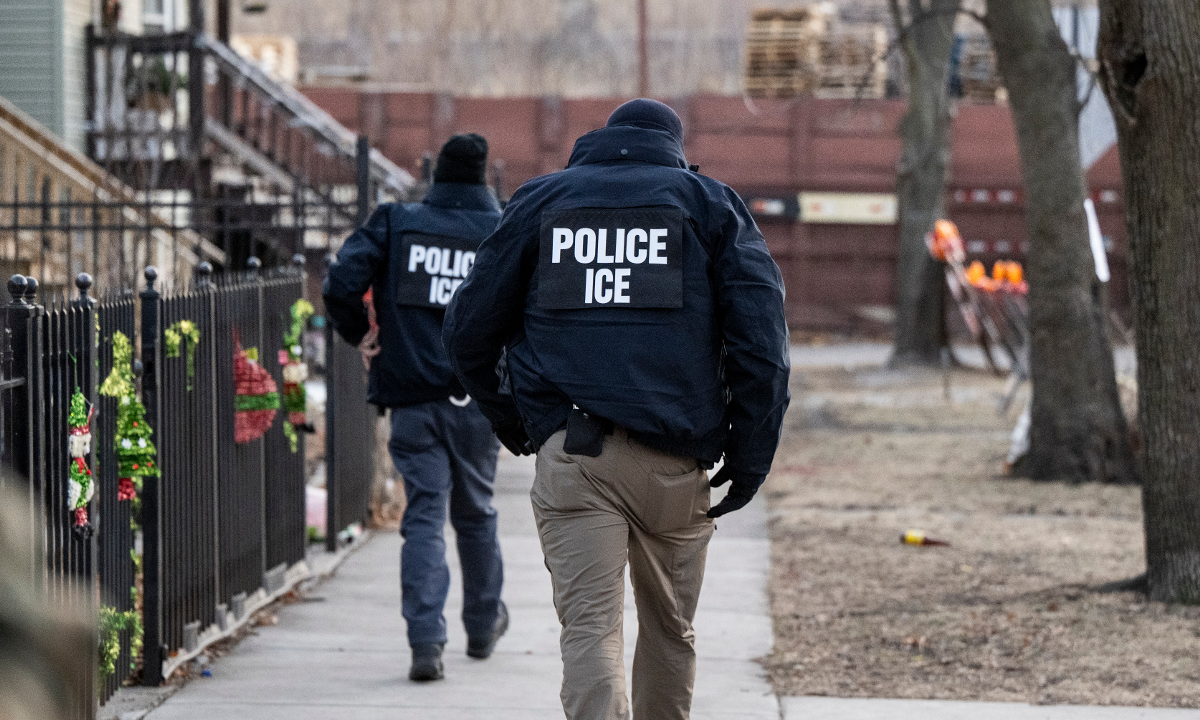
The Department of Justice sued Maryland on Thursday, saying the Community Trust Act blocks immigration-related arrests and deportations and represents an “active and deliberate effort” to thwart federal enforcement. The filing, made in U.S. district court in Maryland, asks the court to resolve whether the state law conflicts with federal immigration authority.
Topline: DOJ lawsuit
The DOJ’s civil division says the Community Trust Act has led some local officials and detention facilities to refuse compliance with Immigration and Customs Enforcement (ICE) detainers and transfers, creating a direct conflict with federal immigration statutes. The complaint seeks a judicial declaration that Maryland’s law is preempted by federal law and asks the court to enjoin enforcement of parts of the statute.
Associate Attorney General Stanley Woodward, in a statement accompanying the filing, said the department “will not tolerate state laws that obstruct federal immigration enforcement.” The DOJ characterizes the Maryland law as an “active and deliberate effort” to block transfers and arrests, rather than isolated misunderstandings about procedure.
What the Community Trust Act says
The Community Trust Act restricts Maryland correctional facilities from transferring individuals into federal custody unless federal officers present a “valid judicial warrant.” The measure aims to limit automatic compliance with administrative immigration detainers and to require notification and procedures before transfers.
In its complaint, the DOJ argues federal immigration enforcement can proceed on the basis of administrative warrants and other federal authority that do not always require a judge-signed judicial warrant. The department contends that, when a state statute bars transfers in those circumstances, it conflicts with federal law and the Constitution’s supremacy clause.
The complaint cites a May 29, 2026, incident at a Worcester County jail in which a jail official reportedly told a deportation officer the facility would no longer honor ICE detainers or release individuals to ICE custody under the new law. The DOJ says that scheduled ICE pickup was denied that morning and the individual was not turned over to federal custody.
Sheriffs and the governor respond
Seventeen of Maryland’s 24 county sheriffs previously sued the state, arguing the Community Trust Act interferes with coordination between local jails and ICE and could hamper public-safety efforts. Their complaint names Gov. Wes Moore and state officials and says the law prevents timely sharing of custody information with federal authorities.
Gov. Moore did not sign the bill into law; under Maryland procedure, legislation becomes law if the governor neither signs nor vetoes it. Moore’s office told reporters he “explained his rationale for letting the bill go into law without his signature,” telling sheriffs that the law is intended to keep local policing focused on violent crime while still allowing coordination in specific serious-offense cases.
Moore’s communications team declined to comment directly on the DOJ lawsuit but criticized the federal administration’s immigration approach and stressed the state will work with federal partners when it improves community safety. The Maryland attorney general’s office, which is named in the related sheriffs’ suit and will defend the state here, has said it will review the federal complaint.
Legal stakes and national context
The Maryland case is part of a broader Justice Department effort begun after a February 2025 directive for the civil division to identify and challenge state and local policies the department views as unlawful sanctuary practices. Since then, DOJ attorneys have filed roughly 20 suits in multiple states, according to public statements and court filings in related matters.
The department’s central constitutional claim invokes the supremacy clause: states cannot adopt policies that nullify or obstruct federal immigration statutes. Maryland and some local officials counter that the Community Trust Act governs only how state facilities and employees use local resources and that routine cooperation decisions fall within state prerogatives.
Legal observers say the outcome will turn on statutory interpretation and the factual record showing how jails and sheriffs are implementing the law. Courts in other disputes have split on whether and when states may limit cooperation with federal immigration authorities without running afoul of federal law.
“This is fundamentally about who controls enforcement priorities,” one analyst noted in recent coverage of similar cases. The factual record — such as the Worcester County incident cited by the DOJ — often proves crucial to whether a judge finds a state policy actively obstructs federal authority.
What comes next in court
After the complaint is docketed, Maryland’s state defendants will typically file a motion to dismiss or an answer denying the DOJ’s allegations. The DOJ may move for a preliminary injunction seeking emergency relief to prevent enforcement of parts of the Community Trust Act while the litigation proceeds.
If a federal judge grants an injunction, the case would move through expedited discovery and merits briefing and could be appealed to a U.S. circuit court. Depending on how the issues are framed, the dispute could ultimately reach the Supreme Court, though that would take additional rounds of appeals and time.
Practically, the litigation will determine whether Maryland jails continue current practices regarding ICE detainers or restore transfers in some circumstances. The schedule for hearings, motions and any emergency orders will shape how jails and sheriffs act in the near term.
Observers say the Maryland lawsuit could influence other DOJ actions targeting state or local sanctuary measures, potentially producing a more uniform federal approach or deepening legal divisions across jurisdictions.
Reporting for this story is based on the Department of Justice’s complaint and contemporaneous news coverage. The DOJ filing is available on the Department of Justice’s website; local filings by Maryland sheriffs and related reporting provided background for the account above.