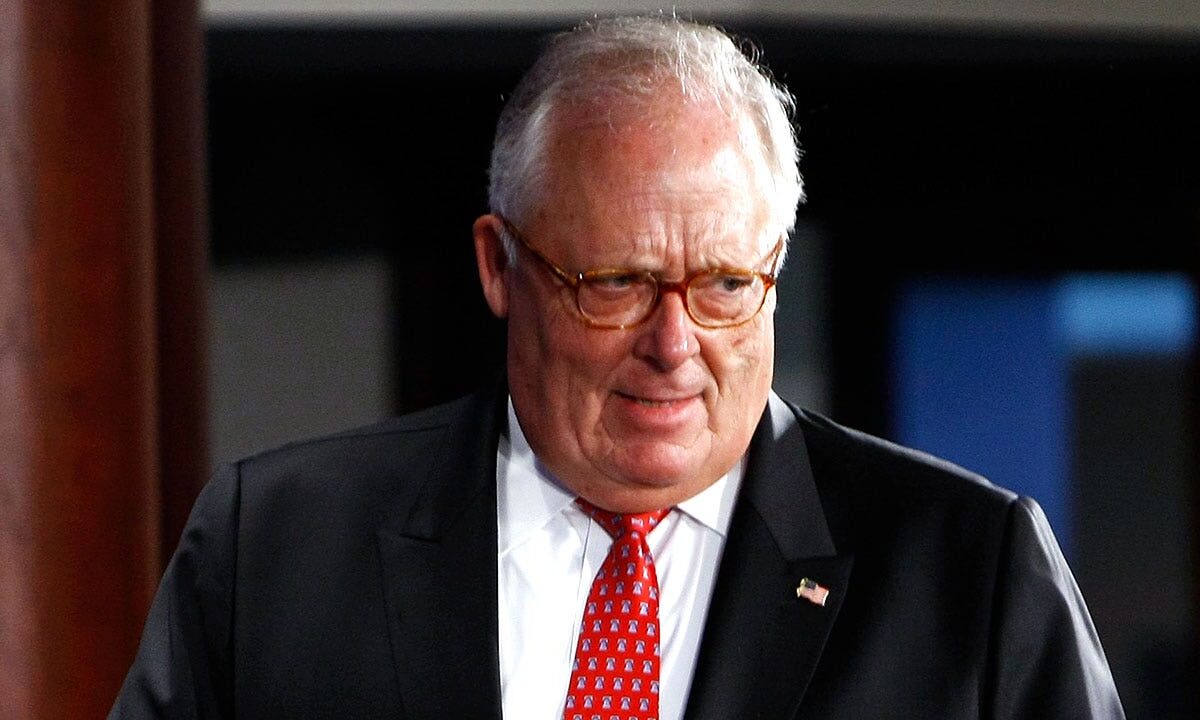
One year after Ed Feulner
One year after Ed Feulner’s passing, Ed Feulner remains a central reference point in debates over how conservatives should organize and plan for the long term. In a Fox News opinion piece, former Vice President Mike Pence frames Feulner’s life and work as an exemplar for building institutions that endure beyond electoral cycles and urges a renewed focus on training leaders capable of stewarding conservative principles into the future.
Pence’s op-ed marks the anniversary by calling for concrete commitments rather than symbolic tributes. He explicitly connects Feulner’s example to a broader strategy for conservative renewal, arguing that institutional capacity — not just short-term political victories — will determine whether those ideas remain influential in public life.
Founding the Heritage Foundation
Ed Feulner was the founding president of the Heritage Foundation, and that role is at the core of his reputation. Under his leadership, the organization sought to translate conservative ideas into practical policy proposals that policymakers could use. The Heritage model combined scholarship with advocacy in a way that aimed to influence both legislation and public debate without becoming merely a partisan operation.
Feulner emphasized rigorous research teams, fellowship programs and a steady pipeline of analysts as mechanisms for moving ideas from paper into practice. That institutional emphasis is what many who knew his work describe as his enduring contribution: a blueprint for creating organizations that persist through changing political fortunes.
Ed Feulner’s approach to institution-building
Feulner’s approach to institution-building married intellectual clarity to organizational craft. He invested in staff development, in processes for turning research into legislative proposals, and in mentoring younger conservatives to take up leadership roles. Those are not partisan talking points but organizational techniques that sustain influence over decades.
As Pence notes in his column, the sustained work of think tanks, fellowships and civic-education programs creates a reservoir of policy-ready leaders. For those who study conservative strategy, the lesson is practical: institutional capacity converts broad principles into tools that elected officials can use when opportunities arise.
The priorities Pence highlights
Mike Pence’s Fox News op-ed draws a through-line from Feulner’s institutional focus to a specific set of national priorities. Pence singles out confronting Communist China, taming the national debt, defending free enterprise against expanding government control, restoring confidence in constitutional governance, and sustaining American global leadership as areas where the conservative movement must marshal resources and talent.
In Pence’s view, these are not merely campaign issues but long-term tests of governance that require durable organizations and a steady supply of trained experts. He presents Feulner’s career as a reminder that policy victories are more likely when the underlying institutions that research, explain and promote them are well resourced and populated by capable personnel.
“Where the Spirit of the Lord is, there is freedom.”
Pence also invokes faith and character as part of the legacy, noting that Feulner’s humility and commitment to principle shaped how he led and taught. That moral framing, combined with the operational lessons of institution-building, is presented in the op-ed as the dual foundation for renewed conservative leadership heading into America’s 250th anniversary year.
What leadership renewal looks like
Translating Feulner’s example into concrete action involves several practical steps that Pence and others recommend. First, increase support for research centers and think tanks that produce rigorous, policy-relevant work. Second, expand fellowship and internship programs that give young conservatives hands-on experience translating ideas into actionable proposals. Third, invest in civic education and mentorship networks that prepare a broader pool of leaders for public service.
Those steps are tactical but interconnected. Funded fellowships and internships build human capital; civic-education initiatives broaden public understanding of constitutional principles; mentorship programs connect experience to emergent talent. Together, they form an infrastructure that can sustain policy influence when political conditions shift.
Pence emphasizes that such investments are strategic rather than purely symbolic. Organizations like Advancing American Freedom, where Feulner later served in a leadership role, are cited as examples of institutions that can bridge idea generation with civic engagement and policy advocacy.
Practical measures also include creating clearer pipelines between private-sector policy work and public-sector service, and ensuring that institutional knowledge is documented and passed on so new leaders do not start from scratch when opportunities to shape policy arise.
Source, context and next steps
Mike Pence’s piece is an opinion rooted in commemoration and strategy. He frames Ed Feulner’s life as a template for conservative renewal and urges concrete institutional commitments to carry that legacy forward. Readers should treat the op-ed as a call to action from a political leader reflecting on a private-sector figure’s influence, not as an independent investigative report.
For conservatives and institutional leaders weighing priorities, the takeaway is consistent: prioritize long-term institutional capacity, leadership development and principled argumentation. Those investments aim to make conservative ideas durable and actionable across changing political landscapes, particularly as the nation approaches symbolic milestones like America 250.
Source: MIKE PENCE, Fox News — full op-ed: https://www.foxnews.com/opinion/mike-pence-where-look-leadership-america-needs-now-more-than-ever
FAQ
Who was Ed Feulner and what did he found?
Ed Feulner was the founding president of the Heritage Foundation, a conservative think tank known for translating policy ideas into practical proposals. He later served in leadership roles with other organizations, including Advancing American Freedom.
What national priorities did Mike Pence highlight in the op-ed?
Pence highlighted confronting Communist China, addressing the national debt, defending free enterprise, restoring confidence in constitutional government and sustaining U.S. leadership globally.
How do Pence and others suggest honoring Feulner’s legacy?
The op-ed recommends strengthening institutions, expanding leadership training programs and supporting organizations that can convert ideas into sustained public-policy influence.