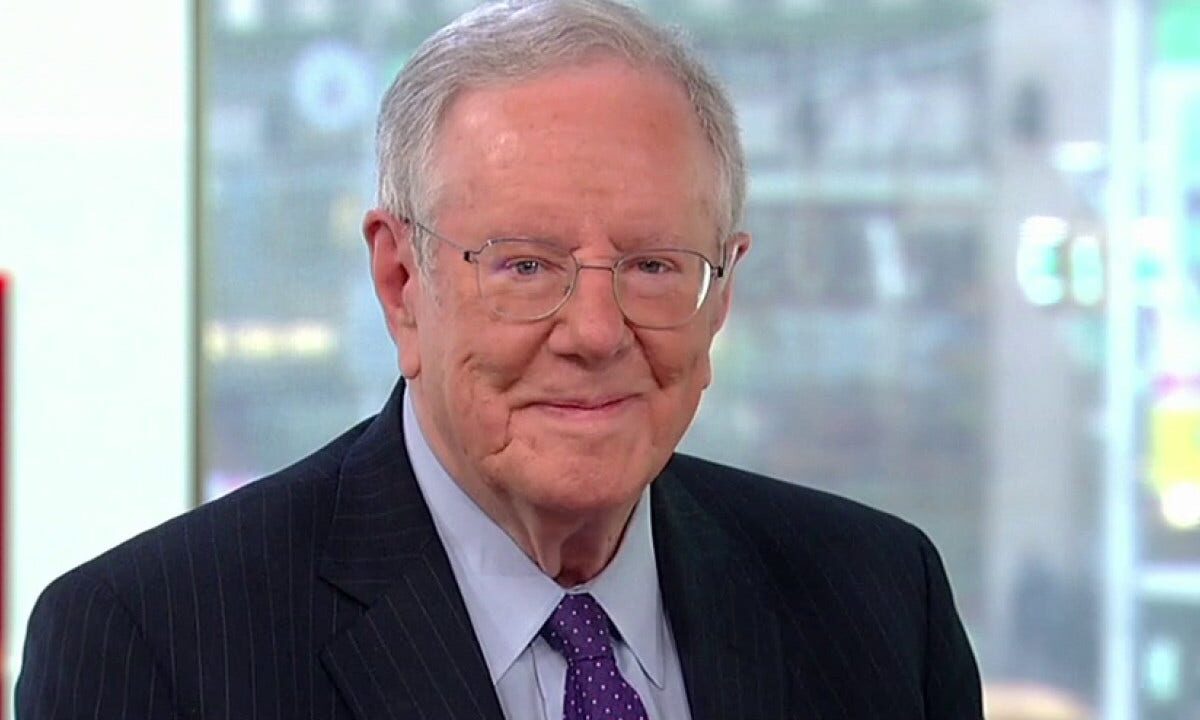
Steve Forbes told a Freedom Fest audience that free passage through the Strait of Hormuz is a nonnegotiable American interest as tensions with Tehran rise. In his remarks, delivered in Las Vegas, Forbes framed freedom of navigation as an enduring U.S. principle, invoking historical episodes to argue Washington should act to keep the international waterway open. Fox News Digital has reported that U.S. forces struck targets in Iran for a ninth consecutive day, a sequence of operations that Forbes pointed to as part of the broader pressure campaign on Tehran.
These remarks are advocacy: they represent Forbes’ policy preferences and political views rather than a government statement of intent. The article below treats calls to escalate pressure on Iran as opinion and flags sensitive claims where appropriate.
What Steve Forbes said at Freedom Fest
At Freedom Fest, Forbes repeatedly invoked historical touchstones—Thomas Jefferson and the War of 1812 among them—to situate freedom of the seas as central to American liberty and commerce. He told Fox News Digital that “freedom of navigation got us into another war with Great Britain, the War of 1812,” using that analogy to emphasize the enduring importance he places on unimpeded sea lanes.
Forbes said the Strait of Hormuz is “an international waterway” and insisted there be “no tolls, no restrictions, all ships of commerce should have free passage through it unmolested.” He praised recent U.S. decisions such as licensing Patriot missiles to Ukraine as examples of sustained pressure on adversaries and argued that the United States should apply similar leverage to deter threats to maritime traffic. Forbes suggested air power could be used to secure shipping lanes and said that properly applied it might reduce the need for “boots on the ground,” though he did not categorically rule out ground forces.
He also used forceful language about Iran’s leadership, urging intensified efforts to remove or weaken Tehran’s ruling authorities. Those comments—including a call to “topple the Tehran regime”—are political advocacy and should be read as the speaker’s opinion rather than a prediction of specific policy actions by the U.S. government.
Why the Strait of Hormuz matters
The Strait of Hormuz is a narrow, strategic chokepoint linking the Persian Gulf to the Arabian Sea and the wider Indian Ocean. A significant share of the world’s seaborne oil and liquefied natural gas flows through the strait; disruptions there quickly affect global energy markets, shipping insurance rates, and the routing choices of commercial vessels. Because it is an international waterway, states and private actors frame access to the strait as both an economic and a security priority.
When a chokepoint becomes contested, the effects cascade—insurers adjust premiums, charterers reroute ships at greater cost and delay, and navies or allied coalitions may feel compelled to posture to reassure partners and maintain trade flows. Forbes’ argument links the abstract principle of freedom of navigation to these concrete economic and strategic stakes.
Recent strikes and regional context
Fox News Digital reported that U.S. forces struck targets in Iran for a ninth consecutive day. That reporting frames the immediate regional backdrop for Forbes’ remarks: a cycle of strikes and counter-signaling that raises the risk of miscalculation. Details about specific operations, targets and damage remain tied to official statements and media reporting; this article references the Fox News Digital account as the primary source for the strike sequence.
The broader regional picture includes diplomatic maneuvering, arms transfers, and proxy activity across multiple theaters. Actions like the Patriot missile licensing Forbes cited—for Ukraine—feed into perceptions of U.S. commitment and capability, which in turn shape Tehran’s calculations. Analysts warn that repeated strikes, whether selective or sustained, can increase escalation risk, prompt asymmetric responses, and complicate de-escalation efforts.
Policy implications and risks
Forbes advances a hawkish policy set: strengthen pressure on Iran, use U.S. air power to deny threats to shipping, and pursue actions intended to degrade or displace Tehran’s leadership. These policy preferences raise several considerations policymakers must weigh: operational effectiveness, legal authority, coalition building, and the likely second- and third-order effects on regional stability.
Military options aimed at ensuring freedom of navigation can achieve immediate tactical goals—disrupting hostile actions against ships or degrading specific capabilities—but they can also provoke retaliation against U.S. forces, allies, or commercial targets. The prospect of “boots on the ground,” even described as a last resort by some commentators, raises concerns about mission creep, casualty risk, and long-term occupation dynamics that have in past conflicts proven costly politically and economically.
Policymakers must also consider non-military tools: diplomatic coordination with allies and regional partners, insurance and commercial incentives to keep shipping lanes open, and economic measures designed to change Tehran’s behavior without expanding kinetic confrontation. Each approach carries trade-offs; the right mix depends on achievable objectives and acceptable levels of risk.
What comes next
Short-term indicators to watch include any explicit shift toward naval escorts or convoy operations aimed at protecting commercial traffic, public statements from Tehran and its regional partners, and movements by insurance markets and shipping companies. Allies’ willingness to participate in maritime security operations will be a key signal of international resolve and burden-sharing.
Diplomatic channels could also become more active: track whether interlocutors seek de-escalation, whether third-party mediators engage, and whether international institutions weigh in to reinforce freedom of navigation norms. Ultimately, whether the Strait of Hormuz remains open without interruption will depend on a mix of military posture, diplomatic pressure, commercial responses, and how incidents are managed on the ground and at sea.
Readers should note: calls by private citizens and commentators to “topple” a foreign government or to escalate military action are advocacy positions and reflect individual viewpoints. This article treats those statements as opinion and highlights relevant risks, rather than endorsing or predicting specific outcomes.
Source: Fox News Digital — “Steve Forbes urges Trump to keep the Strait of Hormuz open at all costs,” Fox News Digital