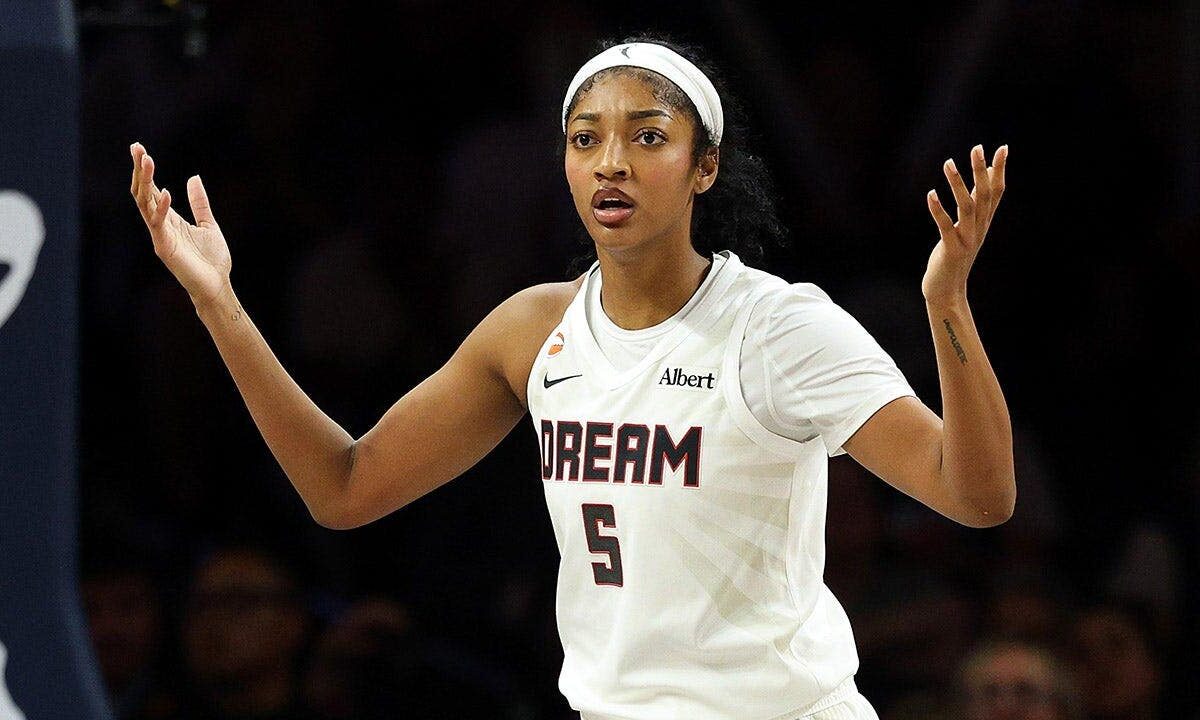
Angel Reese was at the center of a fresh WNBA controversy after Toronto coach Sandy Brondello was heard on a microphone referring to her as a “protected species.” The remark, the league review and reports of online harassment directed at Reese have prompted debate over language, context and player safety.
The following explains the mic comment and team responses, what the WNBA investigated and found, the background of the phrase “protected species,” and the documented reports of abuse that have followed Reese.
The mic remark and team responses involving Angel Reese
During a heated sideline exchange, audio caught Toronto Tempo coach Sandy Brondello saying what reporters transcribed as a reference to Angel Reese as a “protected species” while disputing officiating. Brondello later apologized and the league suspended her one game without pay for the comment.
Reese used social media to call attention to how the phrase sounded when directed at a Black player, writing that “calling a Black woman a species…” underscored why the comment landed as hurtful for many. Brondello said her frustration was with the referees and issued a public apology, and the WNBA’s one-game suspension was announced as the league’s disciplinary response.
Reactions split quickly: some observers emphasized Brondello’s explanation that the phrase reflected an Australian idiom about officiating, while others argued that intent did not erase the impact on Reese and on fans who heard the remark in the arena. Teams, players and commentators debated whether the penalty was proportionate and what it signaled about league standards.
WNBA review and officials’ findings
The league separately reviewed allegations that fans used hateful language toward Reese during an opening-weekend Chicago Sky vs. Indiana Fever game. That investigation centered on arena audio, video and interviews with staff and others present.
Officials also called a foul on Nyara Sabally after contact with Reese on a rebound in that game; the on-court whistle was treated as a standard officiating decision and is distinct from the fan-language allegation that prompted the league review.
“Obviously, there’s no place in this league for that,” Reese said in public comments after the allegations surfaced, calling attention to the problem while investigators reviewed available evidence.
After reviewing the materials, the WNBA said investigators could not substantiate the allegation about hateful fan comments from that particular game. That finding indicates the league did not find confirmatory evidence during its review; it does not prove no offensive language was ever spoken, and the league acknowledged limitations in the available audio and footage when explaining the outcome.
Reporting on the review has been covered by multiple outlets; the inability to confirm the allegation in that instance shaped conversations about how leagues investigate crowd behavior, what evidence is required for enforcement, and what remedial steps arenas and teams should consider to improve monitoring and reporting.
Language and history: what “protected species” has meant
Context helps explain why some speakers used the phrase without racial intent. In Australian sports parlance, calling someone a “protected species” has often been shorthand for saying a player is getting favorable or preferential treatment from officials. The expression appears in commentary and locker-room talk in several sports, and its usage by non-U.S. speakers has sometimes led to misinterpretation when heard in an American context.
Past instances of the idiom in sports coverage and conversation — cited in media accounts of the Brondello episode — show the phrase used to complain about officiating rather than to reference a person’s identity. Still, observers stressed that historical and racial contexts in the U.S. mean a phrase that seems colloquial to one speaker can register very differently with players and fans here.
As commentators pointed out, intent and impact are separate considerations: a coach may intend to question calls, but the impact on a player singled out in an arena and on viewers of color can be profound. The dispute highlighted the challenge teams face in policing language across cultures and the need for sensitivity training and clearer league guidance on conduct.
Online abuse and safety incidents tied to Reese
Beyond the mic remark, reporting has documented multiple instances of online abuse and invasive behavior linked to Reese. She has said someone created sexually explicit fake AI images of her when she was 21; media reports have shown at least some fabricated images circulated online and condemned the exploitation. Reese has described receiving threats and alleged that supporters of another high-profile player sent death threats and circulated fake nude images to her family — claims she and others characterized as part of a broader harassment campaign.
Team accounts and reporting also described an incident in which a man filmed players as they exited a team bus at a hotel, prompting security intervention. Video and statements indicated security moved the individual away; public accounts differ on exactly what was said during that episode.
Reese and teammates have framed these episodes as examples of how online abuse can spill into physical safety concerns and family-targeted harassment. Where behavior crosses into threats, stalking or nonconsensual image creation, law enforcement and platform-safety teams can have roles; Reese and advocates have urged platforms and leagues to do more to prevent and respond to tech-enabled abuse.
Reporting distinguishes confirmed facts — such as the existence of fabricated images and the filing of complaints in some cases — from allegations about specific senders or motives, and public coverage has been careful to attribute claims where full substantiation was not available.
Reese continues to be a prominent figure off the court as well: she launched the “Unapologetically Angel” podcast in September 2024, and her profile has only increased scrutiny of how players are treated online and in arenas.
Source attribution: This analysis synthesizes reporting from Fox News (link below) and summarizes corroborating coverage from other national outlets that reported on the mic comment, the WNBA’s review and the instances of online abuse. Where claims remain unverified in public reporting, this article attributes them to the parties who made them rather than presenting them as independently established facts.
Source: Fox News – Angel Reese’s latest WNBA controversy. Additional outlets including national sports and wire services reported on the WNBA review and the harassment allegations.
What comes next: Watch for any follow-up statements from the WNBA, team policies or platform actions in response to reported image abuse and threats. The suspension of Brondello and the league’s finding on the fan-language allegation have already sparked conversation about discipline standards; further changes to monitoring, arena procedures or education programs could follow as the league and teams consider how best to protect players and address cross-border linguistic misunderstandings.