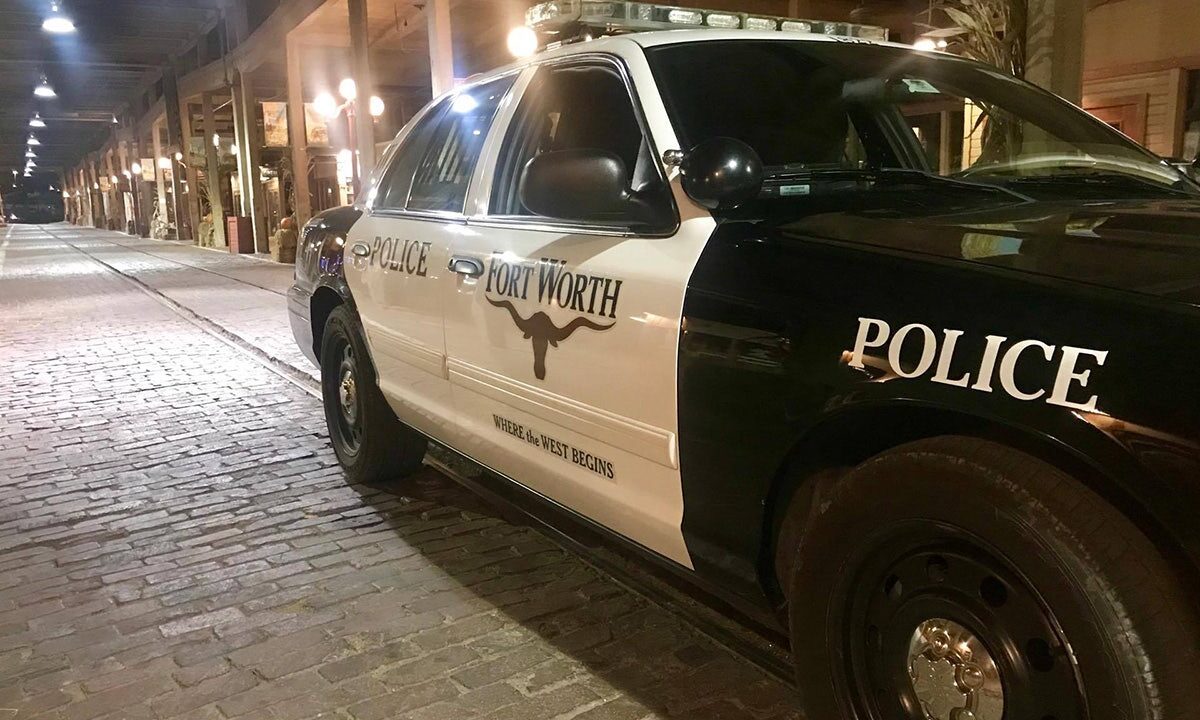
A short exchange between Fort Worth officers and a street preacher outside Trinity Pride Fest went viral and prompted city officials to review the encounter. The Fort Worth police First Amendment remarks captured in the video led to a city announcement of refresher training for officers.
The clip shows officers confronting a preacher who used a bullhorn near the festival and later receiving a disorderly conduct citation. Officials say the citation related to alleged violations of the city’s noise ordinance rather than the content of the preacher’s speech.
Fort Worth police First Amendment remarks: what happened
Officers responded June 27 after nearby businesses complained that amplified sound from a bullhorn disrupted customers and operations near Trinity Pride Fest. Police reported they warned the person using the device that continued amplification would violate the city’s noise code.
When the individual continued using the bullhorn, officers issued a disorderly conduct citation and seized the device as evidence. The department said the person remained free to protest and speak, but without the amplification that businesses said was disruptive.
A video posted on X by Rich Penkoski showed officers telling the preacher that certain ways of addressing people could be a “gray area” and that offensive language might be citable. Another clip in the thread captured an officer saying that if someone was offended by the speech, “we have a problem.” Those on-camera statements drove much of the public reaction after the clip circulated online.
Noise ordinance vs protected speech
Legal experts and officials often draw a distinction between the content of speech and how it is delivered. City noise and amplification rules can lawfully limit volume or the use of devices like bullhorns without targeting the speaker’s message.
Neutral time, place and manner rules — such as limits on amplified sound in busy commercial areas — are generally permissible if applied without regard to viewpoint. That means officers can cite someone for violating a noise ordinance even when the underlying message is protected speech.
Fort Worth officials said the citation stemmed from alleged violations of the city’s noise ordinance, not the preacher’s viewpoint. Police stressed the enforcement action was about amplification and disturbance complaints, not about punishing a particular message.
Officials response and planned training
In a statement, the Fort Worth Police Department acknowledged that an officer made “certain statements that were not accurate.” “We acknowledge that certain statements were not accurate,” the department said, stressing its commitment to constitutional protections regardless of viewpoint.
The City of Fort Worth Law Department announced it will provide refresher training to Fort Worth police officers and to new trainees on First Amendment protections and related legal issues. City officials described a careful review of the incident, officer response and the social media posts that followed.
FWPD told reporters the circulating video “captures only a portion” of interactions and that the city is taking steps to ensure officers have up-to-date guidance on handling First Amendment activity while balancing public safety and local ordinances.
How the video spread and reactions
The clip shared by Rich Penkoski on X was widely reposted and discussed. Conservative commentators and public figures amplified the footage, fueling debate about whether officers misstated the law on camera.
Attorney and commentator Harmeet Dhillon reposted footage of the encounter on X and said her office was looking into the matter. Others on social media framed the episode as an example of confusion about how police should handle incendiary or offensive speech at public events.
Responses ranged from calls for accountability to support for police discretion in enforcing city ordinances. Civil rights groups and local advocates said they would watch for any policy changes that clarify how officers should respond to amplified speech amid public gatherings.
What to watch next
City and police leaders said they will follow through on the announced refresher training. Observers will look for whether the law department’s sessions lead to updated field guidance, clearer protocols about amplification, or changes to how officers communicate with the public during encounters involving speech.
Expect the department to report whether the review produces any procedural or disciplinary outcomes and whether training reduces confusion in future encounters. Members of the public and civil rights observers may monitor whether training alters on-the-ground handling of amplified sound complaints at protests and festivals.
Frequently asked questions
Can police ticket speech at a public event?
Police generally cannot punish speech solely for its content, but they can enforce neutral rules such as noise ordinances or permitting requirements. Limiting amplification or volume is often lawful if a rule is applied without regard to viewpoint.
Why was the preacher cited at Trinity Pride Fest?
According to FWPD, the citation followed warnings about continued use of a bullhorn after business owners said amplified sound was disrupting nearby operations. Police characterized the action as enforcing a noise rule, not as a penalty for the message.
What will the city do to prevent this in future?
The City of Fort Worth Law Department said it will provide refresher First Amendment training for officers and new trainees. City officials say that training and updated guidance are intended to reduce confusion about rights and enforcement at public events.
Source: Fox News — Texas police admit officer made inaccurate First Amendment remarks after preacher cited at Pride event