Internal National Park Service draft modeling reviewed by reporters projects severe fireworks air pollution after the planned July Fourth Salute of America 250 display, estimating typical PM2.5 spikes of roughly 600–1,200 µg/m³ and a worst-case above 2,000 µg/m³. The analysis recommended limiting outdoor time and using well-fitting N95 respirators for anyone who must be outside; staying indoors with windows closed until levels fall was urged where possible.
The prediction — from internal Park Service scenarios described in Washington Post reporting and summarized in other coverage — ties the projected pollution to the sheer scale of the pyrotechnics planned for the Mall.
Fireworks air pollution: What the Park Service modeling found
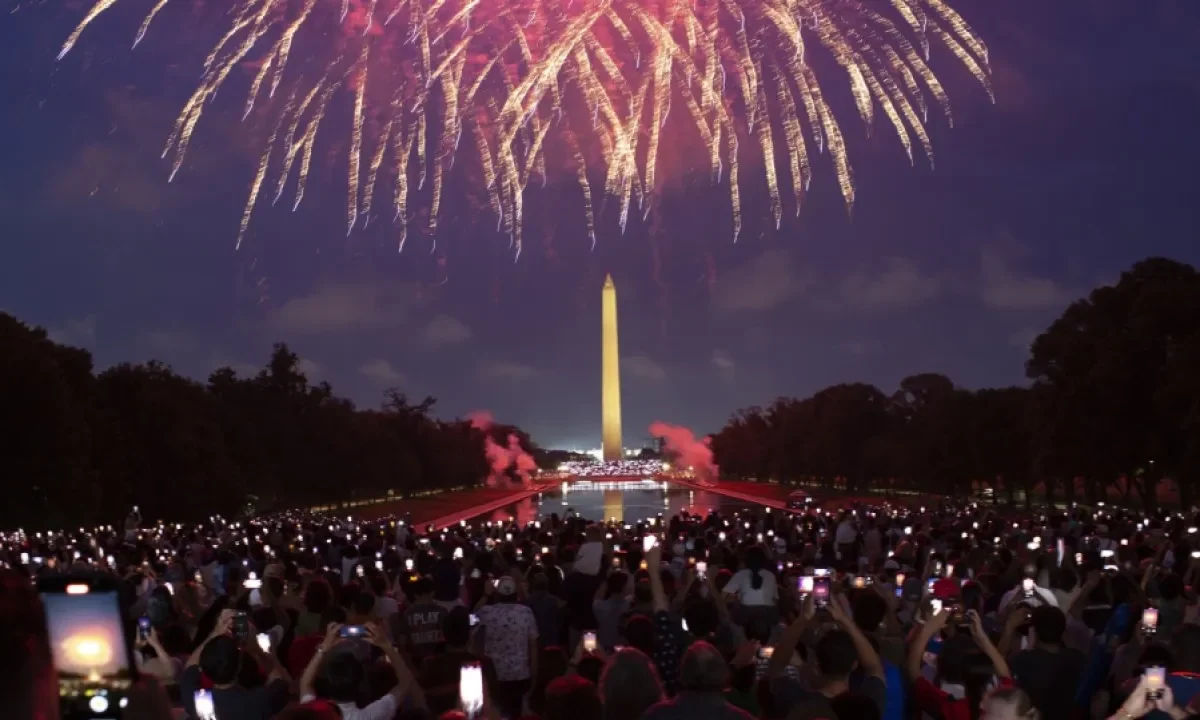
The draft Park Service scenarios modeled emissions from about 850,000 shells launched from multiple sites, including launch locations at the Lincoln Memorial Reflecting Pool, barges on the Potomac and West Potomac Park. In the most likely modeled scenarios the agency projected short-term PM2.5 concentrations on the order of 600 to 1,200 micrograms per cubic meter near peak smoke. The documents warned a worst-case scenario could push concentrations above 2,000 µg/m³ in some locations.
The analysis tied concentration estimates to meteorological conditions and the distribution of launch sites; in calm or inverted atmospheres smoke can linger and concentrate, while stronger winds can spread and dilute emissions but move them farther afield. The Park Service framed these figures as modeled projections rather than post-event measurements.
Fireworks air pollution levels and health advice
PM2.5 describes fine particulate matter small enough to penetrate deep into the lungs and enter the bloodstream; health agencies classify concentrations above roughly 150 µg/m³ as hazardous for short-term exposure, making the Park Service projections — measured in the hundreds or thousands of micrograms per cubic meter — notable for potential acute effects.
The Park Service draft recommended that people avoid prolonged outdoor exposure near the Mall during and for several hours after the display. It specifically advised N95 or equivalent respirators for those who must remain outdoors and recommended staying inside with windows and doors closed until monitors show improved air quality. The modeling estimated elevated smoke could linger roughly three to six hours in many places, though actual persistence will depend on wind and atmospheric mixing that night.
Public-health experts cited in reporting emphasized a precautionary approach: short, intense spikes of PM2.5 can trigger asthma attacks, breathing difficulty and worsen cardiovascular conditions. For most healthy adults the acute risk is lower than for people with preexisting respiratory or heart disease, older adults and young children, but the projected magnitudes in the Park Service scenarios put many people at elevated short-term risk.
Who could be affected and equity concerns
Modeled smoke plumes did not confine impacts to the Mall. The Park Service scenarios indicated downtown Washington, Arlington and Capitol Hill could see “very unhealthy” conditions in some runs. The modeling highlighted the potential for smoke to drift into nearby Southeast Washington neighborhoods and other parts of the metropolitan area depending on winds.
Reporters reviewing the documents noted the locations near the planned launches are adjacent to neighborhoods with higher shares of Black and lower-income residents, raising equity concerns about disproportionate exposure. The Park Service materials framed those distributional questions as part of the analysis, and the draft status of the documents means they were intended to inform planning rather than serve as a final public health determination.
Event scale and official statements
Organizers of the Freedom 250 event list roughly 850,000 shells and multiple launch points for a display scheduled to run around 40 minutes, beginning near 10:30 p.m. The White House promoted the Salute of America 250 fireworks as a centerpiece of anniversary celebrations and materials associated with the event estimated attendance in the hundreds of thousands to more than a million for nearby gatherings — an organizer claim reported in coverage of the display.
City officials described the Mall event as a National Special Security Event and advised attendees to arrive early, use public transit and expect enhanced security screening. Officials also warned residents and visitors to plan for extreme heat and to follow local guidance on safety and transit that weekend.
Practical steps for residents and attendees
Based on the Park Service draft and public-health commentary, practical precautions include:
- Avoiding prolonged outdoor exposure near the Mall during and for several hours after the show when possible.
- Using a well-fitting N95 or equivalent respirator if you expect to be outdoors in crowded viewing areas.
- Staying indoors with windows and doors closed until air-monitoring indicates levels have fallen.
- Following clinicians’ advice for people with asthma, chronic lung or heart disease, older adults and children; consider having rescue medications and action plans in place.
What reporters and residents should watch next
Because these are modeled projections, post-event verification is important. After the display, look for real-time PM2.5 readings from local monitoring networks and updates from the National Park Service and the EPA. Local hospital and clinic visits for respiratory complaints can provide early signals of health impacts. Journalists should compare modeled peaks to measured concentrations and report on differences driven by meteorology or launch patterns.
FAQ
How dangerous is PM2.5 from fireworks for short-term exposure?
Short-term spikes in PM2.5 can aggravate respiratory and cardiovascular conditions. At the Park Service’s modeled levels — hundreds to thousands of micrograms per cubic meter — even brief exposure could pose risks for sensitive groups; measured data after the event will show actual exposures.
Should I wear an N95 mask to the July Fourth show?
The Park Service draft and public-health experts suggested N95 masks for people who must be outside near the display. A properly fitted N95 reduces inhalation of fine particles, but staying indoors until air quality improves is the most effective way to limit exposure.
Which D.C. neighborhoods might see the worst smoke?
Model runs reported by journalists indicated downtown Washington, Arlington and Capitol Hill could experience very unhealthy conditions in some scenarios, with potential spillover toward parts of Southeast Washington. Actual impacts will depend on wind and atmospheric conditions at the time of the display.