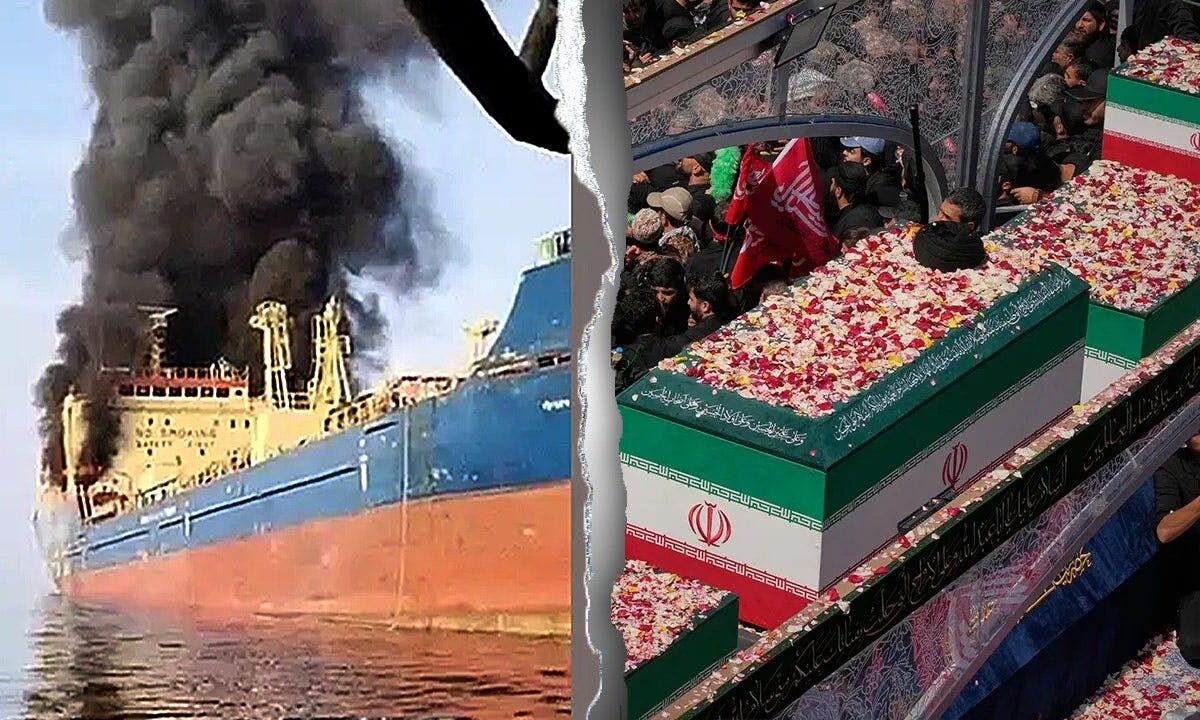
Iran attacks Strait of Hormuz, U.S. and British officials say, after reports that three commercial vessels were struck between Monday and Tuesday. The incidents, confirmed by a U.S. official and by the U.K. Maritime Trade Operations (UKMTO), include reported damage to the Qatari liquified natural gas carrier Al Rekayyat and to the Saudi-flagged tanker Wedyan, according to reporting.
Iran attacks Strait of Hormuz
Reported strikes and ships
A U.S. official identified one ship struck on Monday as the Al Rekayyat, described in reporting as a Qatari liquified natural gas carrier. UKMTO and British maritime authorities separately reported another impact on a tanker identified as the Saudi-flagged Wedyan, and a third commercial vessel was reported struck during the same period, officials said.
Those official confirmations and the UKMTO advisories form the basis for the account; elements reported by Iranian state media are presented below as claims and have not been independently verified by the U.S. or UK authorities cited.
Where and how the strikes happened
British authorities said at least one strike occurred near Omani waters. UKMTO reported that a vessel was struck by a projectile and that a fire broke out on board; responders reportedly extinguished the blaze. Reporting describes projectile strikes to hulls, but the type of weaponry and precise launch locations have not been publicly confirmed by independent sources.
Iranian state media later claimed its forces fired after issuing “repeated warnings” to a ship they said was transiting close to the Iranian coast; that account remains a state claim and differs in emphasis from the U.S. and UK notices, which do not ascribe intent.
Who owns the ships and reported damage
The Al Rekayyat was identified by a U.S. official as a Qatari LNG carrier in reporting. The Saudi-flagged Wedyan was reported to have sustained structural damage; a U.S. official described the Wedyan’s cause of damage as “not immediately clear,” according to available accounts. Reporters say there were no immediate reports of fatalities and no confirmed environmental pollution, though authorities call those assessments preliminary.
Ship operators and embassies were contacted for comment, per reporting, and investigations by regional maritime authorities and military commands are ongoing to determine the full extent of damage and cause.
Ceasefire context and related incidents
The strikes come amid a fragile ceasefire established under a June memorandum that instituted a 60-day negotiating window aimed at de-escalation between Washington and Tehran. The memorandum committed parties to reduce certain operations and to open lines of communication; officials say the agreement was designed to lower the chance of maritime incidents while talks proceed.
Earlier this month, on June 25, U.S. Central Command said Iran struck the Singapore-flagged cargo ship M/V Ever Lovely with a one-way drone near Omani waters. U.S. Central Command labeled that strike a violation of the ceasefire and reported U.S. forces later struck Iranian missile, drone and coastal radar sites in reprisal, according to the reporting cited below.
Implications for shipping and oil markets
The Strait of Hormuz is a key maritime chokepoint: roughly one-fifth of the world’s seaborne oil passes through the strait. Renewed attacks or the perception of sustained threat can raise shipping insurance costs, prompt rerouting and disrupt energy flows.
Ship-tracking firm Kpler reported that daily traffic had stabilized recently at roughly 30 to 60 vessel transits, down from about 140 per day before major operations earlier in the year. That drop reflects continuing caution among commercial shippers; analysts warn further incidents could amplify market volatility and insurance premiums.
What comes next and official responses
The White House and the Pentagon did not immediately respond to requests for comment in the reporting. U.S. Central Command declined to provide public comment on these specific new incidents, while UK maritime authorities have advised vessels to exercise caution and to report suspicious activity.
Officials and analysts say likely next steps include additional intelligence-gathering, public statements from involved governments, and possible adjustments to naval patrols or transit advisories. Any military or diplomatic response will be weighed against the risk of escalation and the desire to preserve the ceasefire negotiating window.
Verified sources and limits: The account above is based primarily on statements from a U.S. official, UKMTO advisories, British maritime authorities, Kpler traffic data and reporting that quotes Iranian state media. Claims attributed to Iranian state media are presented as such and have not been independently verified by the U.S. or U.K. authorities cited. Casualty and environmental-impact assessments are preliminary and remain under investigation.
Source: Fox News reporting. Original reporting: Fox News