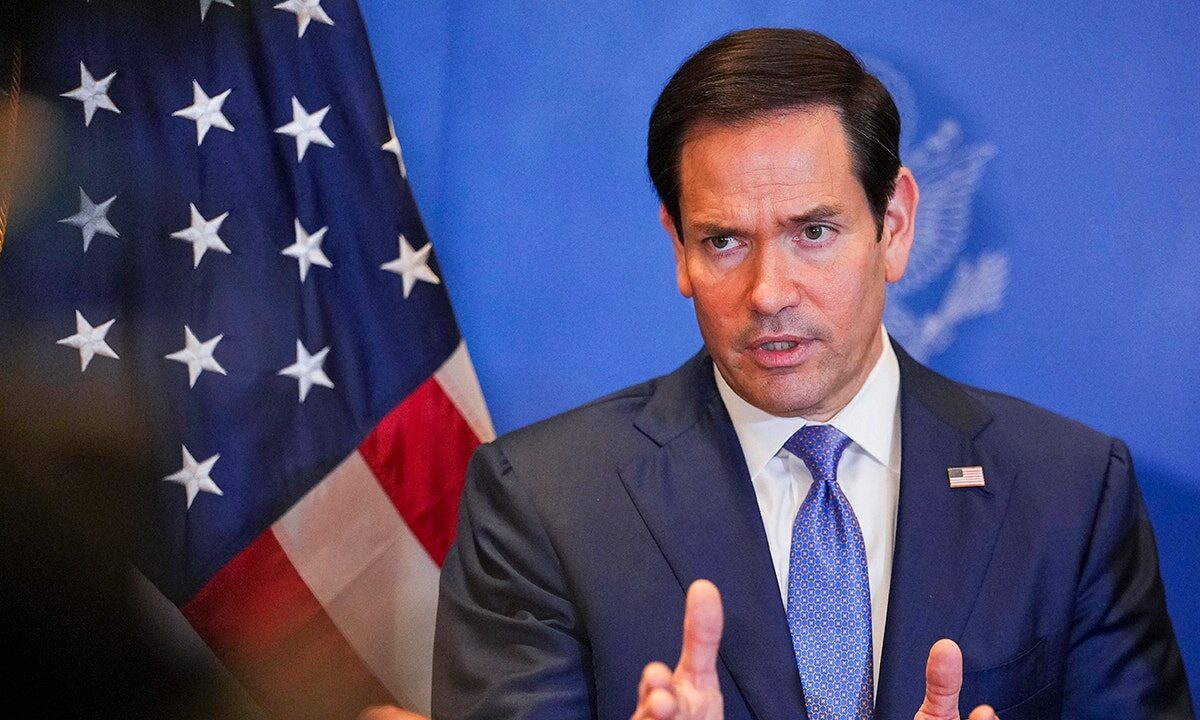
“The problem we’re having right now is they’re not serious about talks. If they’re serious, we’re serious,” Sen. Marco Rubio said at the ASEAN Summit in Manila, warning Iran of consequences as the Iran talks reach the midpoint of a 60-day negotiating window.
- June 17: U.S. and Iran signed a memorandum of understanding establishing a 60-day negotiating window covering nuclear, missile and navigation issues.
- Midpoint reached: Diplomacy and pressure measures — including reported U.S. strikes and alleged maritime incidents — continue in parallel as negotiators race to secure verifiable commitments.
What Rubio said in Manila
Addressing leaders at the ASEAN Summit, Rubio framed the situation as a credibility test: if Iran is serious about talks, the United States will engage; if not, Washington will take other measures. He warned against any attempt to assert control over international sea lanes, saying such a move would set a dangerous precedent for freedom of navigation.
Rubio directly tied navigation security to broader strategic stability: “If we create a precedent in the Middle East where a nation-state can decide that they are going to control an international waterway … we have created a very dangerous precedent,” he said, underscoring the U.S. stance that diplomatic engagement must be backed by enforceable commitments.
Status of Iran talks
The Iran talks are operating under a 60-day memorandum of understanding (MOU) signed on June 17 that, according to reporting, opens a fixed negotiation window addressing nuclear activity, ballistic missile development and freedom of navigation. Officials on both sides have described the MOU as a temporary framework intended to produce verifiable steps and benchmarks within the agreement period.
U.S. diplomats say the talks are conditional: negotiations will continue only if the commitments being discussed are credible and can be verified. Rubio and other U.S. officials have publicly emphasized the need for clear implementation language and monitoring mechanisms; at the same time they say diplomacy remains the preferred route so long as Tehran demonstrates seriousness.
U.S. strikes and Strait of Hormuz incidents
Multiple outlets have reported a pattern of U.S. strikes on Iranian-linked targets in recent nights alongside allegations of attacks on commercial vessels in and near the Strait of Hormuz. Fox News reported what it described as an 11th consecutive night of U.S. strikes; other outlets and official statements have documented maritime incidents in the same general period. These operational claims are being reported by news organizations and by officials, and some aspects remain subject to independent verification.
Rubio characterized the strikes and maritime incidents as part of a broader pressure campaign intended to deter Iran from actions that would restrict freedom of navigation. He warns that allowed aggression in the strait would not only threaten shipping in the region but could embolden similar moves elsewhere.
Implications for shipping and energy
The Strait of Hormuz is widely regarded by analysts and energy officials as a strategic chokepoint: a substantial share of global seaborne oil and liquefied natural gas transits the waterway. Disruptions there can cause immediate volatility in freight rates, insurance costs and global energy prices, amplifying economic risk beyond the Middle East.
Rubio and others point to the economic stakes in arguing for a robust response if Iran seeks to coerce navigation rights. Maintaining free passage through the strait has long been a bipartisan priority for many governments because interruptions can have outsized impacts on global markets.
What comes next
With roughly half of the 60-day window elapsed, negotiators face a compressed timeline to convert the MOU into durable, verifiable measures. Options on the table — as described in public comments by U.S. officials — include continued diplomatic outreach, stepped-up verification mechanisms, targeted sanctions relief in exchange for observable rollbacks, or intensified pressure if commitments are not forthcoming.
Rubio summed up the U.S. posture in plain terms: “If they’re not, then we will do what is necessary to protect our interests and also the interests of our allies.” That sentence captures a dual-track approach combining negotiation with deterrence.
Operational watchpoints
Observers will be closely watching several indicators over the next weeks: any reduction or resumption of attacks on commercial vessels; formal, time-bound verification steps embedded in the MOU; changes in the tempo or targeting of U.S. military strikes; and public statements by Tehran that clarify its intentions. Shifts in any of these areas could quickly alter bargaining dynamics and regional risk assessments.
Expert reaction
Analysts emphasize that the credibility of the Iran talks will hinge on verifiability. One security analyst described the coming weeks as a “critical stretch” in which technical monitoring and independent verification will determine whether diplomatic gains can be converted into lasting constraints. Policymakers, the analyst added, will need both diplomatic channels and operational contingencies ready if commitments lapse.
Source attribution
This article draws primarily on Fox News reporting of Sen. Marco Rubio’s remarks and related operational developments. Additional context on regional energy flows and maritime risk comes from publicly available reporting and energy agency material. Some operational claims — including the number of nights of U.S. strikes and specific vessel-attack allegations — were reported by Fox News and other outlets and may not be independently verified by The Nonstop News at this time.
Sources: Fox News — Rubio says US remains open to Iran talks but warns there ‘will be consequences’; additional context referenced from Reuters, the Associated Press and the U.S. Energy Information Administration (EIA) reporting and public materials.