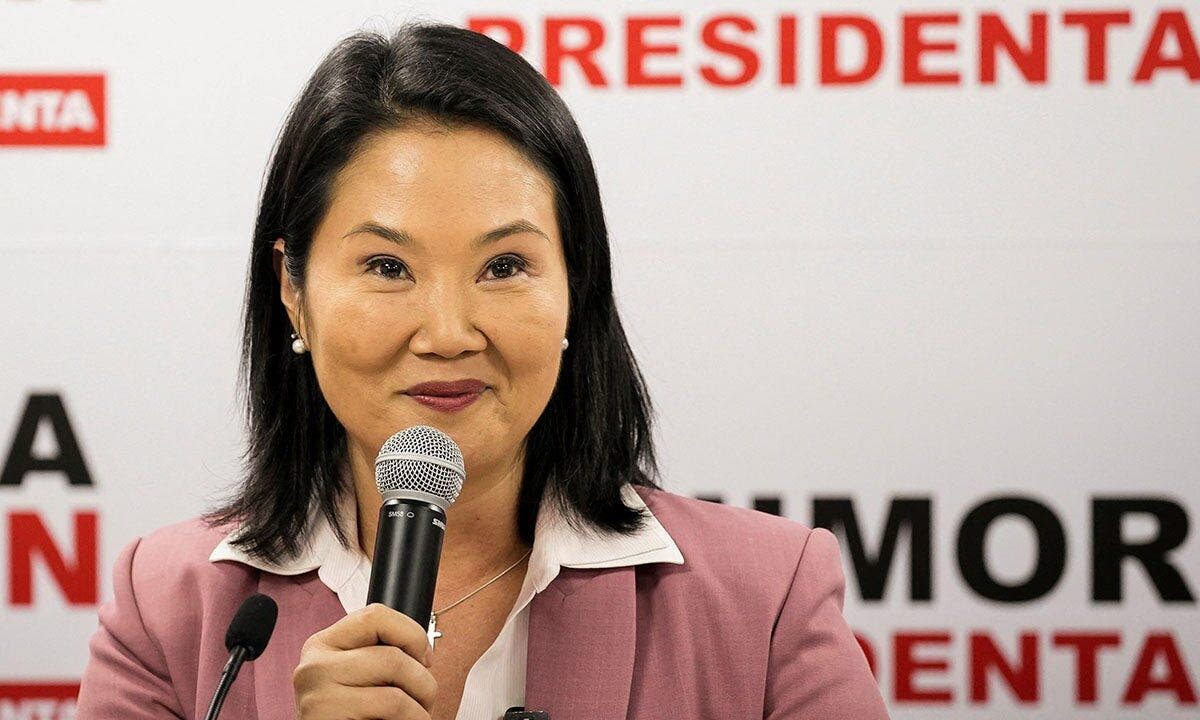
Peru’s top election authority formally certified Keiko Fujimori as president-elect Friday, concluding a tightly contested runoff. Fujimori received 9,223,000 votes, or 50.14%, while rival Roberto Sánchez received about 9,173,000 votes, or 49.87%, according to the Associated Press, which cited the official tally.
Shortly after certification, Fujimori posted a message thanking supporters and stressing stability: “I receive with profound gratitude the trust that millions of Peruvians have placed in me,” she wrote, adding that the transition period will be used to listen and to prepare an orderly handover.
Election result and Keiko Fujimori vote totals
Keiko Fujimori — 9,223,000 (50.14%)
Roberto Sánchez — 9,173,000 (49.87%)
Final margin: roughly 0.27 percentage points
The certification by Peru’s national electoral authority ends the official counting phase and enables the formal transition process to begin. The margin was narrow throughout the count, with the final certified difference amounting to a few tens of thousands of votes out of more than 18 million cast, per AP’s reporting of the official figures.
(Keiko Fujimori on the campaign trail)
Keiko Fujimori win and campaign pledges
Keiko Fujimori ran on a law-and-order platform, repeatedly promising an “iron fist” against violent crime, extortion and gang networks. Her campaign messaging emphasized stronger public-security operations, faster processing of criminal cases and tighter controls on organized crime that has affected neighborhoods and small businesses across major cities.
Fujimori framed her fourth bid for the presidency as a response to citizen demand for immediate improvements in public safety. Campaign statements promised to prioritize increased police presence in urban hot spots, create specialized anti-extortion units and accelerate judicial processes for organized-crime suspects—measures she said were needed to restore public confidence.
Supporters said the focus on security and quick results helped mobilize voters who viewed crime as an urgent daily problem. Critics warned that heavy-handed measures could strain civil liberties and emphasized the need for oversight and judicial safeguards.
Alberto Fujimori legacy and political context
Keiko Fujimori is the daughter of Alberto Fujimori, whose presidency in the 1990s is credited with defeating the Shining Path insurgency and restoring order after years of violence. That period, however, included an authoritarian turn and widespread human rights abuses; Alberto Fujimori was later convicted in 2009 on charges related to human rights violations and corruption.
The family name remains polarizing in Peru. For many voters, the elder Fujimori’s security gains are a benchmark for what strong leadership can achieve. For others, the crimes and abuses of the 1990s serve as a warning about unchecked executive power. Keiko Fujimori’s political career has repeatedly invoked that legacy, forcing her to balance promises of tough security action with assurances she will respect institutions.
International reaction and transition steps
The U.S. State Department issued a congratulatory statement and said it looks “forward to deepening collaboration with the Fujimori administration to advance security cooperation and to strengthen bilateral cooperation on investment and trade in our region,” signaling an early interest in close cooperation on public safety and economic ties.
Other foreign governments provided measured congratulations and urged respect for democratic institutions during the handover. International observers have underscored the importance of transparent transition steps to safeguard stability amid a narrow result that underscores deep divisions in the electorate.
The certification clears the way for formal transition planning. Officials said the president-elect and outgoing government will undertake standard briefings and handover procedures to ensure continuity. Details on the exact inauguration date were described by authorities as part of the coming administrative timetable; officials said the transition will address immediate security coordination and continuity of key services.
What to watch next
With certification complete, attention will focus on several near-term items that will shape Fujimori’s early months in office:
- Inauguration timeline: Confirmation of the date and ceremonial handover; authorities have indicated the president-elect will take office later this month and will announce formal scheduling as transition briefings progress.
- Security policy rollout: Specific plans for police deployments, anti-extortion units and coordination with prosecutors and local governments to tackle organized crime.
- Cabinet and personnel choices: Early ministerial picks will signal priorities on security, justice and economic policy; watch for appointments to interior, defense and justice ministries.
- Investment and trade signals: Statements and meetings with investors or trade partners that indicate continuity or shifts in economic policy and commitments to protect commerce and foreign investment.
Other immediate signals include the pace of transition briefings, the setting of short-term crime-reduction targets and any early legislative or executive measures proposed to strengthen law enforcement capacity.
Background
Peru has seen recurring political volatility in recent years, with frequent changes in leadership and widespread public frustration over corruption, insecurity and weak governance. Those strains set the context for a polarized runoff in which voters weighed competing promises about restoring security and economic stability.
Keiko Fujimori’s victory adds a new chapter to an ongoing national debate about how to address criminal violence while preserving democratic accountability and the rule of law.
Source attribution: Vote totals and certification details cited from the Associated Press; U.S. reaction cited from a U.S. State Department statement.