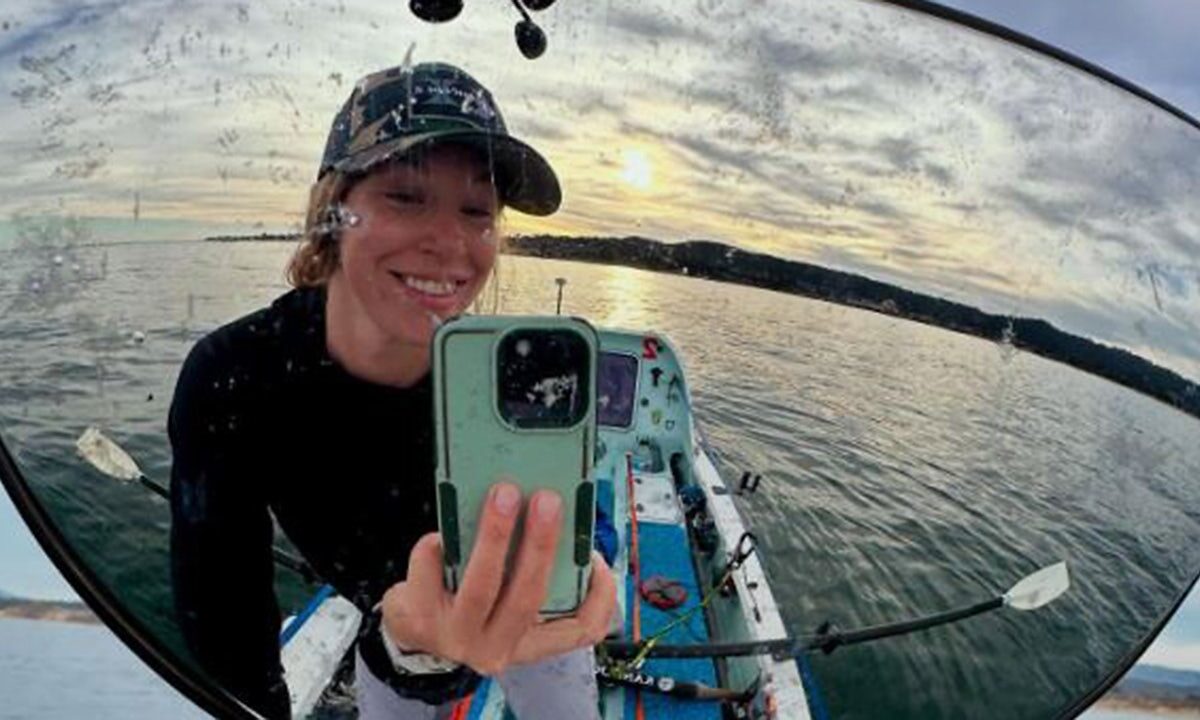
Kelsey Pfendler solo Pacific row ended Friday when she landed in Honolulu after rowing more than 2,400 miles from Monterey, California, in just under 44 days, a run that Ocean Rowing Society International (ORSI) says appears to eclipse prior route times.
Kelsey Pfendler solo Pacific row: route and timing
Pfendler launched from Monterey in May and completed the mid-Pacific crossing to Oahu in an elapsed time reported at just under 44 days, ORSI’s preliminary logs show. Those logs list the route distance as more than 2,400 miles and indicate the elapsed time appears to better the prior women’s mark of roughly 86 days and the earlier men’s mark near 52 days for the Monterey-to-Honolulu route.
ORSI maintains independent records of ocean-rowing crossings and has shared its timing and tracking summaries as the basis for early claims. The organization and Pfendler’s team have made initial filings of tracking files and logs, but ORSI and other adjudicating bodies note that formal ratification by Guinness World Records or similar institutions may take additional review.
Life aboard Lily
Pfendler spent weeks alone aboard her 21-foot boat, Lily, documenting daily life for a large online following. She posted short video updates and photos describing routine tasks and small, repeated actions that sustained the voyage.
Her social posts showed the physical toll of nonstop rowing — blistered hands from constant oar work, improvised laundry measures to keep gear usable, and the creative on-board systems she used to stay fed and hydrated. Media coverage and Pfendler’s own posts referred generally to the methods she used for making fresh water while at sea; ORSI and Pfendler’s team have supplied tracking and log data rather than detailed technical inventories.
Sleep deprivation was a constant challenge. Pfendler acknowledged relying on caffeine pills at times and described the odd rhythms of short naps and interrupted sleep brought on by wind, waves and the demands of navigation. She also used social posts to share small bright moments — a wry joke about a hat tan line and quiet reflections on long stretches of empty horizon.
Pfendler’s social documentation served both as a personal log and a way to keep supporters informed. Her clips and progress updates provided a day-by-day picture of how a solo rower manages food, repairs, navigation and mental endurance on a small ocean craft.
Records and verification
ORSI’s timing shows Pfendler’s elapsed time for the route appears to surpass previous records, but ORSI and other record authorities emphasize that such claims are provisional until full evidence is reviewed. ORSI compiles tracking data and submissions that are often used by Guinness World Records and other bodies as part of their ratification process.
The ORSI logs referenced by Pfendler’s team indicate she bettered a prior women’s elapsed time of about 86 days and a men’s mark of 52 days on the same route. Statements from ORSI and Pfendler’s handlers note that final confirmation will depend on a review of GPS tracks, ship logs, witness statements and other corroborating material.
Guinness World Records historically requires a separate verification protocol; ORSI’s public logs are a respected step in that chain but not the final stamp. Officials familiar with ocean-rowing adjudication told reporters that the verification process can take weeks to months, depending on the completeness of submitted evidence.
Arrival in Honolulu and reaction
Pfendler pulled Lily into Honolulu Harbor to cheers from hundreds of supporters who gathered along the waterfront. Video and photo coverage from the arrival show her stepping ashore to applause and embracing friends and family who had followed the crossing closely.
In a line she shared during the row and later repeated in interviews, Pfendler said, “I just love boats in the middle of nowhere,” a phrase that underscored her affinity for small-craft voyaging. She also told followers, “If any part of this made at least one person feel a little bit more powerful in their own skin, I couldn’t ask for anything else, and I’m happy,” remarks carried in coverage by the Associated Press and other outlets.
The Associated Press reported on the arrival and relayed several of Pfendler’s on-the-water comments and shore-side reflections; AP coverage attributed quotes and details about the post-arrival scene, including the crowd and family reactions.
Why it matters and next steps
Pfendler’s team has described the attempt as aiming to set multiple benchmarks: to be the first American woman, the youngest woman and the fastest woman to make this solo Monterey-to-Honolulu crossing. Those ambitions amplify interest in verification because multiple categories and records may require separate adjudication.
Pfendler’s background as a Grand Canyon and Colorado River rafting guide frames the crossing as a continuation of a career spent guiding and managing risk in remote environments. Observers in the rowing and outdoor-sport communities say the voyage highlights the technical, logistical and psychological demands of long solo ocean rows.
Next steps include formal submission of tracking files, onboard logs and other supporting documentation to ORSI and to any organizations that will adjudicate record claims. ORSI’s preliminary logs provide the basis for early reporting; final ratification by Guinness World Records or other bodies remains pending and could take additional time.
References
• Ocean Rowing Society International (ORSI) — preliminary route logs and timing used for early record comparison.
• Associated Press — reporting on Pfendler’s arrival, quotes and crowd reactions.
• Fox News coverage of the crossing and background on Pfendler’s guiding career.
Note: ORSI’s records indicate apparent route-best times, but formal ratification by Guinness World Records or similar organizations may still be pending.