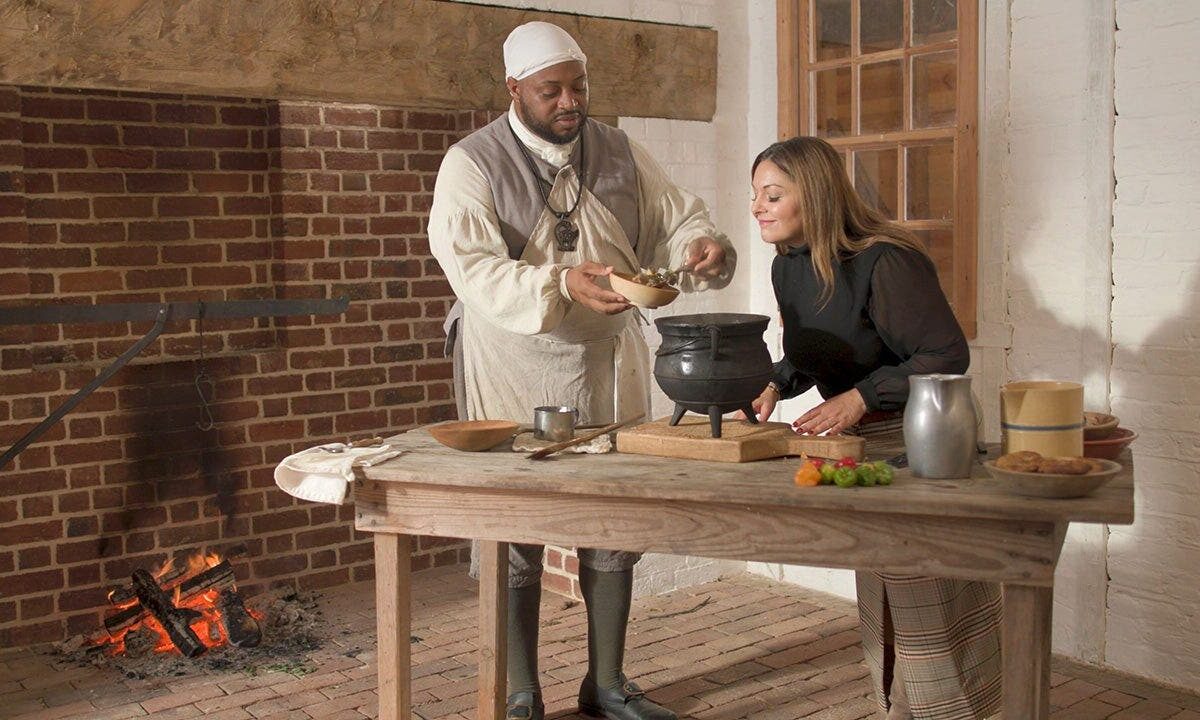
Revolutionary-era food takes center stage in the special America the Bountiful, where preserved taverns, smokehouses and colonial kitchens place viewers inside the improvisation that helped early Americans eat when British imports stopped. Host Capri Cafaro walks through preserved estates and frontier sites, stressing how food — from squirrel pie to homemade cheese — reflected adaptation, resourcefulness and local know-how.
In one on-camera sequence Cafaro stands amid stacked mills and processing rooms and sums up the film’s theme: “Food is a really interesting anchor, culturally,” she tells the crew. That remark frames a program that moves from vivid menu examples to wider questions about who kept food on the table and how those practices shaped communities across the new nation.
What the documentary shows
America the Bountiful maps foodways across landmarks including Mount Vernon and Appalachian homesteads to illustrate practical choices colonists made when transatlantic supply chains failed. The film follows hands-on demonstrations and tastings to show how everyday meals were built from locally available ingredients and preservation methods.
Cafaro leads viewers through tasting sequences and practical demonstrations. She samples recreated recipes and participates in processing small game and dairy, offering a front-row view of daily survival rather than a focus on elite banquets. Fox News Digital is credited for reporting many of the film’s on-camera moments and interviews used throughout the special.
Revolutionary-era food and survival tactics
The special emphasizes preservation techniques as central to colonial diets. Fresh milk spoiled quickly, so turning milk into cheese was a common necessity rather than merely a culinary choice. Curing, smoking and drying meat extended scarce supplies, while fermentation and distillation converted grain into more durable products.
Squirrel pie and stews are shown as emblematic examples of small-game cooking. Hunting small game and using the whole animal were practical strategies in rural and frontier communities; such dishes persisted regionally into the 19th century and remain part of some Appalachian foodways today. The film frames these dishes as examples of thrift and adaptability rather than novelty.
Grain, whiskey and Mount Vernon
Grain supplied more than bread; it supported alcohol production that conserved caloric and economic value. Cafaro describes the Mount Vernon tasting as “alcohol-grain-forward,” contrasting the straightforward spirits of the era with more refined modern palates, and the program explains how settlers reused milling and brewing byproducts to sustain households.
Distilling at a local scale had practical benefits: spirits took up less space, stored longer and were easier to transport than wet grain or thin beers. The documentary situates whiskey-making as part of an agricultural economy shaped by scarcity and ingenuity, showing why such practices were both utilitarian and economically meaningful to early farmers.
Shared knowledge: Indigenous peoples, settlers and enslaved people
America the Bountiful notes that colonial food systems developed through exchanges and labor that involved Indigenous peoples, European settlers and enslaved people. The film highlights examples where botanical knowledge, preservation techniques and labor shaped diets and survival strategies — and it signals that these histories are complex and rooted in contributions from many communities.
The special references practices like locally harvested plant-based teas and other foraged foods that colonists adopted after observing Indigenous methods. It also mentions “Liberty Teas” as a cultural example tied to the period’s politics and botanical knowledge. The reporting aims to present these exchanges while acknowledging the uneven power and labor contexts in which they occurred.
Modern echoes and why it still matters
Though historical in focus, the program draws a through line to present-day food systems. Cafaro says she hopes the documentary amplifies voices of farmers, ranchers and fishers, and the film suggests that the innovation seen in the 18th century still matters for regional food security and resilience.
Today’s small-game hunters, artisanal cheesemakers and craft distillers often work in the same landscapes where those practices originated. Understanding these roots can inform conversations about regional cuisine, rural economies and how communities steward local resources in times of supply disruption.
Key takeaways
When British imports faltered, colonists relied on local solutions: preserved dairy, grain-based spirits and small-game dishes were staples that helped households endure shortages.
Food knowledge circulated across communities, including Indigenous guidance on foraging and preservation techniques, and the labor of enslaved people shaped much of the period’s cultivation and cooking practices.
The material choices of the past — from whiskey distillation to cheese-making — influenced both survival strategies and regional tastes that persisted over time.
FAQ
What is Revolutionary-era food?
Revolutionary-era food refers to dishes, preservation methods and agricultural practices common in 18th-century North America, especially when colonists could not rely on imported goods. It emphasizes practical, locally sourced meals and techniques to stretch supplies.
Did colonists really eat squirrel pie?
Yes. Historical accounts and the documentary note that squirrel pie and squirrel stew were common in rural areas. Small game was an accessible protein for many households and continued to appear in regional cooking into later centuries.
How did colonists preserve milk and meat?
They turned perishable milk into cheese, cured or smoked meats, and used drying or salting where possible. Fermentation and distillation of grain also helped convert surplus into more stable products.
Sources and credits
This article is based on reporting about the documentary America the Bountiful and on-camera material featuring Capri Cafaro. For the original reporting, see Fox News Digital: Americans once survived on squirrel pie, whiskey and homemade cheese after British imports dried up.