
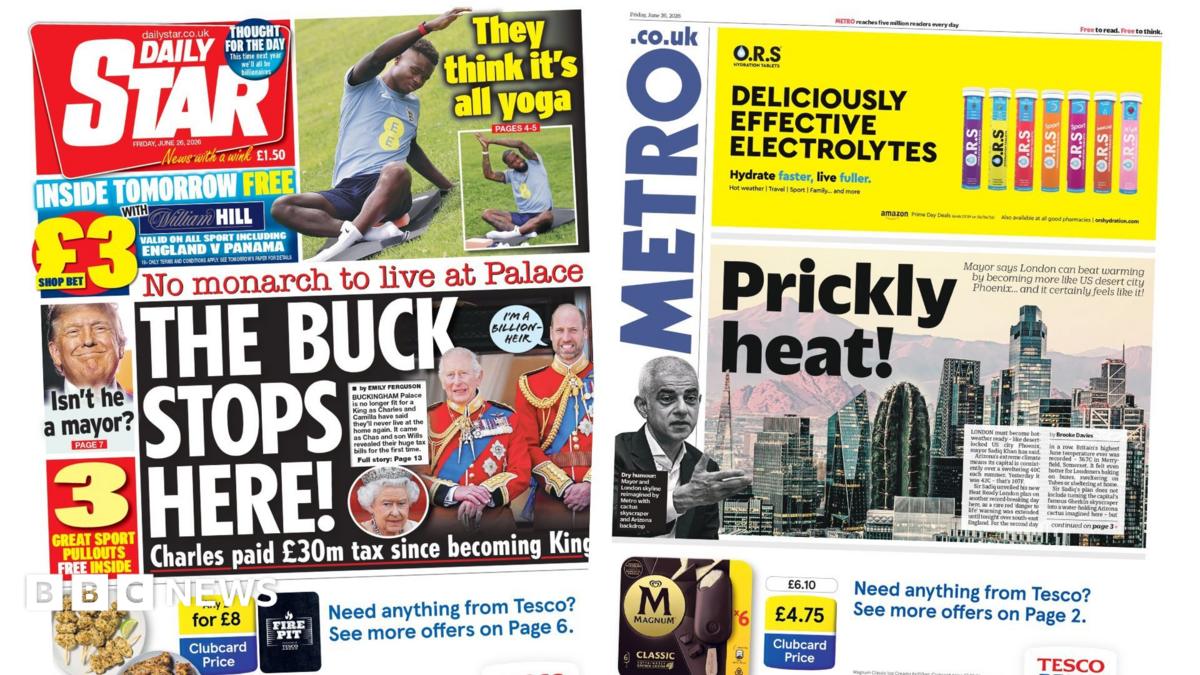
Friday’s front pages are dominated by two stories: a report that King Charles will not live at Buckingham Palace and BBC coverage of record heat across parts of the UK. The BBC’s morning round-up of the papers places both items at the top of today’s headlines, with newspapers emphasising the monarch’s residence and the immediate effects of unusually high temperatures.
What the papers say
Today’s national front pages cluster around two themes. One thread focuses on the future living arrangements of King Charles, with headlines and images suggesting the palace arrangement could change. The other thread centres on unusually high temperatures across the country that the BBC and several newspapers describe as a record event.
The BBC’s compilation of the front pages presents a snapshot of how editors are framing the day: bold, short lines intended to capture attention and shorthand summaries of each story. Headlines range from direct renderings of the palace report to pithy takes on the heat, reflecting the different editorial styles across the national press.
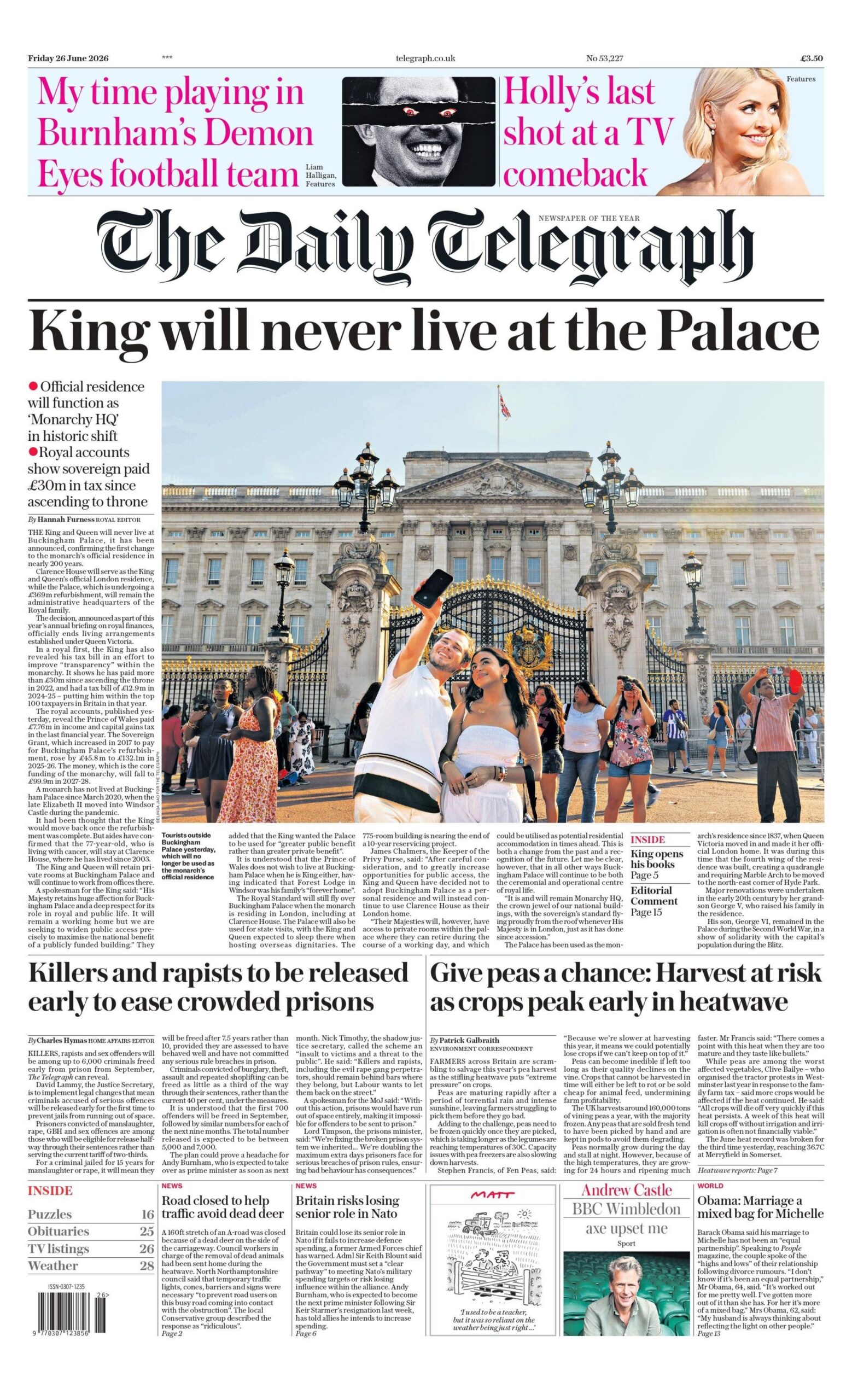
Newspapers commonly mix reported claims, comment and editorial interpretation on major topics. The BBC summary brings together what appears on the covers rather than producing new independent reporting; it collates headlines and imagery and notes which stories lead the editions.
The variety of approaches on the covers underlines how editors choose to emphasise different aspects: symbolic weight in the case of the monarch’s residence and human-interest or public-safety angles for the weather coverage. The BBC’s “The Papers” segment is designed to reflect that spread, showing readers how stories are being presented across titles.
King Charles and Buckingham Palace
The leading palace claim on several front pages is that King Charles will not live at Buckingham Palace. The coverage in the papers is presented as a reported claim rather than an official announcement.
Buckingham Palace is the monarch’s official London residence and the focal point for many state and ceremonial duties. The claim on the front pages is therefore notable because any change in the sovereign’s primary residence carries symbolic and practical implications for the royal household and public ceremonies.
It is important to treat the front-page claim as early reporting. The BBC’s round-up of the papers highlights the story as a prominent item in the press but does not cite a formal confirmation from Buckingham Palace. As the BBC emphasises, the segment collates what newspapers are saying; it does not substitute for an official palace statement.
Coverage of this kind can stem from a range of sources: editorial interpretation of emerging plans, briefings to journalists, or early-stage discussions within institutions. Because the papers are reporting a claim, readers should expect clarification from palace spokespeople or an official statement before regarding the matter as settled.
Record heat across the UK
The second lead is a BBC report that parts of the UK are experiencing record heat. Front pages and the BBC round-up draw attention to high temperatures and the immediate impacts felt by communities, workers and services.
The BBC summary highlights how many papers show scenes of hot conditions and describe the situation in terms used by journalists on the ground. Such coverage often focuses on short-term effects — for example, discomfort for commuters, pressure on transport systems, and rising demand for cooling measures in homes and public spaces.
The BBC’s item summarises the press reaction rather than presenting the underlying meteorological data. Authorities that issue formal weather records — such as the national meteorological service — are the bodies that confirm whether temperatures constitute new official records and provide the scientific context behind such claims.
Impact and reaction
Both stories are drawing public interest and shaping media reaction this morning. Headlines about King Charles’s residence attract attention because they touch on the practical arrangements of the monarchy and the symbolism associated with Buckingham Palace.
Weather-related headlines typically provoke immediate practical responses. Editors use short, striking lines to capture the scale or mood of the event; the BBC’s round-up even groups some headlines under playful or dramatic labels to reflect the covers’ tones. The papers’ use of imagery and succinct lines is intended to draw readers quickly into each story.
At this stage, commentary pages and broadcast segments are likely to expand on these themes through the day, combining reporting with reaction. For now, public response is being shaped largely by what appears on the front pages and by the BBC’s compilation of those covers.
What comes next
Readers should expect a sequence of verification and follow-up steps. For the palace report, the principal next step is a clear statement from Buckingham Palace or an authorised royal channel confirming, denying or clarifying the claim made on front pages.
On the heat story, official meteorological data and announcements from weather authorities will be the definitive source for whether the reported temperatures are new records. Government departments and health services may also issue guidance if conditions pose a sustained public-health or infrastructure risk.
News organisations will update coverage as official confirmations, corrections or additional details become available. We will continue to monitor the BBC’s reporting and statements from official channels and publish follow-ups when those verifications arrive.
Verification note: Until an official Buckingham Palace statement or an authoritative meteorological announcement is published, the palace report and the description of “record heat” should be treated as early-stage coverage being reported by the press and collated by the BBC.
Source: BBC News – Top Stories — The Papers: ‘The buck stops here!’ and ‘Prickly heat!’


