
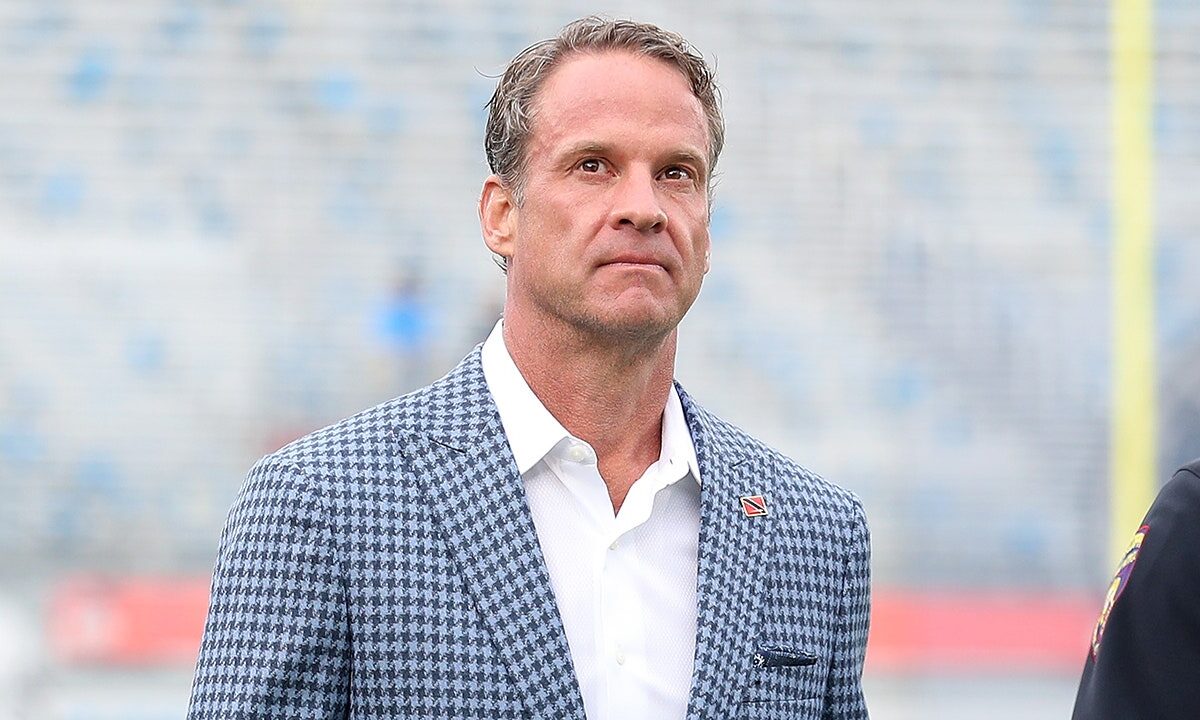
Lane Kiffin racism claims that Black family members were steering recruits away from Oxford were directly challenged by Ole Miss quarterback Trinidad Chambliss within days of the coach’s public remarks. “Me, personally, I don’t agree,” Chambliss told the Associated Press, saying the Oxford community had treated him warmly (Associated Press).
Lane Kiffin racism claims: What he said and his apology
In a May interview published in Vanity Fair, Lane Kiffin said he had heard anecdotes from recruits’ families expressing concern about racism in Mississippi, quoting lines such as, “Hey, coach, we really like you. But my grandparents aren’t letting me move to Oxford, Mississippi” (Vanity Fair). Kiffin framed the anecdote as part of a broader recruiting narrative he had encountered.
After the Vanity Fair piece drew public criticism, Kiffin addressed the reaction in a subsequent On3 interview and offered an apology, saying, “I really apologize if anybody at Ole Miss or in Mississippi was offended by that” (On3). He characterized the remark as something he had heard in conversations about recruiting rather than as an attempt to single out a community.
“I really apologize if anybody at Ole Miss or in Mississippi was offended by that.” — Lane Kiffin (On3)
Trinidad Chambliss’s public response
Trinidad Chambliss, the Ole Miss quarterback whose transfer and recruitment drew attention, publicly disputed Kiffin’s depiction. In an interview with the Associated Press, Chambliss said, “Me, personally, I don’t agree. I don’t think that what he said was truthful” (Associated Press).
Chambliss described his own recruitment visits and interactions with the Oxford community as positive. He told the AP that “The people in Mississippi and Oxford showed me nothing but love” and that his family’s decision involved prayer and trust in the people they met during the visit (Associated Press).
“The Oxford community is nothing but love and they care about their people no matter what they look like.” — Trinidad Chambliss (Associated Press)
Recruiting context and social reaction
Recruiting narratives are highly influential in college football. Coaches commonly recount conversations they hear on the trail, and those anecdotes can shape public understanding of how families make decisions. Kiffin presented his Vanity Fair anecdote as one such conversation (Vanity Fair).
Social media and commentators reacted quickly, with many users criticizing Kiffin’s framing and calling for clarity. The critical response prompted Kiffin’s apology in the On3 interview, while others on social platforms debated whether the comments reflected recruiting reality or risked mischaracterizing communities. Observers have questioned whether the anecdote was an accurate report of conversations or an interpretation that needed clearer sourcing.
Chambliss’s public rebuttal is notable because it offers a recruit’s firsthand perspective that contrasts with the coach’s account. He specifically referenced the line Kiffin used about families saying their “grandparents are not letting me move to Oxford,” and said that his own experience and family discussions did not reflect that characterization (Associated Press).
Why this matters for LSU Tigers and Ole Miss recruiting
The dispute matters for both the LSU Tigers and Ole Miss because recruiting in the Southeastern Conference is intensely competitive and sensitive to perceptions of campus climate. Claims about how communities receive Black student-athletes can influence how recruits and their families evaluate offers and campus visits.
Even without asserting a change in coaching assignments, public statements from high-profile figures can shape media narratives and the environment around recruiting. A recruit or family who hears contrasting accounts — a coach’s anecdote about hesitancy from family members versus a recruit’s account of a welcoming community — will weigh those perspectives as part of their decision-making process.
Chambliss’s statement that Oxford “is home and it’s a great place” provides a counter-narrative that may reassure prospects considering Ole Miss. At the same time, Kiffin’s account, as reported in Vanity Fair, underscores how anecdotal reports from the trail can become part of broader conversations about program reputations (Vanity Fair; Associated Press).
Source notes and what comes next
This report relies on three public sources: Lane Kiffin’s remarks in the Vanity Fair interview, his follow-up apology on On3, and Trinidad Chambliss’s comments to the Associated Press. Direct quotes from Kiffin are attributed to Vanity Fair and On3; Chambliss’s quotes are attributed to the Associated Press (Vanity Fair; On3; Associated Press).
Expect further clarifications from program representatives and additional reactions from recruits, families and local leaders as the recruiting cycle continues. Media coverage and social media discussion are likely to reference both Kiffin’s original account and Chambliss’s rebuttal, and statements from athletic departments or recruiting analysts may appear in the coming days.
Key takeaways
- Lane Kiffin recounted hearing that some Black family members expressed hesitance about Oxford in a Vanity Fair interview and later apologized in an On3 interview (Vanity Fair; On3).
- Trinidad Chambliss directly disputed that characterization, telling the Associated Press he did not agree and that his experience in Oxford was welcoming (Associated Press).
- Because recruiting decisions are sensitive to perceptions of campus climate, the contrasting accounts may influence how prospects and families evaluate Ole Miss and competing programs, including the LSU Tigers.
Source attribution: Reporting in this article is based on Lane Kiffin’s Vanity Fair interview, his On3 apology and Trinidad Chambliss’s comments to the Associated Press. Additional coverage of Chambliss’s rebuttal appeared in outlets that originally reported the exchanges.


