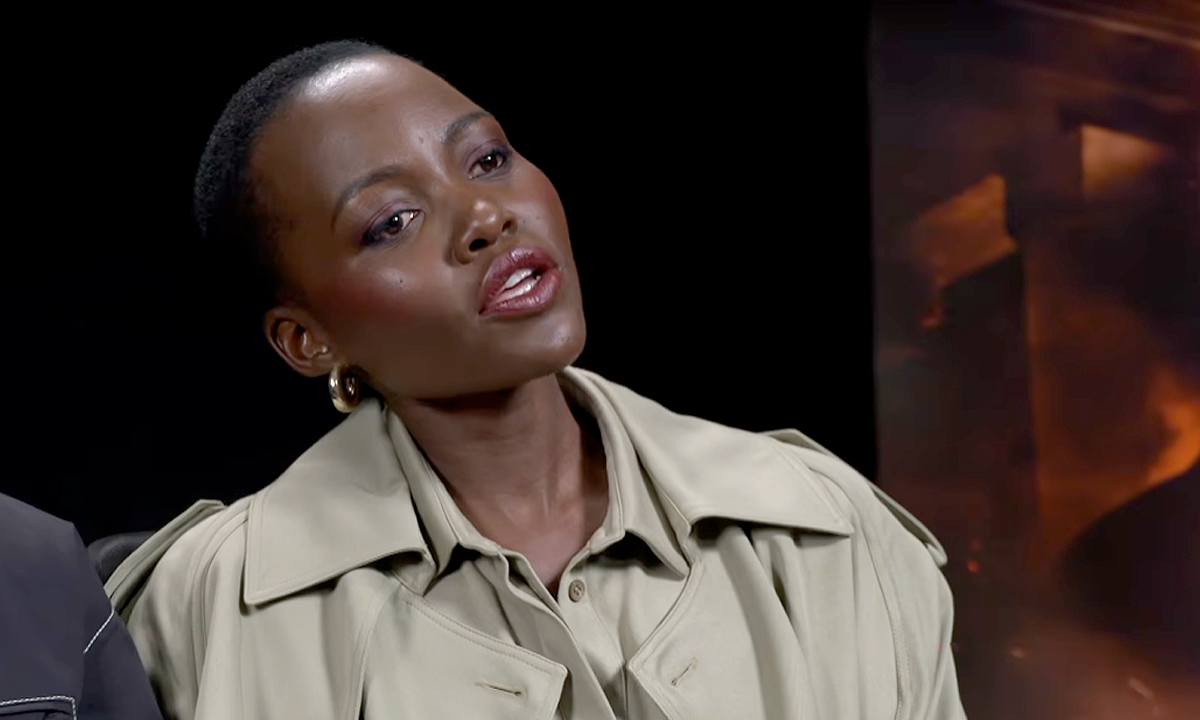
Lupita Nyong’o opened a promotional interview by saying she would “grill” Homer about the lack of female speaking roles if she could meet the ancient poet — a remark that arrived as Christopher Nolan’s The Odyssey continues to provoke conversation over casting and language choices.
Lupita Nyong’o on Homer and the women
In a clip from interviewer Jake Hamilton, Nyong’o — who is reported to play both Helen of Troy and Clytemnestra in Nolan’s film — responded to a hypothetical in which Homer could answer for his treatment of female characters. She asked, “So, Homer, how do you feel about the screen time given to these women considering how little you spent with them?” and followed with the rhetorical, “Yes. Like, ‘Hmm? Remember us??’” (source: Fox News).
The exchange landed during a press round that set up actors to reflect on the decision to retell classical material in a contemporary cinematic idiom. Nyong’o used the moment to draw attention to long-running questions about how women are written into foundational myths and who gets a voice in modern adaptations.
How Nolan reimagined The Odyssey
Christopher Nolan has discussed some of his casting and stylistic choices as intentional efforts to frame the work as part of an oral storytelling tradition. In an interview with Time, Nolan explained that casting Travis Scott as a Greek bard was meant to “nod toward the idea that this story has been handed down as oral poetry, which is analogous to rap” (Time).
Promotional clips and marketing materials shared so far blend classical imagery with modern flourishes: reporters have noted moments of contemporary-sounding dialogue in brief footage, and promotional tie-ins have included high-profile cameos and creative decisions that emphasize a consciously modern register (reporting summarized by Fox News and Time).
Those choices — a multiracial principal cast, the bard-as-rapper framing and bite-sized contemporary lines — are central to why the project has generated a wide range of reactions from critics and viewers.
Casting choices and reactions
Nyong’o’s dual casting as Helen of Troy and Clytemnestra has renewed discussion about how historical and mythic figures are reimagined in modern media. Helen traditionally appears in myth as the figure whose abduction precipitated the Trojan War; Clytemnestra is a prominent figure in the cycle surrounding Agamemnon. Casting decisions that place actors of diverse backgrounds in these roles have sparked praise for inclusivity as well as criticism from those who expect a different kind of historical or period fidelity.
Many of the debates center less on any single performer and more on what adaptations owe to source material versus what they can reinvent. Nolan’s decision to use modern idioms and to spotlight performers from varied creative backgrounds — including musicians cast in narrative roles — has amplified that conversation in public coverage (see Fox News and Time links below).
Why it matters
Adaptations of canonical texts routinely become cultural flashpoints. Nyong’o’s on-camera challenge to Homer speaks to a broader debate about how to honor source material while expanding whose stories are centered and who is allowed to speak within timeless narratives.
For audiences, casting and stylistic choices affect representation on screen and how viewers connect with large-scale mythic storytelling. For critics and scholars, such choices reopen questions about authorial intent, historical context and the responsibilities of filmmakers who retell stories that have been shaped by centuries of transmission.
What comes next
Promotion for Nolan’s film will continue with additional interviews, reviews and clips that will shape the public conversation. As reviewers publish first-look assessments and audiences see the final theatrical cut, discussions about performance, language and adaptation are likely to evolve.
Observers will be watching whether the film’s choices — from casting to dialogue to promotional strategy — shift expectations for how mythic texts can be reinterpreted for contemporary screens.
Source attribution
This report is based on the interview clip and coverage of the remarks about Homer reported by Fox News and on Christopher Nolan’s comments in Time regarding casting and the bard role. For the full interview, see Jake Hamilton’s segment.
Original reporting and interviews: Fox News (canonical); Time; Jake Hamilton interview: YouTube.