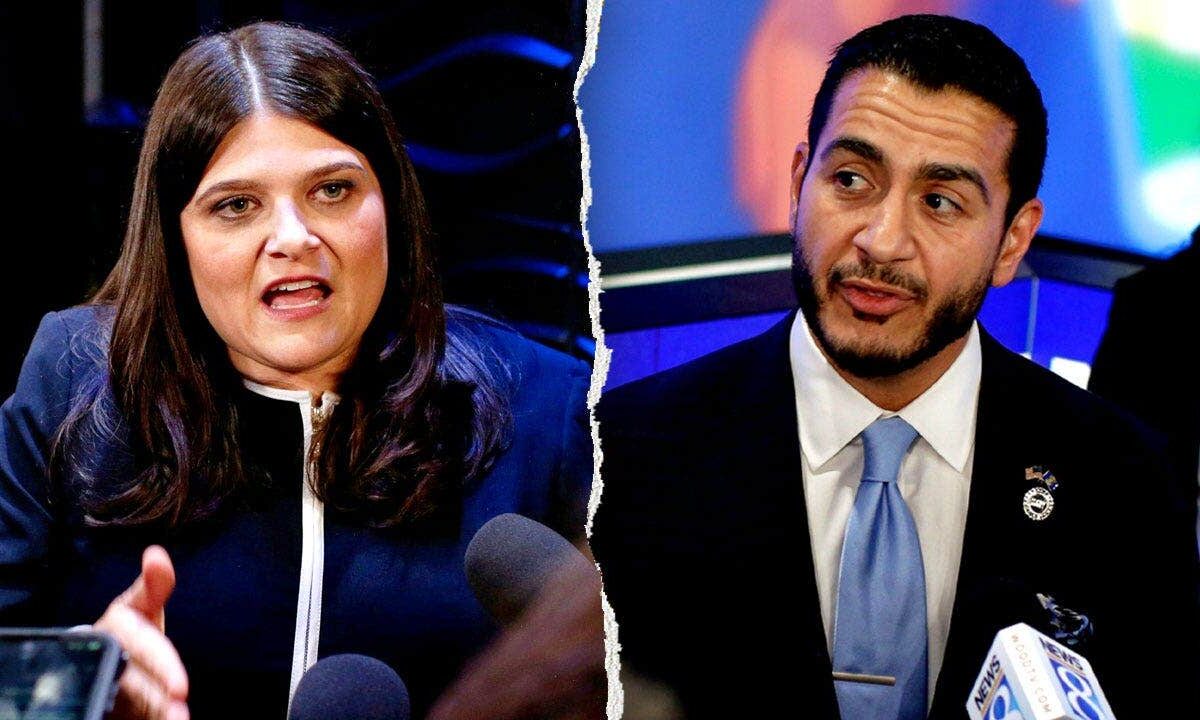
“This is an election between Abdul and the billionaire class,” Sen. Bernie Sanders said at a Detroit Opera House rally, saying outside donors have poured into the Michigan Democratic Senate primary to try to defeat Abdul El-Sayed.
Sanders, joined onstage by Rep. Alexandria Ocasio-Cortez, framed the contest as part of a broader fight between progressive insurgents and establishment-backed candidates as voters head into the Aug. 4 primary.
What Sanders said at the Detroit rally
Speaking to supporters at the Detroit Opera House, Sanders argued the race is not merely a head-to-head between Rep. Haley Stevens and El-Sayed. “In all due respect to Haley Stevens, everybody knows that this is not an election between her and Abdul,” he said, adding, “This is an election between Abdul and the billionaire class.”
Sanders told the crowd that outside groups had already spent roughly $50 million against El-Sayed and said his campaign faced about a 12-to-1 spending disadvantage. Those are Sanders’ assertions made at the rally and have not been independently verified by this outlet; they reflect his framing of the outside spending fight.
How much outside money is in the Michigan Democratic Senate primary
Independent tracking of television ad buys by AdImpact, as reported in media coverage of the rally, shows concentrated TV spending in the closing weeks of the primary. AdImpact’s totals cited in reporting attribute about $26.9 million in TV ads to super PACs backing Haley Stevens and roughly $2.1 million in TV ads supporting El-Sayed during the final five weeks of the campaign (AdImpact, via Fox News reporting).
Those AdImpact figures cover television buys and may not capture digital ads, grassroots spending or other forms of outside activity. Analysts caution that TV totals are a key but incomplete measure of the total outside influence on a race.
Who is running in the Michigan Democratic Senate primary
The Democratic contest is now centered on Rep. Haley Stevens and progressive organizer Abdul El-Sayed. Mallory McMorrow ended her campaign earlier, leaving Stevens and El-Sayed as the principal Democratic choices ahead of the Aug. 4 primary (reporting: Fox News).
Haley Stevens has represented Michigan’s 11th Congressional District since 2019 and has drawn endorsements from many establishment Democrats. Supporters portray her as a conventional, electable choice for November.
Abdul El-Sayed, endorsed by Sanders and other progressives, is a former public-health official and organizer whose platform emphasizes climate action, expanded health care and economic justice. His backers view him as the insurgent progressive alternative.
Why this split matters for Democrats
The primary highlights tensions within the Democratic Party between progressive insurgency and establishment-backed candidates. Sanders framed the spending as evidence that wealthy donors and outside groups see El-Sayed as a significant threat to the party’s more centrist options.
Democratic strategists say the choice will affect both messaging and general-election math in November. If establishment-backed spending helps Stevens prevail, national Democrats may view her as the safer general-election pick. If El-Sayed wins despite large outside expenditures, progressives could claim momentum heading into other 2026 contests.
Both sides argue their nominee is best positioned to defeat the expected Republican nominee, former Rep. Mike Rogers, in November.
What comes next before the Aug. 4 primary
With two weeks left before the Aug. 4 contest, campaigns and outside groups are expected to intensify ad buys, field operations and get-out-the-vote efforts. Sanders warned supporters the ad blitz would continue through the final stretch and urged grassroots organizing to counter outside spending.
Outside groups are likely to keep running television and digital ads in the days before the primary. If a large spending gap persists, the outcome will influence how national donors and progressive organizations allocate resources for the general election.
By the numbers
- AdImpact TV totals (final five weeks): ≈ $26.9 million for super PACs backing Haley Stevens; ≈ $2.1 million for El-Sayed (AdImpact, via Fox News reporting).
- Sanders’ claim at the rally: about $50 million spent against El-Sayed and an asserted 12-to-1 disadvantage for El-Sayed’s campaign (Sanders’ assertion; not independently verified).
- Primary date: Aug. 4. Expected November opponent for the Democratic winner: former Rep. Mike Rogers (reported expectations).
Frequently asked
How much have outside groups spent in the Michigan Democratic Senate primary?
AdImpact’s TV tracking reported roughly $26.9 million in TV ads for super PACs backing Haley Stevens and about $2.1 million for El-Sayed in the final five weeks; Sanders cited a broader, unverified figure of about $50 million spent against El-Sayed.
When is the Democratic primary and who are the candidates?
The Democratic primary is Aug. 4. The remaining principal candidates are Rep. Haley Stevens and Abdul El-Sayed after Mallory McMorrow ended her campaign (reporting: Fox News).
What do Sanders and other progressives say about the role of wealthy donors?
Sanders and allied progressives say large donors and outside groups are coordinating big expenditures to prevent progressive candidates like El-Sayed from winning. Critics call such language political framing; TV ad buys tracked by AdImpact are one measurable element of outside activity.
Source attribution
Primary reporting on Sanders’ remarks and the rally: Fox News. AdImpact TV totals cited above were reported in coverage of the race (AdImpact, via Fox News reporting). Sanders’ $50 million and 12-to-1 spending claims were made by Sanders at the Detroit rally and have not been independently verified by this outlet.
Links cited in reporting: Fox News coverage of Sanders’ Detroit rally.