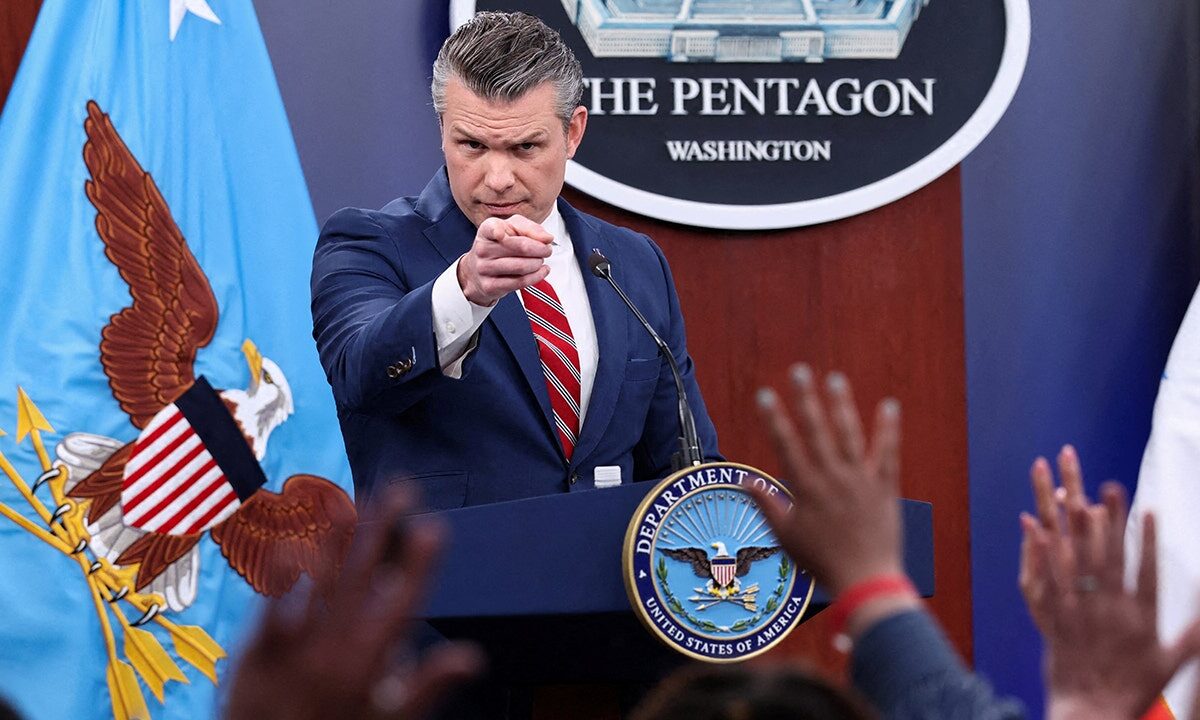
Pentagon chief Pete Hegseth announced a new Pentagon task force on media leaks and said he has partnered with the Department of Justice to identify and prosecute officials accused of disclosing “sensitive information” to reporters. He made the announcement in a video shared on X and called it a national security priority.
The short announcement said the Office of General Counsel will be empowered to request and receive information across the department to assist leak investigations. The move comes amid recent DOJ subpoenas to news reporters and has prompted swift reactions from newsrooms and press freedom groups.
Pentagon task force on media leaks
Hegseth said, “To combat the dangers that leaks pose, effectively immediately, I have delegated tasking authority to the war department’s office of general counsel, empowering OGC to request and receive all information, records and support across the department concerning media leak investigations.”
He added: “Leaked information risks lives. These new tools and processes will greatly assist us in protecting our joint force,” and warned that those who betray classified access “will be met with the full force of the law.”
What the joint task force will do
The Pentagon said the Office of General Counsel (OGC) may request and receive information and records from across the department to investigate suspected leaks. Officials said the OGC will coordinate with the Department of Justice on legal tools, including subpoenas and other investigative authorities.
Pentagon statements framed the effort as aimed at protecting troops and sensitive operations from unauthorized disclosures. The announcement thanked Acting U.S. Attorney General Todd Blanche for his support and described closer operational ties between the Pentagon and DOJ.
Context: DOJ subpoenas and newsroom reactions
The announcement comes days after the Department of Justice issued subpoenas to four reporters at The New York Times in connection with reporting about security concerns over a plane gifted to former President Donald Trump by Qatar, according to The New York Times. The subpoenas sought testimony before a federal grand jury, the paper reported.
The New York Times and its lawyers condemned the subpoenas. David McCraw, an attorney for the paper, said, “The appearance of federal law enforcement agents on the doorstep of news reporters should shock the conscience of any American who believes in the Constitution and the press freedom it protects.” That statement was issued by The New York Times and its legal team in response to reporting about the subpoenas.
Press freedom groups and journalists at multiple outlets criticized the subpoenas as an intimidation risk that could chill reporting. Those reactions emphasized potential threats to the public’s right to know and urged legal safeguards for newsgathering.
Legal pushback and press freedom risks
Legal challenges to Pentagon rules and investigative tactics are already playing out in court. A federal judge last month granted a preliminary injunction finding that a Pentagon requirement that journalists be accompanied by an official chaperone at all times violated the First Amendment in a suit brought by The New York Times.
Separately, the department has in the past proposed measures such as polygraphs and opened internal investigations into officials accused of leaking classified information. Those steps have raised constitutional and press freedom concerns among media lawyers and civil liberties advocates.
Observers note unresolved legal questions about how far the Pentagon and DOJ can go in pursuing officials versus protecting reporters and newsgathering. The department characterizes its actions as necessary for operational security; critics say oversight and legal limits must be respected.
What comes next
The Pentagon said the task force will immediately begin coordinating investigations and may refer matters to the DOJ for potential prosecution. Officials did not provide a public timeline for any specific prosecutions or disclosures of targeted investigations.
Reporters and media organizations are likely to monitor DOJ grand jury activity and any additional subpoenas. Litigation over Pentagon press policies and investigative methods could continue to move through the courts, with potential appeals and further injunctions possible.
Brief timeline
- Last year: The Pentagon opened investigations into suspected classified leaks and proposed measures including polygraphs and reporting restrictions.
- Recent days: The Department of Justice issued subpoenas to four New York Times reporters tied to reporting on a plane gifted by Qatar, according to The New York Times.
- Last month: A federal judge granted a preliminary injunction blocking the Pentagon chaperone requirement for journalists.
- Monday: Hegseth announced the Pentagon task force on media leaks and said OGC will be empowered to work with DOJ.
Expert reaction
The announcement drew a mix of support and concern. Pentagon spokespeople said enhanced coordination with DOJ is needed to safeguard operations. Newsroom lawyers and press freedom groups countered that aggressive investigative tactics risk chilling journalism and could interfere with reporters’ ability to hold government accountable.
David McCraw of The New York Times warned that law enforcement actions targeting reporters “should shock the conscience” and said journalists’ reporting advances the public’s right to know. Other media lawyers and press advocates have called for clear rules to prevent investigative authority from sweeping too broadly into newsgathering activities.
FAQ
What is the Pentagon task force on media leaks?
The task force is a new Pentagon-DOJ effort announced by Pete Hegseth to identify and, where warranted, pursue legal action against officials accused of leaking sensitive information to reporters. The Pentagon says the OGC will coordinate information and investigative support across the department.
Could government officials or reporters be prosecuted?
The Pentagon and DOJ can pursue criminal cases against officials who disclose classified material. Prosecuting reporters is rare and legally fraught; recent DOJ subpoenas seeking reporter testimony have been criticized and may prompt further legal challenges.
What legal challenges have been raised so far?
Courts have already intervened on Pentagon press rules: a federal judge granted a preliminary injunction against a chaperone requirement as a First Amendment violation. Civil liberties groups warn that polygraphs, broad investigatory powers, and subpoenas raise constitutional and press freedom concerns.
Source attribution: This article is based on reporting by Fox News: “Hegseth announces joint task force with DOJ to prosecute leaks to journalists,” Fox News. References to DOJ subpoenas and David McCraw’s remarks are drawn from reporting in The New York Times as noted above.