Gov. Kelly Ayotte told Fox News Digital that the Pine Tree Riot in New Hampshire predated the Boston Tea Party and “may have inspired” later colonial protests — a characterization the state is using as it showcases related artifacts on the National Mall. That possible link is presented by the governor as a claim, not a settled historical fact, and historians treat such connections cautiously.
What the Pine Tree Riot was
The Pine Tree Riot was a 1772 protest in central New Hampshire against royal regulations that reserved large white pine trees for the British Royal Navy. The Crown set aside mature white pines — generally described at the time as trees with trunks at or above a specified diameter — for use as ship masts and restricted colonists from cutting them for private use.
Resistance to that enforcement took several forms. Local men in the town of Weare and nearby communities confronted lumber inspectors and seized control of felled logs in at least one well-documented incident. Those actions are frequently cited by scholars as an early example of organized colonial defiance: a focused, local challenge to imperial regulation rather than an outright call for independence.
Ayotte, the exhibit and the artifacts
At the Great American State Fair on the National Mall, New Hampshire’s booth highlights the Pine Tree Riot alongside other Revolutionary-era storylines. Gov. Kelly Ayotte, speaking to Fox News Digital, described the display as an opportunity to “display the history of New Hampshire” and to emphasize the state’s Revolutionary contributions.
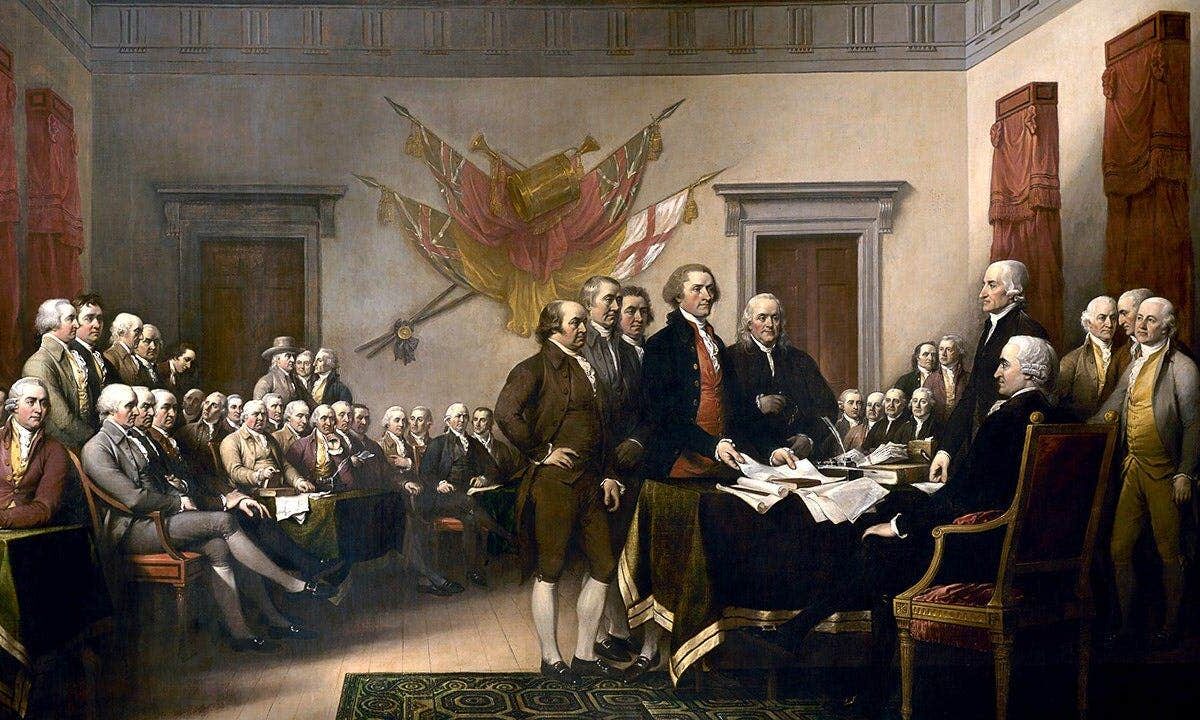
The state’s presentation includes two notable printed artifacts: a Dunlap Broadside — one of the earliest printed copies of the Declaration of Independence — and a 1823 William J. Stone engraving that reproduced earlier prints of the Declaration. The booth also shows short video loops and offers giveaways such as New Hampshire maple syrup, per the state’s description to reporters and fair visitors.
The state pairs the Mall exhibit with local events: select documents are scheduled for public viewing at the New Hampshire Statehouse, and officials have said they will promote parades, fairs and other Independence Day activities around the Granite State.
Why the riot mattered then
Contemporaries and later historians point to the Pine Tree Riot as evidence that colonists could organize and resist specific imperial policies. By confronting enforcement of the white pine rules, local actors demonstrated willingness to challenge Crown officials and to use collective action to protect local economic interests.
Some commentators, including Gov. Ayotte in remarks to Fox News Digital, suggest the Pine Tree Riot “may have inspired the Boston Tea Party” and other later protests. That is presented by Ayotte as a possibility rather than an established causal claim. Academic treatments of the period generally caution against drawing direct lines of cause and effect between distinct local protests without independent documentary proof. Readers should understand the suggested link as interpretive and subject to further historical verification.
Separately, fair and campaign materials sometimes highlight New Hampshire “firsts” — claims such as being the first colony to draft a state constitution appear in some public-facing descriptions. Those assertions are contested in historical literature and should be verified against primary sources and scholarly work when used to support broader narratives about the Revolution.
How to see the display and local events
The Great American State Fair exhibit is on the National Mall in Washington, D.C., where New Hampshire is operating a booth as part of a wider 250th-anniversary program. Visitors should consult the fair’s posted schedule for booth hours, special programming and any times when the Dunlap Broadside or Stone engraving is on public view.
Back in New Hampshire, selected documents are slated for limited public viewing at the Statehouse. Local towns traditionally mark the Fourth of July with parades, fairs and fireworks; state officials have said they will participate in several parades and public events on July 3 and 4. If you plan to visit, check the Great American State Fair calendar and New Hampshire Statehouse event listings for precise times and access rules for historical documents.
What to see
Look for the Dunlap Broadside and the William J. Stone engraving when the booth lists artifacts on display. The state’s booth may also show a short historical video and distribute maple syrup and other state-themed giveaways during peak hours.
Source attribution and verification notes
This article draws on reporting by Fox News Digital, which published Gov. Kelly Ayotte’s quoted remarks and described New Hampshire’s National Mall exhibit. The Fox News Digital story is the primary reporting source for the governor’s statements about the Pine Tree Riot and the exhibit. The Great American State Fair and New Hampshire state event listings provide the fair and Statehouse scheduling details cited above.
Readers should note two verification points: first, Ayotte’s comment that the Pine Tree Riot “may have inspired the Boston Tea Party” is a claim offered in campaign and public remarks and is not established fact; historians urge caution in linking separate protests without direct documentary evidence. Second, public claims of state-level “firsts,” such as being the first to draft a constitution, are sometimes repeated in promotional material but are matters for independent historical verification. For readers seeking primary sources, the Dunlap Broadside and Stone engraving are named artifacts that can be traced to archival records and reproduced in scholarly publications.
Source: Reporting by Fox News Digital and public materials from the Great American State Fair and New Hampshire state offices. For the original Fox News Digital coverage of Ayotte’s remarks and the exhibit, see the Fox News story cited in the fair’s press materials.
FAQ
What was the Pine Tree Riot?
The Pine Tree Riot was a 1772 protest in New Hampshire against British regulations reserving large white pine trees for Royal Navy masts. Local colonists resisted enforcement of those rules, an episode often cited as an early example of organized colonial opposition.
Did the Pine Tree Riot inspire the Boston Tea Party?
Some officials, including Gov. Kelly Ayotte in remarks to Fox News Digital, have suggested the riot “may have inspired” later protests like the Boston Tea Party. Historians treat such links as possibilities that require independent documentary evidence; the direct causal connection is not universally confirmed.
Where and when can I see the Dunlap Broadside and Stone engraving?
New Hampshire is displaying those items as part of its Great American State Fair exhibit on the National Mall and has scheduled related documents for limited public viewing at the Statehouse in New Hampshire. Check the fair and state event schedules for viewing times and access rules.