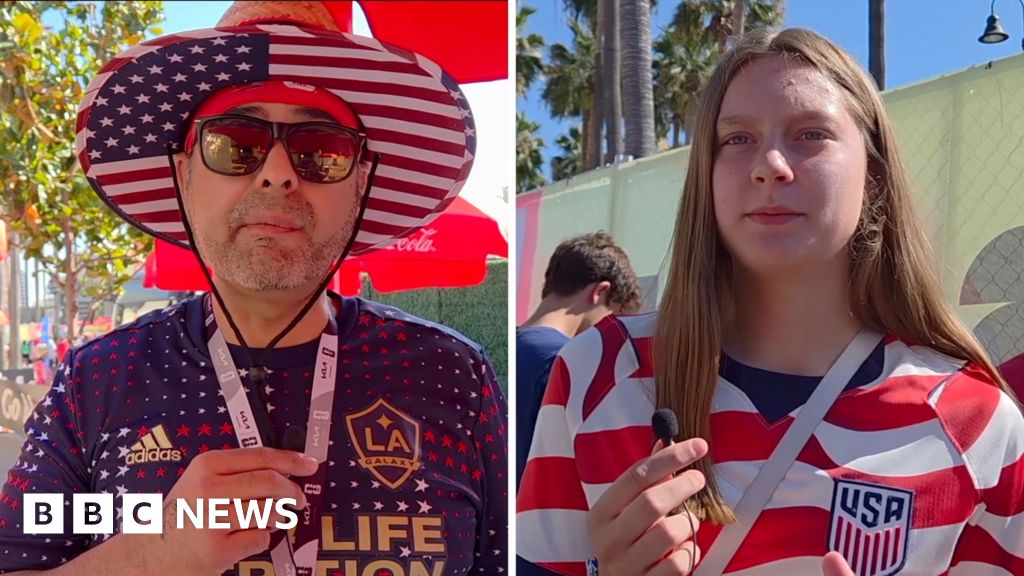
“Here to stay,” one fan tells BBC reporter Nardine Saad, summing up a mood captured in a BBC News video about the rise of soccer in the United States. Other interviewees describe full stands, kids playing soccer at the weekends, and a growing mainstream media presence — observations that together sketch a picture of momentum for the sport.
The BBC segment, presented by Nardine Saad, strings together short on-the-spot interviews with supporters in several locations. Those voices — vivid, often emotional and rooted in matchday experience — provide a ground-level view of how dedicated fans see the game changing in their communities.
Rise of soccer in the United States: what fans say
In the clip, supporters repeatedly point to three visible signals: larger crowds at MLS and exhibition matches, greater youth participation, and more prominent media coverage. Several of those interviewed used the phrase “Here to stay” when asked whether soccer’s recent attention is a passing phase.
Fans describe chanting sections, family groups on terraces, and young players at local fields as concrete signs the sport now reaches beyond niche pockets. The footage captures both long-term followers and newer fans, suggesting a widening base rather than enthusiasm confined to a single demographic.
Where fans are seeing growth
Interviewees in the BBC piece point to matchday atmosphere, grassroots participation and commercial visibility as visible markers of growth.
- Matchday crowds: Many noted fuller stands at Major League Soccer games and louder atmospheres at exhibition fixtures featuring international clubs.
- Youth and grassroots play: Parents and coaches in the video talk about rising enrolment in youth leagues and more organised local competitions.
- Media and commercial presence: Supporters mentioned increased television coverage, sponsorships and mainstream attention compared with earlier decades.
Those are visible cues fans notice in their cities and towns. They provide useful snapshots of local experience but do not by themselves demonstrate a uniform national trend.
Why supporters say Here to stay
Across the interviews, supporters offered reasons why they believe the sport will remain popular: soccer’s accessibility for children, clearer professional pathways through club academies, and the global reach of major tournaments that now attract U.S. audiences. Some pointed to generational change — younger fans who follow international clubs online and engage through social media are seen as a more stable future audience.
Several speakers emphasised that soccer requires relatively little specialised equipment, which makes it easy for families and schools to support participation. Others said that the emotional intensity of matchdays — singing, community rituals and shared identity — cements fan commitment.
Limits of the evidence
These on-the-spot interviews are anecdotal by design. The BBC video is a purposeful slice of fan sentiment, not a systematic survey or statistical analysis. That makes the footage valuable for illustrating lived experience, but it also imposes clear limits on what the material can demonstrate about national trends.
Risk notes: an edited collection of interviews overrepresents people willing to speak on camera and may skew toward cities or clubs where enthusiasm is already concentrated. The piece does not provide attendance series, youth-registration numbers, TV-viewing figures or nationwide demographic breakdowns that would be needed to assess growth rigorously.
For a fuller picture, researchers would compare the impressions captured here with longitudinal data from league attendance reports, youth-sports registries, broadcast metrics and commercial sponsorship trends.
What comes next for soccer in the United States
If the patterns fans describe continue, short-term indicators to watch include year-over-year MLS attendance trends, expansion of youth-program enrolment, the number and profile of international matches hosted in the U.S., and broadcast and sponsorship deals that affect visibility. Investment in academy systems and coaching pathways will influence whether early participation translates into stronger domestic competition and talent development.
Whether fan enthusiasm becomes sustained national growth depends on measurable shifts across multiple systems — not just louder terraces. Analysts and policymakers should look for corroborating data in official league statistics and market research to assess how far the anecdotal momentum maps onto broader change.
FAQ
Is soccer really growing in the United States?
The BBC segment shows clear fan enthusiasm and local signs of growth, such as fuller stadiums and active youth leagues. Those impressions are meaningful but anecdotal; robust confirmation requires reviewing official attendance, youth registration and media-viewing figures.
What did fans say in the BBC piece titled Here to stay?
Fans told reporter Nardine Saad they see more people at matches, more kids playing soccer and a louder, more diverse fan culture. Several used the phrase “Here to stay” to express confidence that the sport’s popularity has lasting power.
Do fan reactions equal national trend data?
No. Fan reactions are useful for understanding local experience and momentum but do not replace comprehensive national statistics or formal studies. Treat anecdotal evidence as a starting point for further investigation.
Source: BBC News – Top Stories. Original video: ‘Here to stay’ – Fans react to the rise of soccer in the US. Presented by Nardine Saad. Published 2026-07-06T13:41:46.000Z.