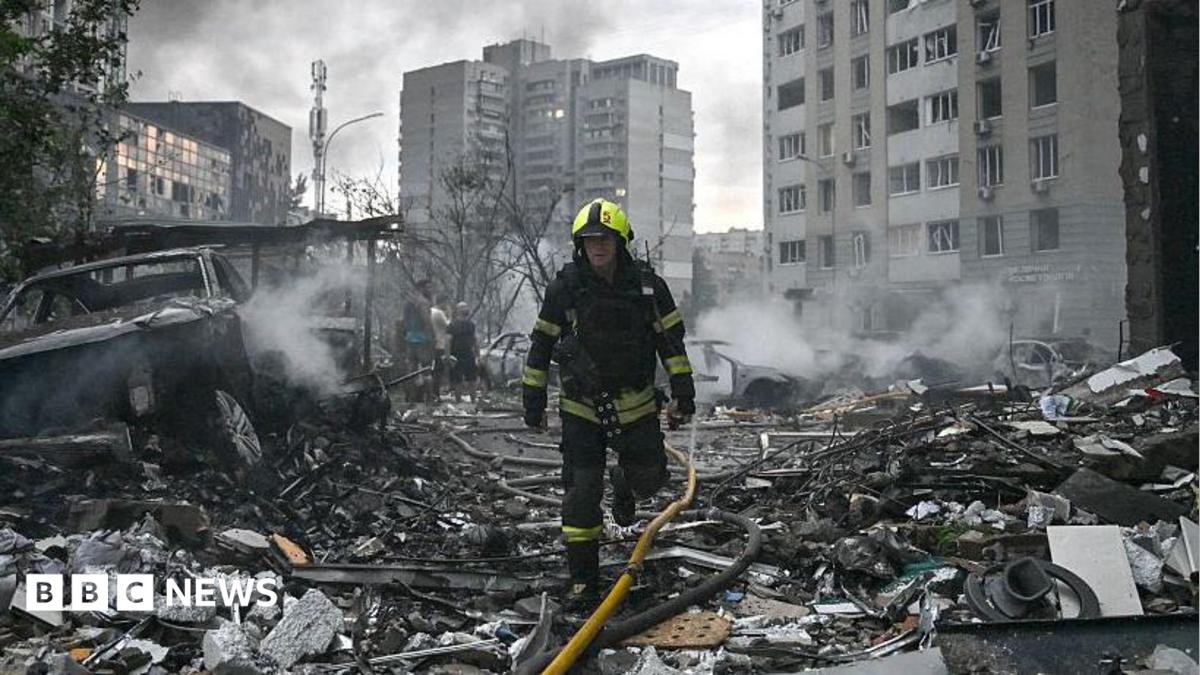
BBC reports that Russian strikes on Kyiv killed nine people on the eve of a Nato summit in Turkey, officials and emergency crews said. The attacks struck residential areas and caused significant structural damage, marking Kyiv’s second round of air strikes in a week.
Casualty figures are provisional and may change as rescue teams complete searches and hospitals update their counts. Emergency services continued to work through the night at multiple locations to recover people trapped under debris.
What happened in Kyiv: Russian strikes on Kyiv
According to BBC reporting, multiple air strikes hit the Ukrainian capital late on the eve of the Nato summit. Officials reported nine people were killed and several buildings suffered damage. Local authorities described scenes of collapsed concrete, shattered windows and disrupted utilities in affected neighbourhoods.
The city had already been targeted earlier in the week, making this the second time Kyiv has faced air attacks in recent days. Emergency crews moved quickly to cordon off dangerous areas, clear debris and search for survivors amid unstable structures.
Local rescue services, supported by municipal emergency teams, focused first on sites where residents had been reported missing or where buildings had partially collapsed. Where possible, heavy equipment was used to remove large sections of rubble; in close or unstable spaces, teams conducted careful manual searches to avoid causing further collapse.
Casualties and rescue efforts
Crews are racing to find survivors under rubble, BBC reported. Teams described long hours of painstaking work, checking apartments room by room and listening for signs of life under concrete and twisted metal.
Hospitals in Kyiv readied emergency departments to treat people with blast injuries and trauma from the falling debris. Officials have not provided a full breakdown of injuries, and some victims were reported to have been taken to medical facilities for urgent care.
Witnesses at strike sites described chaotic scenes, with neighbours helping to clear smaller debris and emergency responders coordinating triage and transport. City services moved to restore essential utilities and clear access routes so ambulances and heavy machinery could reach the hardest-hit blocks.
Authorities emphasised that all casualty figures remain provisional while search and recovery operations continue. The situation on the ground can change rapidly as teams complete sweeps of damaged structures.
Alleged responsibility and verification
The BBC report attributes the strikes to Russia. That attribution is presented by the source and should be treated as an allegation pending independent confirmation.
Independent verification of responsibility for air strikes typically relies on a combination of forensic analysis, radar or flight-tracking data, satellite imagery and witness testimony. At the time of the BBC report, such corroborating evidence had not been publicly presented to definitively confirm who carried out the attacks.
Officials, international monitors and investigative bodies often require additional time to gather and verify evidence before making conclusive statements about responsibility and intent.
Why the timing matters for the Nato summit
The strikes came on the eve of a Nato summit in Turkey, an event where allied leaders meet to discuss collective security and regional developments. Attacks timed near high-level meetings can sharpen diplomatic tensions and influence summit discussions.
Delegations arriving for the summit are likely to raise the incident in private and public sessions, and Nato officials may issue statements or request briefings from member states and partners. While immediate operational decisions at the summit depend on verified facts, such incidents commonly feature in agenda items on deterrence, aid and regional security co-ordination.
The proximity of the strikes to the meeting could shape the tone of discussions among Nato members and prompt calls for additional support or reassessment of security measures, depending on what investigators conclude about responsibility and motive.
Source and next steps
This article is based on reporting by BBC News. BBC reports nine people were killed and that crews were racing to find survivors under rubble. Those figures are provisional and may change as emergency teams finish searches and officials update their counts.
Further coverage is expected as rescue operations conclude and investigators and independent monitors review available evidence. Key developments to watch include official casualty updates from Ukrainian authorities, any forensic or satellite evidence that becomes public, and statements from Nato and its member states during the summit in Turkey.
FAQ
How many people were killed in the strikes?
BBC reports nine people were killed. Authorities have described casualty figures as provisional and subject to confirmation as rescue and recovery efforts continue.
Has Russia been independently confirmed as responsible?
The BBC report attributes the strikes to Russia, but that attribution is currently treated as an allegation. Independent verification typically requires additional evidence and has not been reported at the time of the source article.
Will this affect the Nato summit in Turkey?
The timing of the strikes places them immediately before the Nato summit and is likely to be raised by leaders and officials. Any direct diplomatic or security consequences will depend on further confirmation of responsibility, official statements and discussions among member states at the summit.
Source: BBC News — https://www.bbc.co.uk/news/articles/cewqqnd7zdwo?at_medium=RSS&at_campaign=rss. Figures reported as provisional.