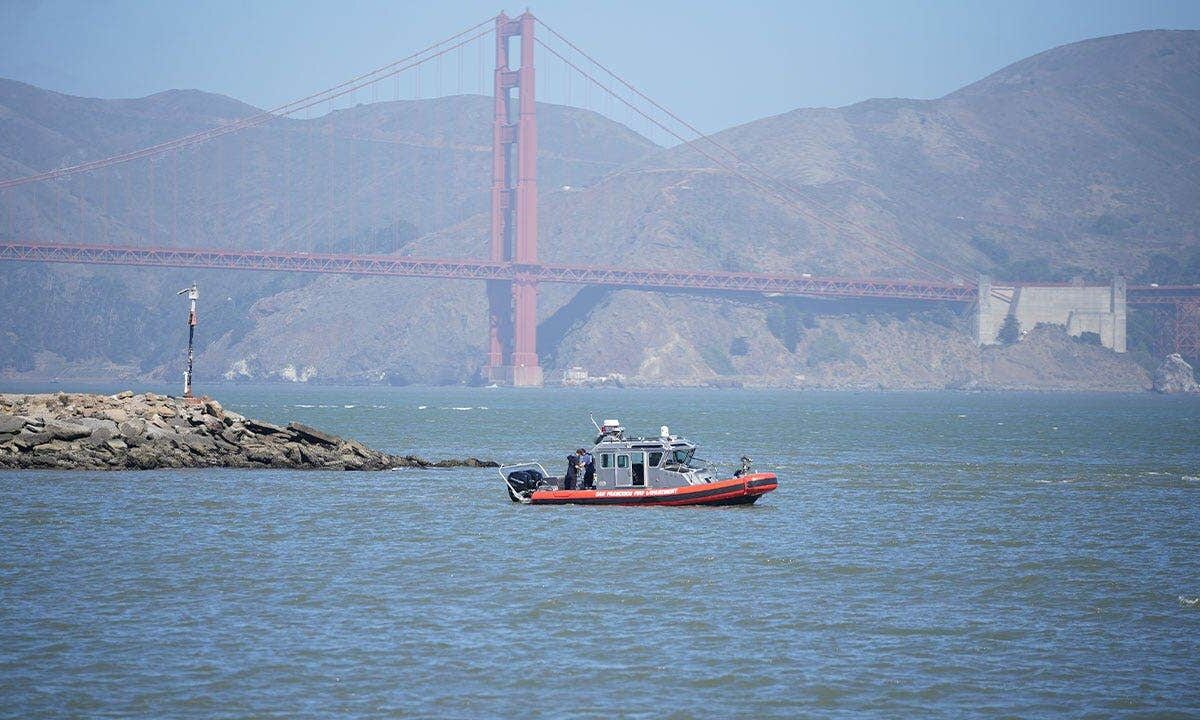
The U.S. Coast Guard suspended active searching Wednesday evening after a 49-foot cabin cruiser capsized near Alcatraz, in an incident first reported when the San Francisco Bay boat capsized and nearby boaters rushed to help. Authorities say 20 people were aboard; 16 were rescued, one person was killed and three remain missing as recovery operations move from surface search to remote assessment.
What happened and immediate rescue
Officials say the recreational vessel was carrying 20 people on a family memorial outing when it was struck by a wave, listed, rolled over and sank while returning across the bay after a stop at Angel Island. Rescue crews pulled 16 people from the water and took several to hospitals or reunion centers for evaluation. One person, identified by authorities as 79-year-old Clifford Joseph Boisa of Sutter County, died after being pulled from the water. A family dog also perished in the incident.
First responders — including recreational boaters who reached the scene quickly — provided life jackets and on-scene care before Coast Guard and San Francisco agencies arrived. Survivors described chaotic, fast-moving conditions as the vessel rolled and went under; investigators have said some passengers were sheltering on lower decks when the cruiser capsized.
San Francisco Bay boat capsized: scale of the search and why it was suspended
Coast Guard Sector San Francisco and partner agencies conducted an intensive search for about 23 hours before suspending active surface and air efforts. Command coordinators said the operation used 11 surface vessels and four aircraft, covering roughly 950 square nautical miles and logging more than 1,700 miles of search track.
“Suspending an active search is one of the most difficult things we do as Coast Guard commanders,” Capt. Jarod Toczko said at a news briefing quoted by local media. He added, “Our goal is always to bring home families’ loved ones.” The Coast Guard noted the decision to suspend followed an exhaustive assessment of the search area, environmental conditions and the likelihood of finding additional survivors. (See the U.S. Coast Guard statement for details: U.S. Coast Guard Pacific Area / Sector San Francisco.)
Who was on board and the memorial outing
The group had gathered for a family memorial outing to scatter ashes, according to officials. Survivors and witnesses described a day that turned tragic within minutes. Families of the missing were notified by authorities before the active search was suspended, and investigators said support services and reunification centers were activated to help relatives and survivors cope with the unfolding response.
Investigators are working to confirm passenger manifests, contact next of kin and document survivor accounts. San Francisco police and fire units have taken the lead on local notifications and family assistance while the Coast Guard leads the search-and-rescue coordination and maritime investigation.
Recovery challenges and ongoing investigation
Officials told reporters the cabin cruiser likely now rests roughly 130 feet beneath the surface near the sinking site. That depth exceeds typical safe limits for many commercial and public-safety divers — standard operational recreational dive limits are far shallower and many public-safety dive teams consider about 120 feet a hard safety threshold for human divers. Because of that, Coast Guard and police investigators said their next step is to locate the wreck precisely and inspect it with a remotely operated underwater vehicle (ROV) to determine the feasibility and safety of any recovery attempt.
San Francisco police said the immediate priority is to confirm the identity and condition of the vessel and to document any evidence around the hull. Authorities noted there has been no confirmed evidence of a fire aboard the boat; what some witnesses described as smoke was likely steam or spray as the vessel sank, investigators said. Capt. Toczko acknowledged investigators still consider the possibility some people may have been trapped as the boat sank, though officials have not reached conclusions about that and are treating survivor interviews and witness accounts as part of an ongoing evidence-gathering process.
The investigation will include survivor and witness interviews, review of weather and sea-state data at the time of the capsize, mechanical inspection when recoverable, and coordination between the Coast Guard’s marine-safety investigators and San Francisco police detectives. Officials said any recovery attempt will be driven by safety for divers and crews and by the condition and position of the wreck as observed by underwater assets.
By the numbers
• 20 people aboard the 49-foot cabin cruiser; 16 rescued; 1 confirmed dead (Clifford Joseph Boisa); 3 missing.
• Active search length: about 23 hours before suspension.
• Assets deployed: 11 surface vessels and 4 aircraft; search area covered roughly 950 square nautical miles and more than 1,700 miles of search track.
• Wreck depth: believed to rest near 130 feet; standard diver safety limits near 120 feet; underwater ROV planned for inspection.
What comes next for families and authorities
With active surface and air searches suspended, investigators will shift to locating and documenting the wreck with remote equipment and preparing an evidence timeline. Authorities said an underwater remotely operated vehicle will be used to inspect the hull and interior before any decision about divers or salvage is made. That assessment could take days to complete depending on current, visibility and equipment availability.
San Francisco police detectives and Coast Guard marine-safety investigators will coordinate notifications, family briefings and legal steps such as vessel seizure for investigation. Officials said they will provide regular updates to families and the public as new information becomes available and as evidence from underwater inspections is analyzed. The timeline for recovery or a safe removal of the vessel will depend on ROV findings, environmental conditions and safety reviews by dive and salvage experts.
FAQ
What caused the San Francisco Bay boat to capsize?
Investigators say the vessel was struck by a wave, listed, lost stability, rolled over and sank. Officials have not reached final conclusions and continue to examine witness statements, survivor interviews, sea conditions and the vessel’s mechanical condition.
Who were the missing boaters and were families notified?
Three people remain missing. Authorities confirmed families were notified and that support and reunification services were activated. investigators continue to work with relatives and survivors to confirm manifests and next steps.
Will the search resume and can the vessel be recovered?
The Coast Guard suspended active surface and air search operations after assessing the likelihood of finding additional survivors. Investigators plan to locate the wreck and inspect it with an ROV; any recovery involving divers will depend on ROV findings and diver safety limits at the approximate 130-foot depth.
Source attribution
This report draws on statements from Coast Guard Sector San Francisco and local authorities and reporting by Fox News. For official Coast Guard statements and operational details, see the U.S. Coast Guard Pacific Area / Sector San Francisco site: https://www.pacificarea.uscg.mil/. Additional reporting: Fox News — San Francisco Bay search suspended for 3 missing boaters.