
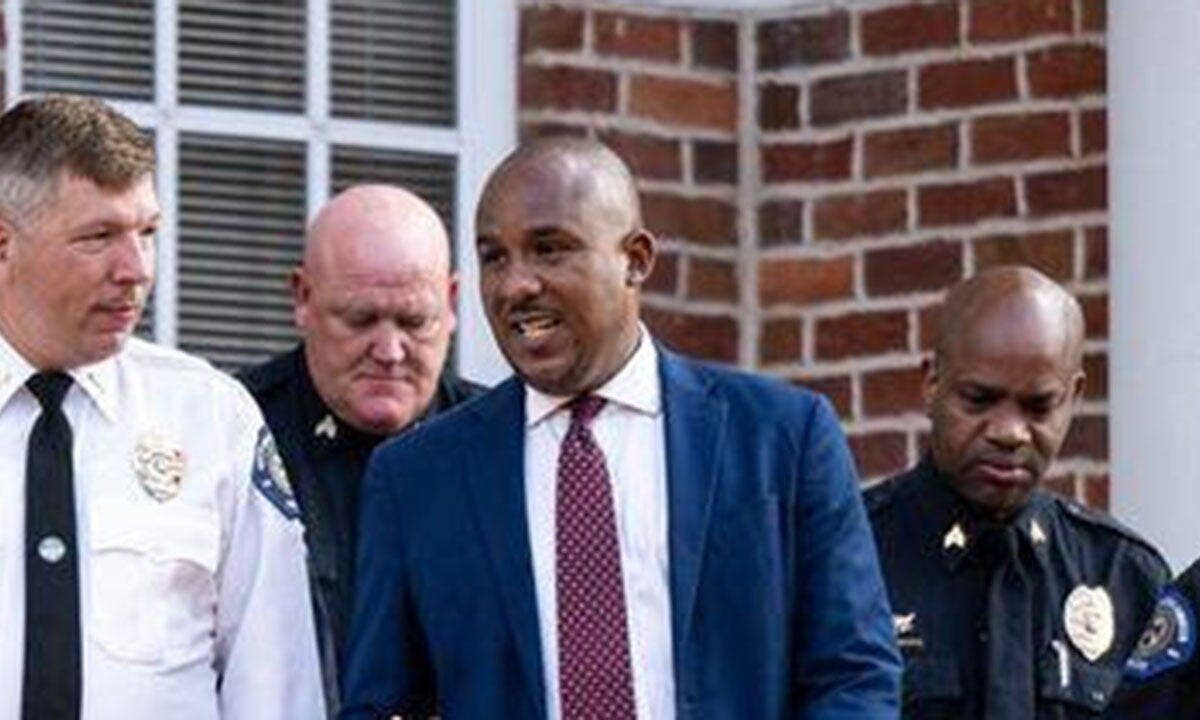
Scott Colom’s campaign has drawn renewed national attention as Democratic organizers and outside backers signal new investments to boost his profile against Sen. Cindy Hyde-Smith. A recent donor call featuring Sen. Elizabeth Warren and national operatives — and federal campaign filings showing contributions from people linked to the Soros family — sharpen questions about how much outside money and attention will matter in a deep-red state.
What the new push says about Scott Colom
On a recent conference call, supporters including Sen. Elizabeth Warren, former Rep. Joe Kennedy and Michael Vachon outlined a strategy to address Colom’s biggest hurdles: visibility and cash. Vachon, identified in public reporting as an adviser connected to national Democratic networks, told participants the campaign faces a simple problem: name recognition. As a participant summarized the outreach, “Not enough people know who he is.” That line has been repeated by backers to justify the fresh investment.
Colom and his team frame the campaign as Mississippi-rooted, insisting policy choices will reflect local priorities and the rule of law. “Once people know who he is and know his story and know he’s running, then they want to vote for him,” a supporter on the call said, according to those briefed on it. The campaign also stresses grassroots organizing in Black and urban communities as the path to translating national attention into local turnout.
FEC records and the money trail
Federal Election Commission filings are the primary public record of who is giving and how much. FEC reports for the candidate can be searched directly at the FEC site (see the candidate search: https://www.fec.gov/search/?search=Scott+Colom).
Those filings include itemized contributions from individuals identified in media reporting as connected to the Soros family that, when combined, approach the mid-five figures this cycle. The campaign and national backers say those dollars pay for basic campaign infrastructure — staff, paid media and voter-contact programs — intended to close the name-recognition gap.
Opponents have seized on the FEC entries to argue Colom is reliant on out-of-state donors. Colom’s campaign counters that contributions do not equal control, and that spending decisions are made locally. The FEC record shows who donated; it does not, by itself, prove policy direction or coordination.
Hyde-Smith’s donors and the fertilizer link
Sen. Cindy Hyde-Smith’s donor list includes contributions from the fertilizer and agribusiness sectors. Public campaign finance records show roughly $14,000 in contributions tied to that industry since 2018, including entries identified in reporting as about $11,000 connected to Koch Industries and roughly $3,000 linked to Nutrien. These amounts are reflected in the FEC search results for the senator (see: https://www.fec.gov/search/?search=Cindy+Hyde-Smith).
Colom allies have highlighted those donations while pointing to public reporting that alleges some fertilizer companies have faced scrutiny related to pricing. Those are allegations reported in news coverage and, where raised, should be evaluated on the basis of the underlying reporting and any official findings. Hyde-Smith has defended her record and her supporters.
Why this race matters in Mississippi
Mississippians haven’t elected a Democrat to the U.S. Senate in decades; a successful Colom bid would alter the political map in a state that reliably votes Republican for federal offices. National Democrats view a small set of races as pathways to changing Senate arithmetic, and they say investing in candidates like Colom can push on issues such as voting rights and representation in the Deep South.
On the donor call, national leaders linked investment in the race to broader policy priorities a Democratic Senate majority would pursue, including voting-rights legislation. Republicans, for their part, frame outside spending as evidence of an external agenda at odds with local priorities — a narrative that can be persuasive where voters are skeptical of national partisan interventions.
Competing claims and where evidence matters
Much of the public argument in the race centers on money and motive. Communications staff for the Hyde-Smith campaign have labeled the effort evidence of “out-of-state liberal elites” steering the contest, language intended to underscore partisan concerns about external influence.
Colom’s team stresses independence, saying decisions will be made on local facts and legal considerations rather than donor preferences. It’s important to distinguish between documented contributions (what FEC records show) and allegations about control or improper influence. Where reporting describes investigations or probes involving donors, those reports should be read as allegations pending confirmation from investigators or courts and clearly attributed to the outlets or officials making the claims.
What voters should watch next
Key near-term signals to monitor: updated fundraising totals in each FEC filing, new ad buys and paid-media schedules in Mississippi, endorsements beyond the initial donor call, and polling that measures name recognition and favorability. Because national backers emphasize visibility as the limiting factor for Colom, changes in name-recognition metrics and turnout-focused organizing will be especially informative.
Also watch whether messaging from opponents about outside donors escalates into sustained advertising narratives, and whether Colom’s campaign can convert national attention into local volunteer networks and consistent voter contact.
FAQ
How much has the Soros family given to Scott Colom? FEC filings and public reporting indicate individual contributions tied to members of the Soros family total nearly $30,000 this cycle; these entries can be inspected in the FEC search results for the candidate: https://www.fec.gov/search/?search=Scott+Colom. The FEC data show donors and amounts but not contractual control or policy direction.
What donations has Cindy Hyde-Smith received from the fertilizer industry? Public campaign finance records show roughly $14,000 in contributions from fertilizer-related sources since 2018, including amounts identified in reporting linked to Koch Industries and Nutrien. Those entries appear in Hyde-Smith’s FEC filings: https://www.fec.gov/search/?search=Cindy+Hyde-Smith.
Does outside funding mean Colom is controlled by national donors? Contributions provide documented evidence of who gave money; they do not, on their own, prove control. Determinations about influence typically require additional evidence such as coordination agreements, public statements by donors dictating policy, or other corroborating materials. Colom’s campaign emphasizes local decision-making; critics point to donor patterns as reason for scrutiny.
Source attribution
This article is based on federal campaign finance filings and public reporting. Primary documents: FEC candidate search pages for Scott Colom and Cindy Hyde-Smith (Scott Colom FEC search; Cindy Hyde-Smith FEC search). Additional reporting cited includes coverage of the donor call and national backers; a related report can be found at Fox News: https://www.foxnews.com/politics/soros-network-targets-deep-red-mississippi-bid-flip-senate-seat. Where investigations or allegations involving donors are referenced, those items are described as allegations and attributed to reporting rather than presented as established fact.
Quick voter takeaways: check upcoming FEC filings for fresh fundraising numbers, watch local polling and ad activity for signs of momentum, and weigh both local records and outside spending when evaluating candidates.


