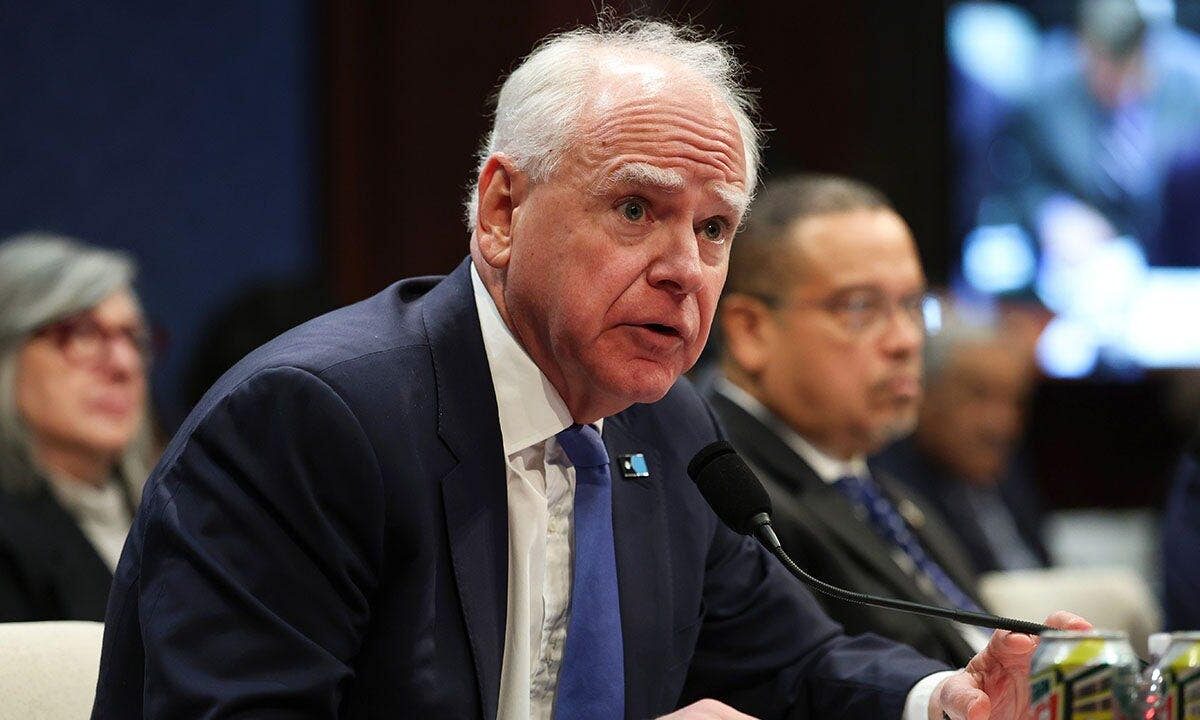
“As the Supreme Court says states can be cruel to trans kids, my message is clear: Here in Minnesota, we stand with and value our trans neighbors and youth,” Gov. Tim Walz wrote on X as the high court issued its decision on laws governing transgender athletes in girls’ sports.
The court’s decision — a 6-3 ruling in the consolidated cases including West Virginia v. B.P.J. and Little v. Hecox — immediately reshaped the legal landscape for school sports and sparked an intense reaction across Minnesota’s political spectrum (source: Fox News).
What Tim Walz said
Walz used X and later on-camera comments to criticize the ruling, calling it “cruel” to transgender youth and urging Minnesotans to treat one another with respect. In his post he framed the decision as allowing some states to pursue exclusionary policies while not preventing states like Minnesota from taking a different path.
“The Supreme Court has allowed states to be as cruel as they want to be to transgender people,” Walz said, adding that “they’ve also allowed states like Minnesota to be as kind and welcoming as they can, so I kind of view this as a mixed bag.” His statement emphasized the administration’s intent to maintain an inclusive posture toward transgender students in Minnesota schools.
What the Supreme Court ruled
In the consolidated decisions tied to West Virginia v. B.P.J. and Little v. Hecox, the Supreme Court ruled 6-3 in favor of state laws that require students to compete on teams that align with biological sex at birth rather than gender identity, clearing the way for states to enforce such policies (source: Fox News).
The court’s ruling removes a layer of federal judicial uncertainty for states that enacted restrictions, although it leaves open political and policy fights at the state and local levels about how schools and athletic associations implement eligibility rules.
Local backlash and social media reaction
Walz’s post drew swift criticism from Minnesota conservatives and national accounts. State Sen. Julia Coleman used X to argue that the ruling protects girls’ sports and urged vigilance for female athletes’ safety and opportunities, framing the decision as necessary to preserve fairness in competition.
Retired Minnesota State Patrol Lt. and Republican congressional candidate John Nagel also responded on social media, accusing the governor of ignoring the rule of law and suggesting his comments were out of step with voters concerned about women’s athletics. Other conservative voices amplified those critiques and pressed for policy clarity from the governor and state lawmakers.
Supporters of Walz countered that his remarks were aimed at protecting vulnerable youth and preserving inclusive school environments. Advocacy groups on both sides have continued to use social channels to rally supporters, underscore their policy positions and press state officials for action.
State impact: what this means for Minnesota
Walz emphasized Minnesota will continue to treat transgender athletes and youth with “dignity and humanity and respect,” saying the state’s participation policies would not change immediately as a result of the ruling. He reiterated that Minnesota’s executive branch intends to prioritize inclusion while lawmakers consider any legislative response.
The ruling also affects national policy dynamics: it authorizes a path for many states to enforce restrictions on transgender participation without the same prospect of immediate federal-court reversals. Reporting on the decision referenced how state-level statutes and administrative rules will now be the primary battleground for eligibility questions (source: Fox News).
News coverage cited that a significant number of states have enacted laws or policies limiting transgender participation, while others — noted in reporting as 23 states by name in some accounts — have not adopted such restrictions and maintain protections or inclusive policies for transgender students (source: Fox News). That split underscores why state legislatures and school boards are likely to remain active arenas for debate.
For Minnesota, the practical effect is to clarify that state lawmakers and education officials, not the immediate threat of federal preemption, will shape how athletic participation is governed going forward. Walz’s comments signal an intent by the governor’s office to defend inclusive practices administratively, but any statutory changes would require action by the Legislature.
What comes next and sourcing
Expect renewed attention in state capitols and at school districts as officials weigh whether to leave existing rules in place or pursue changes. Local school boards may revisit eligibility guidelines and athletic associations could review their policies to ensure they comply with state law while addressing concerns raised by stakeholders.
Fox News Digital reached out to Walz’s office for comment. Reporting on reactions and follow-up policy moves is likely to continue as state leaders and local school officials parse the ruling and its implications.
Fox News Digital’s Jackson Thompson contributed to this report. Source: Fox News.