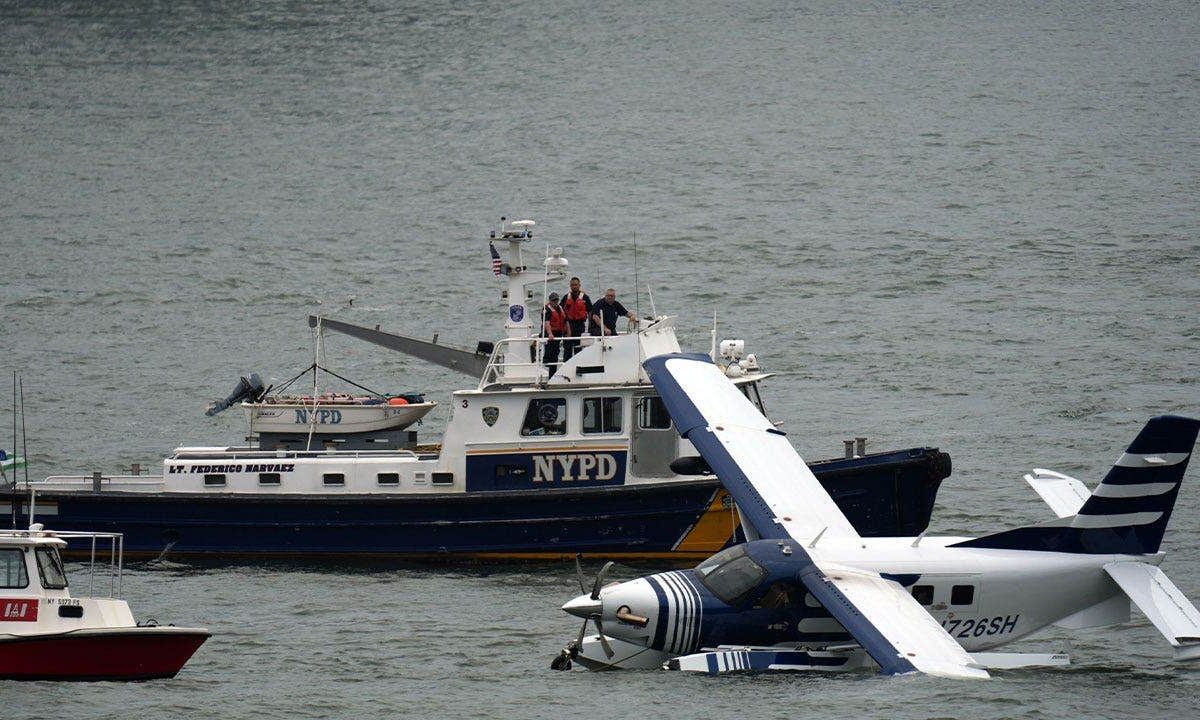
A seaplane hard landing East River incident left eight people rescued Sunday after the aircraft came down near Manhattan’s NY Skyport, officials said. The New York City Fire Department received a call at 12:01 p.m. reporting a plane in the water near East 23rd Street and the FDR Drive, and crews found the aircraft floating upright in the river.
FDNY marine units and other first responders removed all eight people aboard the Kodiak 100 and the aircraft was later towed back to a nearby dock. Two civilians sustained minor injuries but declined treatment at the scene, the department said.
Seaplane hard landing East River: what happened
FDNY said dispatchers got a call at 12:01 p.m. about a plane in the water near the NY Skyport on Manhattan’s East Side. When crews arrived they discovered the plane floating upright in the East River and began rescue operations.
All eight people aboard — the number the FAA later confirmed — were removed from the aircraft by FDNY units. Video from the scene showed first responders surrounding the seaplane as they worked to get people to safety before the plane was towed toward a dock.
Timeline
- About 12:00 p.m.: Air traffic control audio published by media outlets captures the pilot declaring a mayday in the moments before the public emergency call (see below for attribution).
- 12:01 p.m.: FDNY received a report of a plane in the water near East 23rd Street and FDR Drive and dispatched marine units.
- Shortly after arrival: FDNY and other first responders removed all eight aboard; two civilians reported minor injuries and declined treatment.
- Following rescue: The aircraft was secured and towed to a nearby dock for recovery; FAA opened a preliminary investigation.
Aircraft, injuries and visible damage
The Federal Aviation Administration identified the aircraft as a Kodiak 100 seaplane, registered N726SH. The FAA said the pilot made a hard landing that snapped a wing strut, with that detail reported publicly in early updates.
Two civilians reported minor injuries and declined treatment at the scene, FDNY said. Authorities did not report any life-threatening injuries in their initial statements.
Pilot mayday and flight path
Air traffic control recordings obtained and published by media outlets include the pilot declaring “mayday” in the moments before the FDNY dispatch at 12:01 p.m. Those published clips place the mayday call at roughly the one-minute window before FDNY’s recorded call time; the department’s official timeline places the public emergency call at 12:01 p.m. The existence of an ATC mayday call has been reported by news organizations; FDNY and the FAA remain the primary official sources for operational details.
The flight departed East Hampton Airport on Long Island and was en route to the NY Skyport seaplane terminal in Manhattan when the event occurred, according to FAA and media accounts. Authorities have not released the names of the pilot or passengers.
Local scene and emergency response
FDNY marine units led the response on the water, meeting additional NYPD and other first responders at the East River waterfront near East 23rd Street and the FDR Drive. Crews worked to secure the area, assist those aboard and coordinate towing of the aircraft.
On-scene video and reporting showed multiple rescue boats and personnel around the plane as officials coordinated recovery and patient care. The NY Skyport, the city’s only seaplane terminal, was the planned destination for the flight.
Background: the Kodiak 100
The Kodiak 100 is a single-engine turboprop often used in commuter, charter and utility roles and, when fitted with floats, for seaplane operations. It is designed for short-field and rough-field capability, which is why it is commonly used on both land and water operations in regional and commuter services.
FAA investigation and open questions
The FAA said it is investigating the incident and described the information released so far as preliminary. The agency confirmed the aircraft model and registration (N726SH) and the number of people aboard but has not released a cause for the hard landing.
FAA preliminary investigations typically include review of air traffic recordings, maintenance records and witness statements. Officials caution that early information is subject to change as more evidence is gathered and analyzed.
What comes next
The FAA’s fact-gathering will determine whether a broader on-site inspection or further agency coordination is needed. That process can include physical inspection of the aircraft once it is secured, review of maintenance logs and interviews with the pilot and passengers when appropriate. Officials reiterated that details released so far are preliminary and could be refined.
Frequently asked questions
Was anyone seriously injured?
Authorities reported two civilians with minor injuries who declined treatment at the scene. FDNY and responding agencies did not report any life-threatening injuries in their initial statements.
What caused the hard landing?
The cause has not been determined. The FAA, which has opened a preliminary investigation, will review ATC recordings, maintenance and other evidence before drawing conclusions.
Is the FAA investigating this incident?
Yes. The FAA confirmed it identified the Kodiak 100 (N726SH) and said it is conducting a preliminary investigation. Officials emphasize that early findings are provisional while investigators gather more information.
Source attribution: This story is based on official statements and timestamps provided by the New York City Fire Department (FDNY) and preliminary information released by the Federal Aviation Administration (FAA). Additional details—specifically the circulation of an ATC/mayday audio excerpt—were reported by media outlets (including Fox News) that published recordings of radio traffic; those media-published audio clips are cited here as secondary reporting. Officials have not released names of those aboard; the FAA has labeled its findings preliminary.