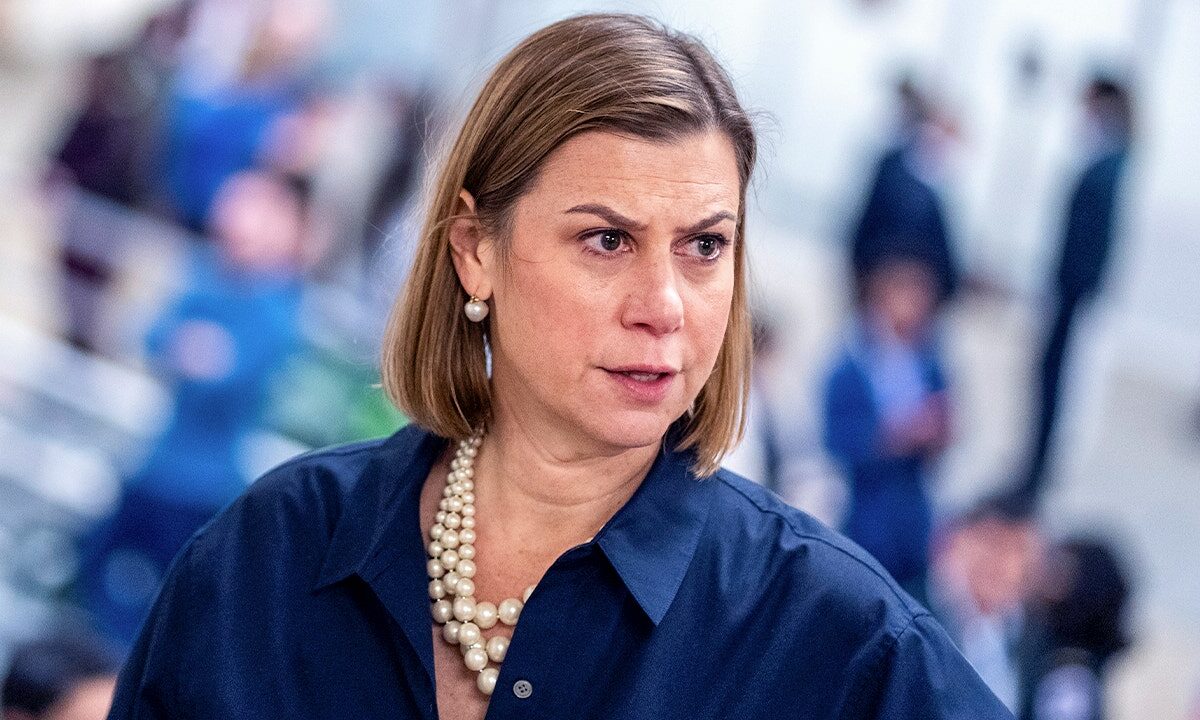
“It would make it hard for any Democrat in any state to win any election,” Sen. Elissa Slotkin said in a video unearthed after the Senate narrowly rejected the SAVE America Act. The remark, captured at an Indiana Democratic Party event and circulated by media outlets, came the day after a 48–50 vote against the measure and has reignited debate over what the bill would do and whether its critics or supporters are framing the stakes fairly.
The video has been used by Republicans as evidence that Democrats see the bill in explicitly partisan terms. It has also drawn fact checks and pushback from voting-rights groups and statements from the White House, which contested several of the implications raised in the exchange.
SAVE America Act: what the bill would change
The SAVE America Act is a federal proposal that, according to summaries circulated by its sponsors and press reports, would impose new national requirements for federal elections. Key provisions described by supporters include documentary proof of U.S. citizenship to register to vote and a requirement that voters show a photo ID to cast a ballot in federal elections.
Sponsors also describe steps aimed at tightening voter rolls, including additional directives for states to identify and remove registrations tied to noncitizens. Backers say those measures would strengthen election security and standardize rules across states; critics say the rules could lead to more aggressive roll-cleaning and create new burdens for eligible voters who lack the specified documents.
Supporters have said the bill provides processes for resolving mismatches — for example, allowing additional documents such as a marriage certificate or other identifying paperwork to correct a name mismatch. Opponents counter that, in practice, those requirements could introduce extra steps that deter or delay voting for people who have lost documents, have changed names, or face other barriers to obtaining official papers.
Fact check: Slotkin’s claims and disputed details
Slotkin’s claim that the SAVE America Act would make it “hard for any Democrat” to win is framed as her assessment of the bill’s likely partisan impact. In the video she did not present empirical evidence tying implementation of the bill directly to election outcomes; instead, she described how documentary and matching rules could create barriers for groups that tend to vote Democratic.
One specific line in the video said the proposal could cause married women trouble if a birth certificate does not match a current last name. That scenario is debated: critics say matching rules and document requirements can create extra steps for voters who changed names after marriage, while supporters maintain that commonly available supporting documents — marriage certificates, updated IDs or other records — would resolve most mismatches.
On the broader question of noncitizen registration, the Center for Election Innovation & Research, a nonpartisan election policy organization, has found that registration of noncitizens is rare. Their analysis and statements from election officials note that investigations into improper registrations are usually isolated and addressed by authorities, which feeds arguments from critics that a nationwide overhaul may be disproportionate to the documented scale of the problem.
The video also includes a line referencing former President Donald Trump and claims about calls to seize voting machines after the 2020 election. Reporting indicates an unsigned draft executive order was discussed in some reporting but was never signed or implemented; it remains an unexecuted draft document. Separately, a Fox News Digital review noted wording Slotkin ascribed to Trump did not appear in his State of the Union address; Trump has, however, repeatedly raised concerns about perceived election irregularities and argued for voter-verification measures.
Throughout these points, fact-checkers and voting-rights groups have urged labeling disputed assertions as claims and recommended reviewing how specific language in the bill would operate in state implementation, where much of the mechanics of registration and verification are set.
Reactions from both sides
Republicans seized on Slotkin’s remarks as confirmation that Democrats view the issue through a partisan lens. Some GOP lawmakers and allies framed the video as proof Democrats oppose uniform verification because they fear the electoral consequences. Rep. Tony Wied posted on X that “Democrats are saying the quiet part out loud,” a line picked up in Republican messaging to argue the bill addressed partisan incentives.
Democrats and voting-rights advocates framed the measure differently, arguing it would impose burdensome paperwork and could suppress turnout among eligible voters who face obstacles to obtaining the required documents. Critics of the bill summarized their concern bluntly: they said measures like this are pushed even when documented ineligible registrations are rare and argued the cumulative effect would be to make voting harder for certain groups — a critique sometimes distilled into the charge, “They want to cheat,” used by opponents to describe what they see as intentional partisan advantage-seeking through rules changes.
Senators on the Republican side such as Rand Paul and Mike Lee defended the bill as a necessary step to ensure voters present identification, drawing analogies to everyday ID checks for routine tasks and job paperwork. That framing casts the dispute as one of election security versus access concerns.
Political context and what comes next
President Donald Trump made passage of the SAVE America Act a stated priority for his political agenda. The bill’s failure in the Senate — a 48–50 vote that left it short of passage — was a setback for that push. Reporting also noted that Trump withheld his signature from unrelated legislation in protest over Congress’ failure to advance the SAVE measure, signaling how central the proposal is to his priorities.
Senate opposition included at least four Republicans who voted against the measure, joining Democrats to defeat it. Backers say they will continue to push for similar provisions through the remainder of the congressional session and via campaign messaging; opponents say they will press legal, administrative and political objections and highlight the practical barriers they say the bill would impose.
Analysts say the bill’s future will hinge on whether supporters can build a broader bipartisan coalition or pare back provisions that critics say would create new barriers. Much of the outcome will depend on how specific provisions would be implemented at the state level and whether legal challenges emerge around any new federal requirements.
Next steps: lawmakers are expected to continue debating revisions and enforcement language. Observers say both policy details and political messaging will shape whether a revised bill can clear Congress or mainly becomes a campaign issue ahead of the 2026 midterms.