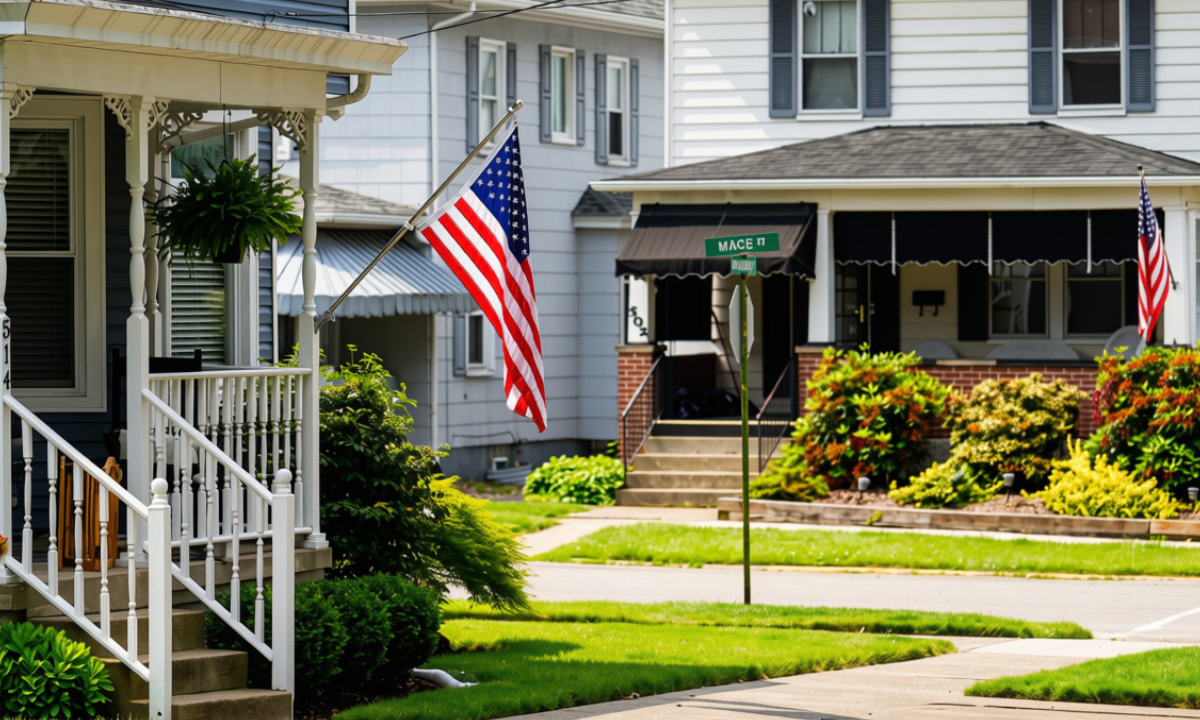
Realtor.com finds that the income needed to afford typical starter homes has surged to roughly $78,000 a year, a jump of more than 80% since 2019. That rise has outpaced wage growth and reshaped where first-time buyers can realistically shop for entry-level housing.
The Realtor.com analysis shows a split market: some regions added meaningful entry-level inventory and saw prices pull back from pandemic peaks, while other areas — especially parts of the Northeast — are materially less affordable today. These shifts matter for buyers planning timing, financing and geographic flexibility.
Starter homes affordability at a glance
Nationally, the report places the median income threshold for what Realtors consider a starter home at about $78,000. That represents an increase of more than 80% since 2019, reflecting both higher sale prices during the pandemic and the continued impact of elevated mortgage rates on monthly affordability.
The report also documents a pullback in transactions at the lower end of the market: purchases of homes priced below $350,000 fell roughly 10% in April compared with the prior year. That decline suggests that even where listings exist, many potential buyers face income or down-payment constraints that keep them on the sidelines.
Regional shifts: South, West, Northeast, Midwest
The recovery in starter-home availability has been uneven across U.S. regions, producing clearer opportunities in some markets and tighter conditions in others.
South: The South recorded the largest gain in affordable listings, adding nearly 170,000 entry-level homes since the 2022 bottom. Prices in the region are down about 3.5% from their pandemic peak, which in many metros restored some buying options for households that can meet mortgage qualification requirements.
West: The West has seen the most pronounced price easing from recent peaks, with starter-home prices down roughly 7.3% from their 2022 highs. Markets such as Denver and Phoenix have experienced increased builder and resale activity in smaller footprints, improving choice for buyers focused on entry-level properties.
Northeast: By contrast, the Northeast moved toward greater unaffordability. Realtor.com estimates the typical starter home in the region now costs about $444,000, with prices up more than 12% since 2022. Limited resale inventory and higher base prices have squeezed many first-time buyers in suburban and urban areas.
Midwest: The Midwest remains the most affordable in dollar terms. More than half of homes listed there still fall below the $350,000 threshold, though localized price gains mean affordability is uneven across metro areas.
These regional patterns are important for buyers able to consider relocation or commuting trade-offs: where inventory and prices have softened, monthly payment requirements can be meaningfully lower even if headline sale prices do not fall dramatically.
Why first-time buyers are still priced out
Improvements in listing counts have not translated into broad recovery in first-time purchases. Realtor.com and market analysts point to several limiting factors that keep many would-be buyers from completing transactions.
Mortgage rates remain elevated compared with pandemic lows, which increases monthly payments and tightens the income band of qualified buyers. Because most lenders qualify borrowers based on monthly payment capacity and debt-to-income ratios, a lower nominal sale price does not always expand the pool of qualified buyers if rates are higher.
Down-payment savings and other upfront costs persist as barriers. Realtor.com emphasizes that many aspiring owners lack sufficient savings to cover down payments, closing costs and reserves — a constraint distinct from listing availability. As Realtor.com summarized: “First-time buyers aren’t sitting on the sidelines because they don’t want to own a home—it’s because, for many of them, it’s just not possible right now.”
Local supply dynamics also matter. Zoning, builder focus and lot availability determine whether smaller, more affordable units are built. Markets that encourage higher-density or smaller-footprint construction have been quicker to restore entry-level product.
What this means for buyers and next steps
For prospective buyers, the market calls for a practical roadmap: tighten the budget around monthly payments, explore assistance and nontraditional financing, and track local inventory trends closely.
1) Focus on monthly payment calculations, not just list price. Use current mortgage rates to model monthly principal, interest, taxes and insurance, and stress-test against potential rate increases.
2) Investigate first-time buyer programs and down-payment assistance in your state or locality. Programs can lower upfront costs or offer favorable terms that make entry possible even in higher-cost regions.
3) Consider market flexibility. Regions where builders are adding smaller footprints or where the South and parts of the Midwest have restored inventory may offer better odds of finding starter homes within modest budgets.
4) Work with lenders early to get prequalification and understand what income, savings and debt levels will mean for purchase power in your target market.
By the numbers
- About $78,000 — estimated annual household income now needed to afford a typical starter home (Realtor.com).
- More than 80% — increase in required income since 2019.
- ~170,000 — additional affordable listings added in the South since the 2022 bottom.
- 3.5% — decline in starter-home prices in the South from the pandemic peak.
- 7.3% — decline in West starter-home prices from their 2022 peak.
- $444,000 — estimated typical starter-home price in the Northeast.
- ~10% — drop in purchases of homes under $350,000 in April year-over-year.
FAQ
How much income is now needed to afford a starter home?
Realtor.com estimates an annual household income of about $78,000 is now needed for a typical starter home — more than an 80% rise since 2019.
Which U.S. regions are currently most affordable for starter homes?
The Midwest remains the most affordable in dollar terms, with more than half of listings under $350,000. The South has added many affordable listings since 2022, while the Northeast is the least affordable on average.
Will starter home prices fall more if mortgage rates drop?
Easing mortgage rates would lower monthly costs and could boost purchase activity, which might support prices. Outcomes will vary by local inventory and builder activity, so a rate drop wouldn’t produce uniform declines everywhere.
Source attribution
This article summarizes findings from a Realtor.com analysis and reporting by Fox News Digital. Original reporting: Fox News Digital — “The American dream now comes with a ZIP code”. The underlying research referenced is from Realtor.com.