
Smoke from Canadian wildfires moved into the United States during the World Cup Final in New Jersey, prompting President Trump to raise the issue with Canadian prime minister Carney and to say the haze was “poisoning” US air. The comment was reported as a quoted complaint and is presented here as such; it has not been independently verified.
What happened at the World Cup Final
According to BBC News (published 2026-07-20), the US president spoke briefly with Canadian prime minister Carney while attending the World Cup Final in New Jersey and complained about smoke drifting south from fires in Canada. The BBC’s report records the president using the word “poisoning” to describe the effect of the cross-border haze on US air.
The BBC account focuses on the diplomatic exchange as an on-the-ground moment at the event rather than providing technical air-quality attribution for specific health outcomes. The wording is reported as a direct complaint from the president and should be treated as such.
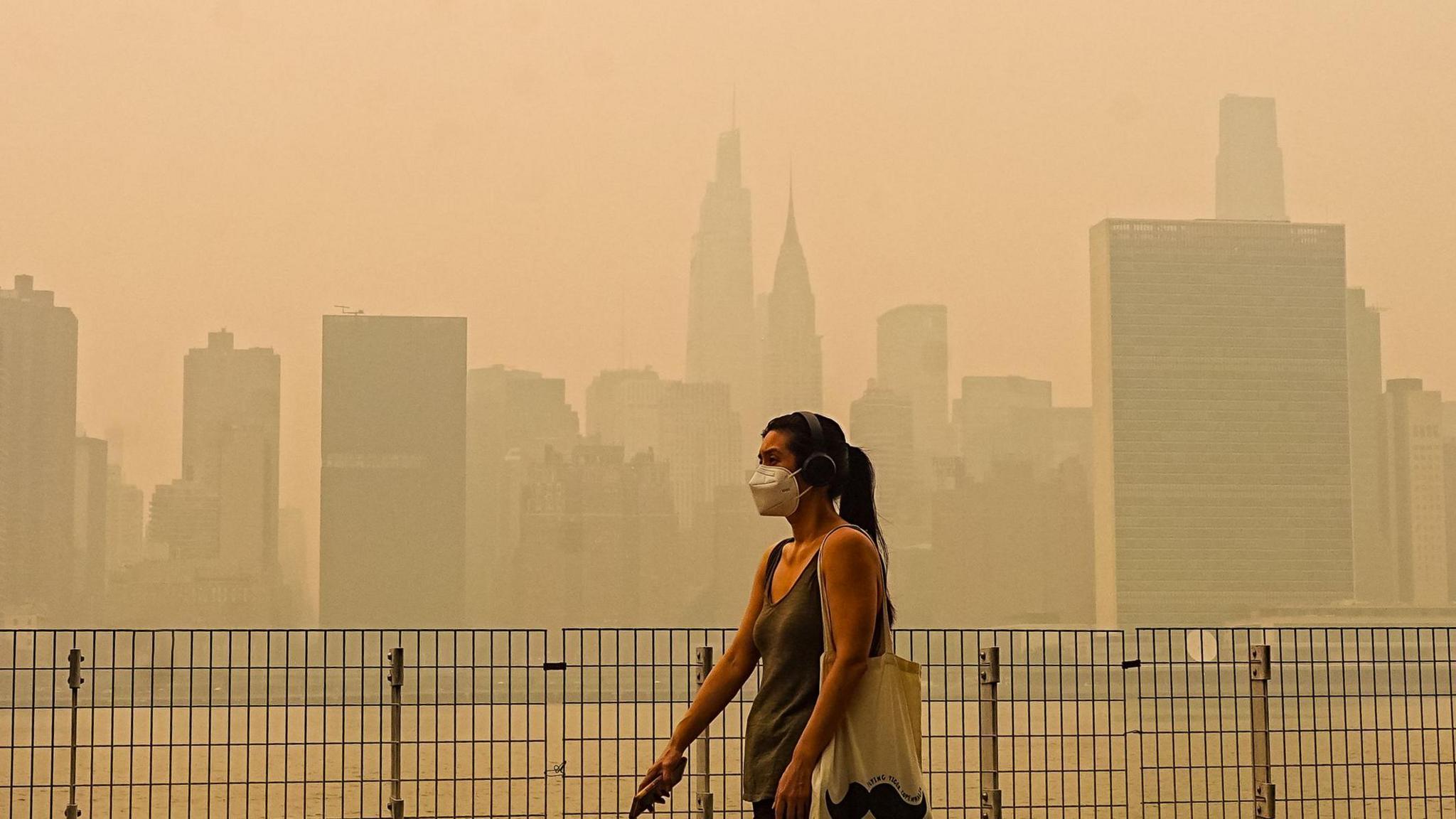
Canadian wildfires: where fires are and smoke outlook
Wildfires continue to burn across multiple provinces in Canada, producing plumes of smoke that meteorological conditions can carry deep into the northern United States. Prevailing winds and upper-air currents determine smoke transport, and visibility or haze can appear hundreds of miles downwind on some days.
Local forecasts and air-quality monitoring networks provide the most up-to-date picture of where smoke is present and how conditions may shift. BBC images and coverage show visible smoke from Canadian wildfires creating haze across wide areas; monitors report particulate increases when plumes pass overhead.
Short-term smoke outlooks from state and regional forecasters typically indicate when concentrations are likely to rise, and whether plumes are expected to linger or move out of an area within hours to days.
Air quality and health guidance for affected US areas
When smoke reduces air quality, the main risk is exposure to fine particulate matter (PM2.5), which can irritate airways and aggravate heart and lung conditions. People in New Jersey and neighbouring states who notice heavy haze should treat local advisories as authoritative.
Practical precautions include staying indoors with windows and doors closed when smoke is heaviest, using air-conditioning with clean filters or portable HEPA air cleaners where available, and avoiding strenuous outdoor exercise. If you must be outside, N95 or equivalent respirators can reduce inhalation of fine particles; cloth masks do not provide the same protection against smoke particles.
Those at higher risk—people with chronic heart or lung disease, older adults, pregnant people and young children—should follow guidance from local public-health authorities and consider relocating to areas with cleaner air if advised. Consult local air-quality indexes (AQI) and state health department releases for real-time recommendations specific to New Jersey and other affected states.
Diplomatic context and what the allegation means
The president’s use of the word “poisoning” adds a sharp tone to a transboundary environmental issue, transforming what is often treated as a technical air-quality problem into a public diplomatic complaint. That phrase is reported from the president’s remarks and is not presented here as a scientific finding.
Transboundary smoke events are commonly managed through shared monitoring, public-health guidance and operational coordination on firefighting where appropriate. Any formal diplomatic response would likely depend on technical assessments—air-quality data, emissions information and exposure analyses—rather than the exchange of remarks at a public event.
Attributing specific health harms to particular fires requires detailed study of emissions, concentrations and population exposure. The BBC report does not supply those technical assessments, so the allegation should be viewed as a reported complaint pending independent verification.
Background and what to watch next
Recent wildfire seasons in North America have produced repeated episodes of long-range smoke transport. Weather patterns, fuel dryness, lightning activity and land-management practices all influence the size and frequency of large fires and the likelihood of cross-border smoke.
Readers in potentially affected areas should watch for local air-quality forecasts, advisories from public-health agencies and updates from fire-management organisations for changes in fire activity or smoke forecasts. Any follow-up statements from officials in either country could clarify whether the World Cup exchange leads to formal inquiries or cooperative measures.
Reporting and sources
This article is based on reporting by BBC News. The BBC article, published 2026-07-20, described the exchange between the US president and Canadian prime minister Carney at the World Cup Final in New Jersey and reported on smoke from Canadian wildfires moving into the United States.
Source: BBC News — Canadian wildfires rage as Trump warns Carney again over ‘poisoning’ US air (published 2026-07-20).
Frequently asked questions
Are Canadian wildfires causing harmful air in the US?
Smoke from Canadian wildfires can reduce air quality in downwind areas and raise levels of fine particles that affect breathing. Whether air is “harmful” depends on particle concentrations, exposure duration and individual health; check local AQI for current risk levels.
What exactly did President Trump tell Prime Minister Carney?
The BBC report says the US president raised the issue during the World Cup Final in New Jersey and used the word “poisoning” to describe the smoke’s effect on US air. That wording is reported as a quoted complaint and has not been independently verified in the BBC piece.
How can people protect themselves from wildfire smoke?
Limit outdoor activity during heavy smoke, keep windows and doors closed, run air-conditioning with clean filters or use portable HEPA air cleaners indoors, and use N95-type masks if you must be outside. People with heart or lung conditions, children and older adults should follow local health advisories.
Attribution: This report relies on BBC News reporting published 2026-07-20 and established public guidance on air-quality precautions.