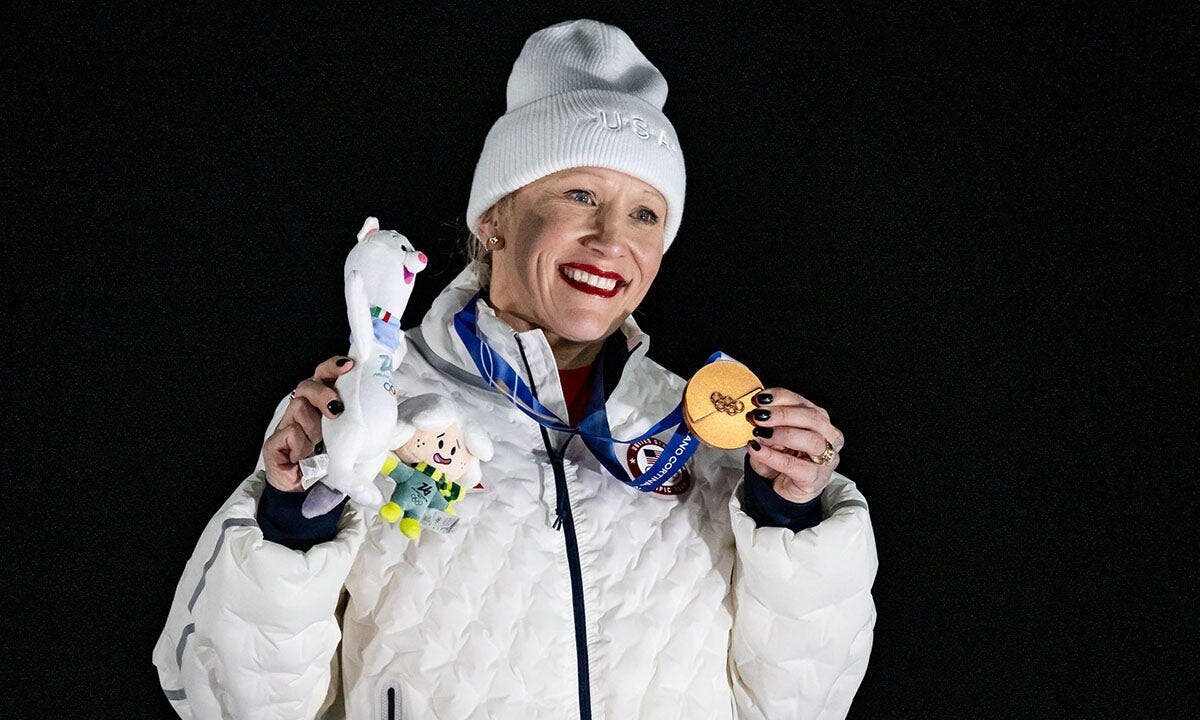
The Supreme Court recently issued a decision addressing Title IX and the scope of sex-based classifications in education and athletics. Coverage cited by Kaillie Humphries described the ruling as supporting distinctions between biological sex and gender identity; this article summarizes the reporting, Humphries’ comments, and potential practical effects while noting open legal and policy questions.
“Identity is not the same as biology,” Kaillie Humphries told reporters, as quoted in Fox News coverage of the decision.
What the Supreme Court decided on Title IX
News coverage describes the Court’s opinion as addressing how Title IX’s prohibition on sex discrimination should be applied in contexts such as athletic eligibility. Reporters highlight language in the ruling and in a Justice Kavanaugh opinion that, as quoted in coverage, characterizes competitive sports as constrained by limited roster spots and resources—summed up in the phrase “sports are a zero-sum game.”
Coverage and observers differ in how they summarize the decision’s legal holding and its scope; some describe the opinion as emphasizing sex-based classifications, while others note the Court delineated questions of statutory interpretation that could be implemented differently by regulators and institutions. The Court’s written opinion and any concurrences or dissents are the primary sources for the ruling’s legal reasoning; readers can consult the opinion text for authoritative language on the Court’s posture.
Kaillie Humphries: record and role in the debate
Kaillie Humphries is widely reported as a three-time Olympic gold medalist and five-time world champion who has competed for both Canada and the United States. Her athletic record and public visibility have made her a prominent voice in discussions about eligibility and fairness in women’s sports.
Humphries has also been described in media reports as an advocate aligned with organizations and movements that press for eligibility rules based on biological sex. Her statement that “Identity is not the same as biology” appears in coverage as a summary of her view that athletic classifications should reflect biological sex distinctions.
How the ruling could affect women’s sports, scholarships and rosters
Reporting emphasizes that any change in how Title IX is interpreted or implemented can have practical consequences for roster composition and the distribution of scholarships, because roster slots and funding for women’s teams are finite.
If institutions or athletic governing bodies adopt eligibility rules that emphasize biological sex distinctions consistent with some readings of the decision, schools could revise documentation or medical-review procedures, and conferences or federations might update roster and scholarship policies. Those procedural changes could affect who qualifies for team membership and who receives financial support.
At the same time, implementation is likely to vary: federal agencies, state governments, athletic associations and individual schools each have roles in translating a court decision into concrete rules. That means effects on scholarships and rosters may be uneven and subject to further administrative rulemaking, litigation, or institutional policy choices.
Responses, controversy and competing views
Supporters of eligibility rules tied to biological sex argue such rules protect competitive fairness, especially where opportunities and funding are limited. Humphries and like-minded advocates frame the debate in those terms and have used the decision to press for policy changes at institutional and governing-body levels.
Opponents and civil-rights advocates warn that narrowing eligibility definitions could exclude some transgender athletes and raise concerns about discrimination, privacy and practical enforcement. They point to equal-protection and anti-discrimination principles and to the administrative burden of new verification processes.
Legal commentators emphasize the difference between an opinion’s reasoning and the practical outcomes that follow, noting that court language must be read alongside statutory text and regulatory guidance. As one core legal text puts it, Title IX provides that “No person in the United States shall, on the basis of sex, be excluded from participation in, be denied the benefits of, or be subjected to discrimination…” (20 U.S.C. § 1681), and debates pivot on how that statutory language interacts with the Court’s statutory interpretation.
What comes next for policy and competitions
In the near term, schools, conferences and governing bodies are likely to review eligibility rules, scholarship criteria and compliance guidance to assess whether changes are needed to align with the Court’s decision as interpreted by counsel and regulators.
Possible steps include institutional compliance reviews, consultations with legal counsel, and updated policies from athletic associations or state education authorities. Federal agencies that oversee Title IX enforcement could also issue guidance or begin administrative processes that clarify how schools must apply the statute post-decision.
Because legal and administrative responses take time, observers should expect a period of rulemaking, policy memos, and possibly new litigation as stakeholders test how the ruling applies in practice. Institutions balancing fairness, inclusion and legal risk will likely pursue different interim approaches while awaiting further regulatory or judicial clarity.
Reporting summarized here relies on the Fox News article cited below and on primary legal sources and public legal commentary. For the original reporting and Humphries’ quoted remarks, see the Fox News piece linked in the sources. For the Title IX statute and legal background, consult 20 U.S.C. § 1681 and public legal analysis available from independent outlets and court-focused sites.
Sources: Fox News reporting on Kaillie Humphries’ response (https://www.foxnews.com/outkick-sports/kaillie-humphries-identity-not-same-biology-supreme-court-agrees); Title IX statute (20 U.S.C. § 1681) via Cornell Law School Legal Information Institute (https://www.law.cornell.edu/uscode/text/20/1681); Supreme Court public site for the opinion (https://www.supremecourt.gov/) and independent legal analyses such as SCOTUSblog (https://www.scotusblog.com/) for commentary and interpretation.