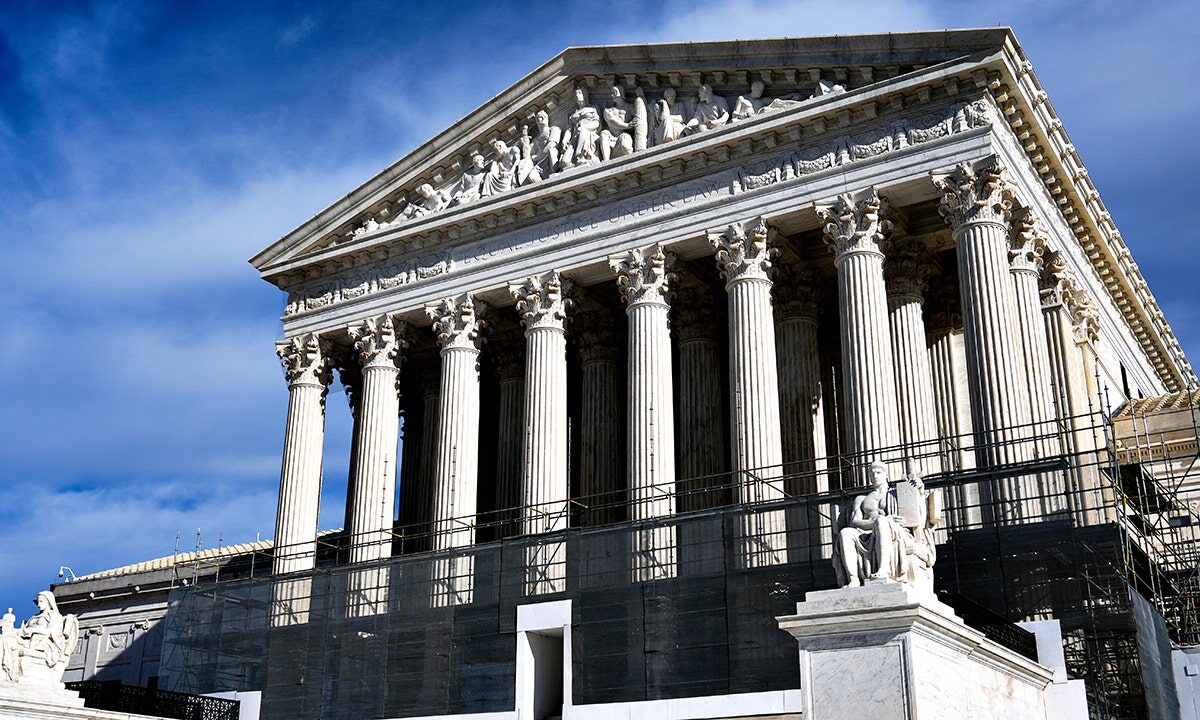
The Supreme Court on Thursday issued a 6-3 decision in Mullin v. Doe allowing the Department of Homeland Security to end Temporary Protected Status for certain Haitian and Syrian nationals. The high court’s ruling overturned lower-court orders that had kept the protections in place and clears the way for renewed agency action.
What the Supreme Court decided
In a 6-3 ruling in Mullin v. Doe, the Supreme Court held that the executive branch — acting through the Secretary of Homeland Security — had authority to terminate the TPS designations at issue. The majority rejected the legal theories that persuaded lower courts to block the agency’s actions, effectively undoing the injunctions that had preserved protections for the affected groups.
Justice Samuel Alito, writing for the majority, framed the dispute as an exercise of executive discretion rather than one that required a finding of unconstitutional motive. The opinion resolves the immediate procedural posture of the case and signals how the court may treat similar challenges to administrative immigration decisions going forward.
How the decision affects Temporary Protected Status
Practically, the ruling allows the Department of Homeland Security to carry forward termination steps it previously announced for the Haitian and Syrian TPS designations at issue in the case. The decision overturns the lower-court rulings that had kept those designations in effect and removes the blanket judicial stays that had paused the agency’s moves.
Because TPS is an immigration designation managed by DHS, the agency will determine the timing and mechanics of any formal termination, including final dates for the end of designations and the handling of related work authorizations. Affected individuals should watch DHS notices and official guidance for precise administrative timelines.
Reactions from attorneys and the White House
Immigration attorney Allen Orr, who represented Haitian nationals in litigation, described the ruling as “very devastating,” warning of immediate human consequences for families and employers. He said, “There are going to be a lot of jobs that are left open, and a lot of people in the home healthcare industry who are not going to receive any service, because their providers are going to be removed from the United States.”
“There are going to be a lot of jobs that are left open,” — Allen Orr (statement presented as his assessment)
Orr also stated there are “a million-plus TPS individuals” who live and work legally in the United States. That figure and the downstream effects he describes are presented here as Orr’s assessment and have not been independently verified by Fox News Digital.
White House spokesperson Abigail Jackson, responding to the ruling, characterized the decision as consistent with the administration’s view that TPS is a temporary program administered at the Secretary of Homeland Security’s discretion. Her statement emphasized the administration’s focus on orderly implementation and compliance with the law.
Potential labor and care consequences
Orr warned that sectors that rely heavily on TPS holders — including home health care and other direct-care services — could face staffing shortfalls if protections end and work authorization lapses. Those warnings reflect plausible labor-market impacts but remain projections tied to the pace and scope of DHS implementation.
The precise scale, timing and geographic distribution of any workforce effects will depend on agency decisions about termination dates, grace periods for work authorization, and whether affected individuals pursue other immigration relief or receive administrative extensions. Local employers and care recipients could experience gaps if providers lose legal authorization to work and no immediate replacement workforce is available.
What comes next for TPS holders and DHS
With the Supreme Court decision in place, DHS can proceed with administrative steps previously signaled. Those steps typically include publishing formal notices about termination dates, adjusting or ending work-authorized status when those dates arrive, and coordinating with federal benefits and immigration systems. Affected people should consult official DHS announcements at dhs.gov for authoritative guidance.
Legal advocates can still pursue narrow procedural avenues and individualized relief for some people, including requests for stays, temporary extensions, or alternative immigration options. However, the ruling removes the broad preliminary injunctions that had halted termination for the groups in Mullin v. Doe.
Individuals and representatives should monitor agency notices, keep identity and immigration documents current, and consult immigration counsel to understand deadlines for work-authorization renewals, potential departure timelines, and any possible paths to lawful status.
Background
Temporary Protected Status is a humanitarian immigration designation that the federal government can grant to nationals of countries affected by armed conflict, environmental disaster, or other extraordinary conditions that make safe return temporarily impracticable. TPS was first granted to many Haitian nationals after the 2010 earthquake and has been extended, contested and litigated in subsequent years.
President Trump moved to end certain TPS designations in 2017, and later administrative actions by DHS leadership have sought to rescind or narrow other designations. The Mullin v. Doe decision resolves a long-running dispute over those steps and clarifies judicial review of similar executive decisions.
Source attribution: Reporting for this post is based on a Fox News story. For the original report, see Fox News. For primary documents and background about the court, see the Supreme Court website and official DHS guidance at dhs.gov.