A Tesla crash in Katy, Texas, on June 19 killed a 76-year-old woman and sparked both criminal and civil legal action as investigators weigh competing accounts about what happened inside the vehicle before it left the roadway.
Authorities identified the victim as Martha Avila. She was flown by Life Flight to a hospital after the vehicle struck the side of a house and was later pronounced dead, according to local reporting and the Harris County Sheriff’s Office affidavit.
What happened in the Tesla crash
Harris County Sheriff’s Office records and an arrest affidavit filed in the case outline the sequence of events that led to the crash. The driver, Michael David Butler, 44, told investigators he was making a DoorDash delivery and said a Tesla driver-assistance system was engaged when the vehicle left the road and struck the home.
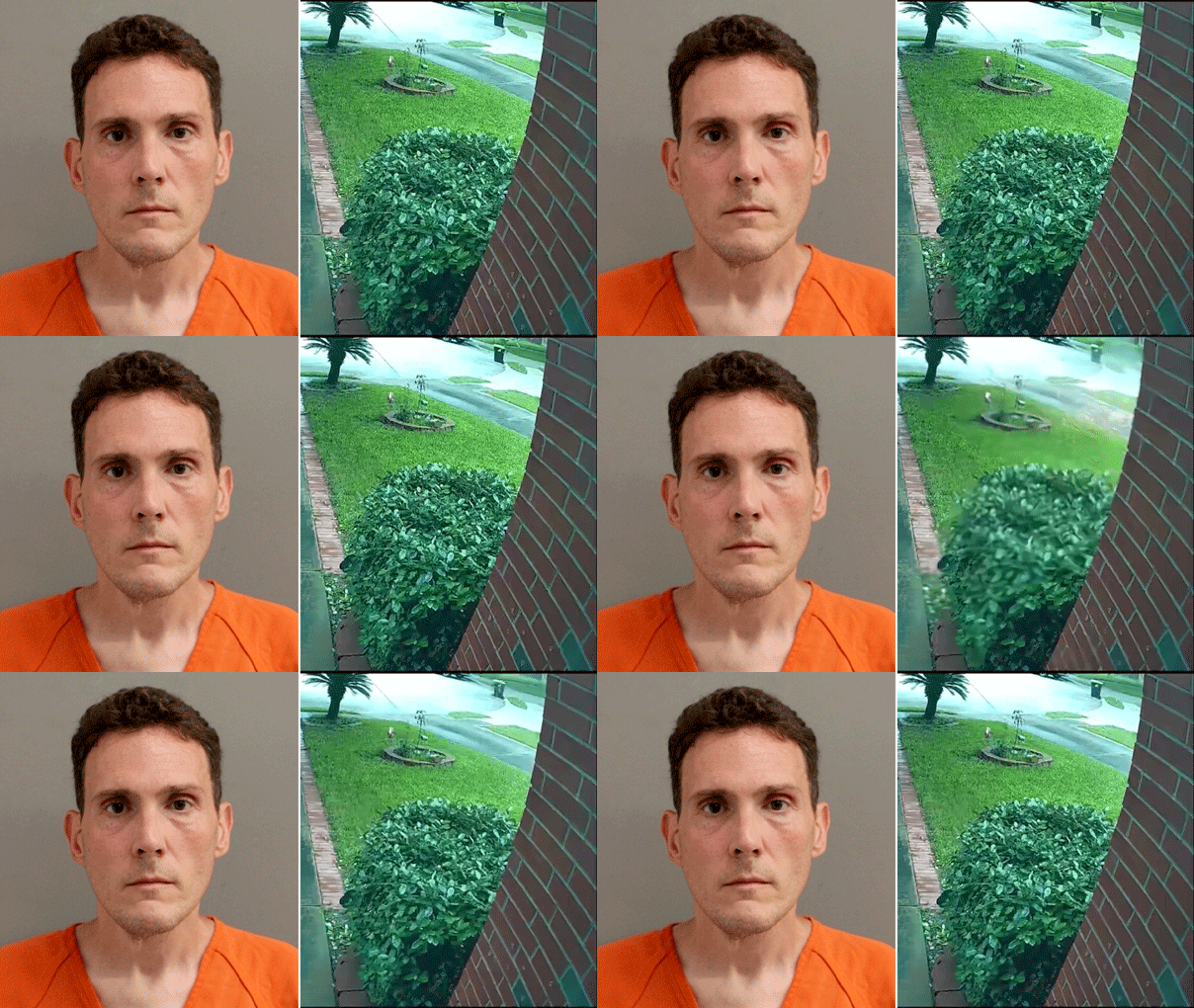
Ring doorbell footage obtained by local media shows a Tesla traveling at high speed before colliding with the house. The affidavit also says Butler reached for the car’s touchscreen and adjusted the music shortly before the vehicle left the roadway.
Affidavit and vehicle data
Charging documents filed by the Harris County Sheriff’s Office allege the Tesla reached 73 mph in the minutes before impact — more than double the posted speed limit for the residential area — and that the brake pedal was not applied during that period. The affidavit further states Butler told investigators he “passed out,” and that he denied feeling ill or having consumed alcohol or drugs before the crash.
Those details appear in the arrest affidavit and in the probable-cause materials used by prosecutors. Investigators described the vehicle’s departure from its lane and the lack of braking as factors cited in the manslaughter charge against Butler; the affidavit presents those details as allegations that must still be substantiated through forensic analysis.
Tesla response and system dispute
Tesla has disputed the account that Autopilot or the company’s Full Self-Driving system was operating at the time. Company officials and executives posted that their data indicate the driver manually overrode the system by fully depressing the accelerator in the moments leading up to the crash.
Ashok Elluswamy, who leads Tesla’s autonomy software team, wrote on X that the company’s data show a full application of the accelerator pedal and characterized the event as a manual override. Tesla’s public statements frame their data as contradicting the driver’s description; company representatives say vehicles in Full Self-Driving mode would not behave in the way recorded on the doorbell footage at the speeds reported.
Those technical claims come from Tesla and its employees and are part of the company’s rebuttal to the driver’s statement. Harris County investigators have said they will continue forensic review of the vehicle’s data, telematics and any available video to independently verify the sequence of events.
Legal status and civil claims
Prosecutors charged Michael David Butler with manslaughter. He was arrested and appeared in probable-cause court, where a judge set bail at $150,000. Court orders require him to wear an ankle monitor and to refrain from driving while the criminal case proceeds, local station KHOU-TV reported.
Separately, Avila’s family has filed a civil lawsuit against Tesla alleging gross negligence and failure to warn consumers about defects in its self-driving systems. The complaint seeks damages and contends the company bears responsibility for risks posed by driver-assistance features. Those civil allegations have not been proven in court.
Why this crash matters for driver-assist safety
The case underscores ongoing public-safety questions about advanced driver-assistance systems, driver responsibility and legal liability. Investigators and safety experts have long debated how much responsibility rests with drivers when systems such as Autopilot or Full Self-Driving offer partial automation, and how post-crash data should be interpreted when accounts differ.
Regulators, courts and manufacturers face pressure to clarify standards for monitoring driver engagement, interpreting vehicle logs and disclosing system limitations. If investigators find the vehicle was operating with a driver-assist system engaged, the outcome could inform both criminal liability decisions and civil claims about product safety. If instead the vehicle was being driven manually and the accelerator was depressed, questions will focus more squarely on operator conduct and possible medical or impairment factors.
Public safety advocates say transparent access to vehicle data and consistent forensic protocols are essential for establishing what occurred in crashes involving partial automation. Automakers contend their telemetry can help reconstruct events, but differences in interpretation between manufacturers and independent investigators can complicate legal proceedings.
Source and reporting
This report draws on the Harris County Sheriff’s Office arrest affidavit and local and national reporting, including coverage by Fox News Digital and KHOU-TV. Life Flight transported the victim to a hospital, and Reuters contributed early reporting to the story.
For original reporting and court documents, see the Fox News Digital story and the Harris County Sheriff’s Office release cited by local media: Fox News Digital and Harris County Sheriff’s Office. Local KHOU-TV coverage provided details on the court appearance and bail conditions.