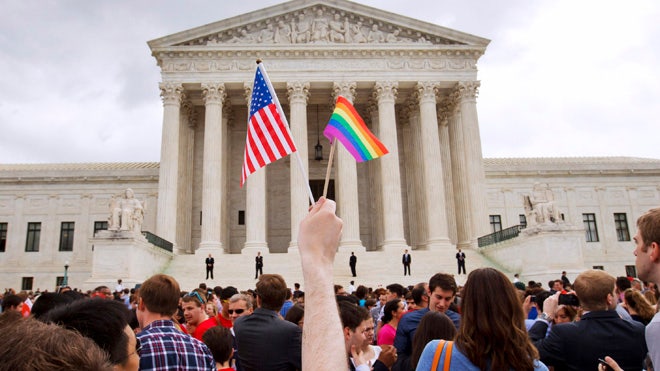
Two transgender teenagers have dismissed their challenge to New Hampshire’s law barring trans girls from competing in girls’ school sports, ending a 2024 case after the U.S. Supreme Court issued a pivotal Title IX ruling on June 30. The decision and its aftermath — including the trans athletes New Hampshire lawsuit being dropped — follow the high court’s interpretation of Title IX that affects how courts treat state restrictions on participation based on biological sex.
What happened in the trans athletes New Hampshire lawsuit
The plaintiffs, identified in court filings as Parker Tirrell and Iris Turmelle, filed suit in 2024 challenging a New Hampshire statute that restricts participation in girls’ athletics. Their complaint expanded to include federal actions they said contributed to discriminatory treatment. According to reporting by Fox News Digital, the teens and their attorneys argued that the state law and certain federal directives together harmed transgender students and violated Title IX and equal protection guarantees. The plaintiffs and their lawyers later voluntarily dismissed the case following the Supreme Court’s decision.
How SCOTUS ruling ended the trans athletes New Hampshire lawsuit
On June 30, the Supreme Court issued a consolidated ruling in Title IX cases, including West Virginia v. B.P.J. and Little v. Hecox, decided 6-3. The high court’s opinion, as reported, permits states to adopt policies that require student-athletes to compete on teams that correspond with biological sex at birth rather than gender identity. That interpretation significantly narrowed the legal theory available to challenge state bans under Title IX, and plaintiffs’ attorneys in New Hampshire concluded their prospects for success were diminished.
New Hampshire law and federal orders at issue
New Hampshire’s statute prohibits transgender girls from participating in girls’ interscholastic sports. The litigation also referenced federal executive actions: reporting describes a Jan. 20 executive order issued by the Trump administration, commonly referred to in coverage as the “No Men in Women’s Sports” order, which the plaintiffs said affected federal funding and policies related to gender identity. In their filings, the plaintiffs alleged that the combination of state law and federal directives created discriminatory conditions for transgender students.
The U.S. District Court for the District of New Hampshire allowed female athletes represented by the Alliance Defending Freedom (ADF) to intervene in the case to defend the state law and the administration’s actions, according to court records and reporting.
Responses and key quotes
The Alliance Defending Freedom, which intervened on behalf of female athletes, issued statements celebrating the end of the case. ADF Senior Counsel Jonathan Scruggs said, “Women and girls deserve privacy, safety, and equal opportunities. That can’t happen when males are competing in women’s sports, taking spots on women’s athletic teams, and winning women’s championships.” That statement represents ADF’s position and assertions about competitive impacts and safety.
Fox News Digital reported that the plaintiffs’ legal team, associated with GLBTQ Legal Advocates & Defenders (GLAD), was contacted for comment; no response was reported at the time of publication. Reporting characterizes the plaintiffs’ claims about discrimination tied to the federal and state actions as allegations advanced by their lawyers, not judicial findings.
Legal context: what the Title IX decision means
Title IX is a federal civil-rights law that prohibits sex-based discrimination in education programs that receive federal funding. In its recent decisions, the Supreme Court interpreted Title IX in a way that allows states greater latitude to maintain sex-separated athletic programs and to set eligibility rules that distinguish biological sex from gender identity. That interpretation reduces the likelihood that courts will enjoin state laws nationwide on a Title IX theory, and it shifts more comparative policy decisions to state legislatures and athletic governing bodies.
Legal scholars and civil-rights advocates have warned that the ruling will prompt a patchwork of state-level policies and more localized litigation. Supporters of inclusion argue those state bans can harm transgender students’ access to school activities and social supports; advocates for restrictions say sex-separated competitions protect fairness and safety. Those competing policy views frame ongoing disputes at the state and local level.
What comes next for athletes and policy
With the dismissal in New Hampshire, enforcement of the state statute is likely to proceed without this particular federal challenge. Fox News Digital reported that 23 states still lack equivalent prohibitions on transgender participation in girls’ sports, including states such as California, New York and Massachusetts. Those states may continue to allow transgender athletes to compete under their own policies, and separate legal challenges or legislative efforts remain possible elsewhere.
Observers say the practical effect will vary by state and by school sports governing bodies. Some school districts and athletic associations are expected to review policies to ensure compliance with state law and the Supreme Court’s interpretation of Title IX, while advocates on both sides of the issue prepare for additional litigation or legislative action.
Responses and next steps
The dismissal does not create new precedent beyond the Supreme Court’s rulings, but it illustrates how the high court’s interpretation influences whether plaintiffs pursue lower-court challenges. Civil-rights groups and advocacy organizations continue to monitor enforcement and may pursue other avenues to contest or defend policies affecting transgender students.
Frequently asked questions
Why did the plaintiffs drop the lawsuit?
The plaintiffs withdrew their challenge after the U.S. Supreme Court issued a June 30 Title IX ruling that narrowed the legal path for challenging state restrictions on transgender participation in girls’ sports, reducing the likelihood of a favorable outcome in New Hampshire.
What did the Supreme Court rule in the Title IX cases?
The high court, in decisions including West Virginia v. B.P.J. and Little v. Hecox, ruled 6-3 in ways that allow states to require student-athletes to compete on teams corresponding with biological sex at birth rather than gender identity, according to reporting on the decision.
Does this mean trans athletes can compete in New Hampshire now?
No. The dismissal of this lawsuit does not change New Hampshire law. The state statute remains in force, and enforcement of that law is unaffected by the withdrawal of this particular federal challenge.
Source: Fox News Digital — Trans athletes drop lawsuit to gain access to girls’ sports in New Hampshire after SCOTUS ruling.