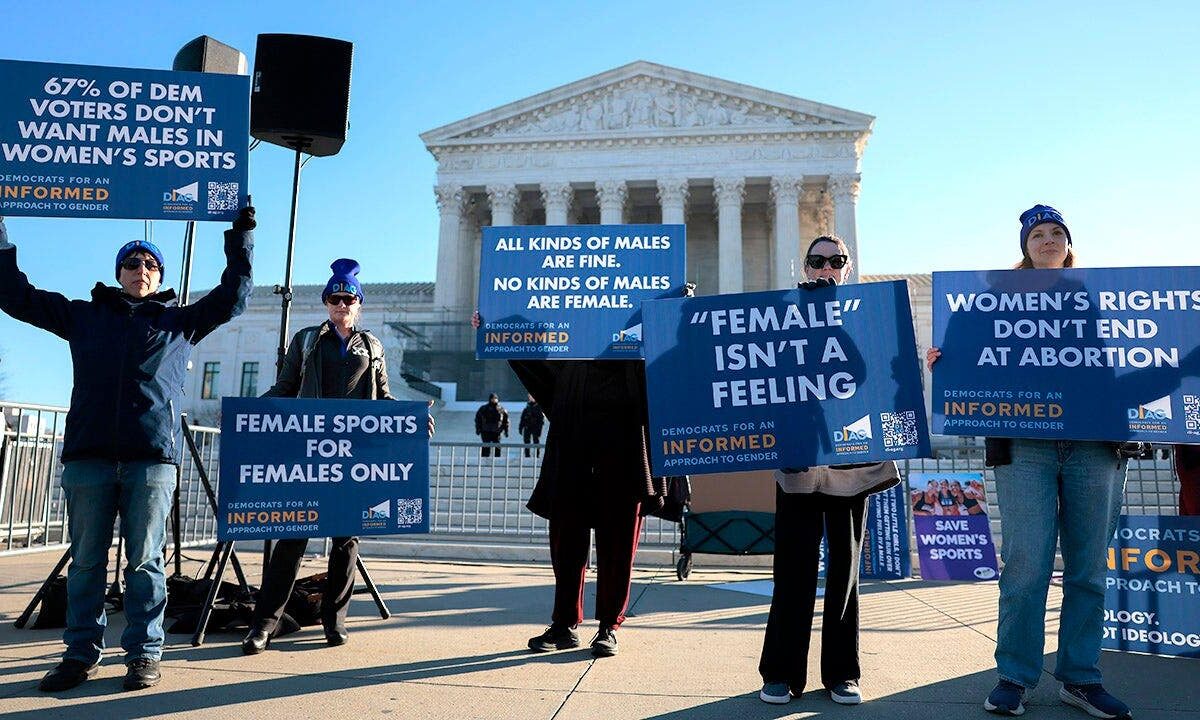
The Supreme Court’s recent ruling left the fate of trans athletes in women’s sports largely to state governments and athletic bodies. That has kept the issue of transgender participation — and the competing concerns about safety, privacy and competitive fairness — at the center of state legislatures, school boards and courtroom fights.
For readers tracking local impacts, this analysis maps where rules now differ, summarizes the major legal fights and firsthand accounts, and outlines what to expect in the near term as lawyers and lawmakers press their cases.
Quick take: what the Supreme Court did and did not change
The Court did not create a nationwide standard on eligibility for school athletics; instead it left many disputes to states, state education agencies and athletic associations. No matter what the ruling with the Supreme Court was, nothing has changed. Existing state laws and association policies generally remain in force while new bills, agency guidance and litigation proceed.
State map: where trans athletes in women’s sports stand
The landscape falls into three practical categories used in recent reporting and state-by-state tracking: 27 states with sex-based protections, 19 states allow transgender athletes, and Pennsylvania Wisconsin Alaska Virginia restrictions.
Put another way, many states now have explicit statutes or laws that restrict participation in girls’ and women’s sports on the basis of biological sex; other states and associations permit participation consistent with a student’s gender identity; and a small group of states have seen administrative or association-imposed limits even without a clear standalone statute.
Examples cited in reporting include California — where state law protects participation consistent with gender identity (historically known in legislative discussion as AB 1266) — and Illinois, where the Illinois High School Association has policies that govern eligibility. Battlegrounds include Minnesota and Maine, where association policies allowing participation consistent with gender identity are now the focus of federal litigation and enforcement actions.
Local legal fights and major cases to watch
Several lawsuits and enforcement actions will shape outcomes in the coming months. The Alliance Defending Freedom (ADF) is leading a prominent lawsuit in Washington that alleges a girl was sexually assaulted by a biological male competing in girls’ wrestling; that incident is described by ADF as an assault but remains an allegation in active litigation and contested by other parties. Reporting attributes the claim to ADF and court filings; it should be treated as an allegation pending judicial findings.
ADF leaders have framed the Washington suit as emblematic of harms they say arise when sex-based boundaries are erased. Kristen Waggoner, ADF’s CEO and chief counsel, described the alleged incident as “devastating” and has called for legal remedies; those characterizations are part of the plaintiff’s case narrative in court documents.
Federal actions are also in play. The Department of Justice has sued state entities and associations over participation policies in Minnesota, Maine and California, asserting civil-rights claims in some cases; those filings are public and signal continued federal involvement where prosecutors see possible statutory or constitutional violations.
There have been notable settlements that underline the financial stakes for schools and associations. Reporting shows Mid Vermont Christian School reached a $566,000 settlement after it was barred from some state competitions following a 2023 forfeit tied to a roster dispute that included a transgender athlete. That settlement demonstrates how school boards, private schools and associations can become entangled financially and legally even when cases do not reach final court judgments.
Athletes’ accounts, safety and fairness claims
Firsthand accounts have driven much of the public debate. Washington student Soleil Hoefer told reporters she played against a biological male goalkeeper in club soccer and later raced against a male athlete in the 400 meters; she said those experiences left her frustrated about fairness and worried about younger athletes’ opportunities. Those interviews are cited in coverage and form part of advocacy for sex-based protections.
Other contested individual claims have surfaced in litigation. For example, reporting around West Virginia and related matters has included allegations of sexual harassment and assault tied to school athletic competition; in multiple cases, named students have denied allegations and some school investigations have described outcomes as inconclusive or unsubstantiated. Because these are contested and sometimes ongoing, coverage treats them as allegations or disputed claims tied to litigation or investigations.
Polling is frequently referenced by policymakers and litigants. A 2025 Gallup survey reported that 69% of U.S. adults said transgender athletes should compete only on teams matching their birth sex, while 24% favored participation consistent with gender identity; advocates on both sides cite such polls when framing public support for their positions.
What comes next: litigation, state law and policy moves
Expect multi‑track activity: continued litigation by ADF and allied groups challenging participation rules they view as unlawful; defensive litigation and administrative responses by civil-rights groups and state agencies; and a wave of legislative proposals in statehouses. ADF and similar organizations have signaled plans for continued litigation and cultural advocacy where they see openings.
Lawmakers in several states without current protections are preparing bills, and some advocacy groups have pointed to potential campaigns in states such as Nevada in the 2027 legislative session. Administrative rulemaking by state education agencies and athletic associations will also remain a primary avenue for near-term changes because associations can alter eligibility rules more quickly than legislatures can pass statutes.
For school administrators, judges and legislators, immediate decisions will involve how to balance privacy and safety concerns with competitive fairness and federal civil‑rights obligations while litigation moves through district and appellate courts.
Source attribution
This analysis is grounded in reporting by Fox News Digital and cites interviews, court filings and public records referenced in that reporting. For original reporting, see the Fox News Digital article cited below. Coverage also references public court filings and Department of Justice enforcement actions and a 2025 Gallup poll; specific claims about alleged incidents are attributed to plaintiff filings, ADF statements or school investigations in the cited reporting and are treated here as allegations when contested.
Primary reporting source: Fox News Digital. Organizations named in coverage include the Alliance Defending Freedom (ADF) and the U.S. Department of Justice (DOJ).