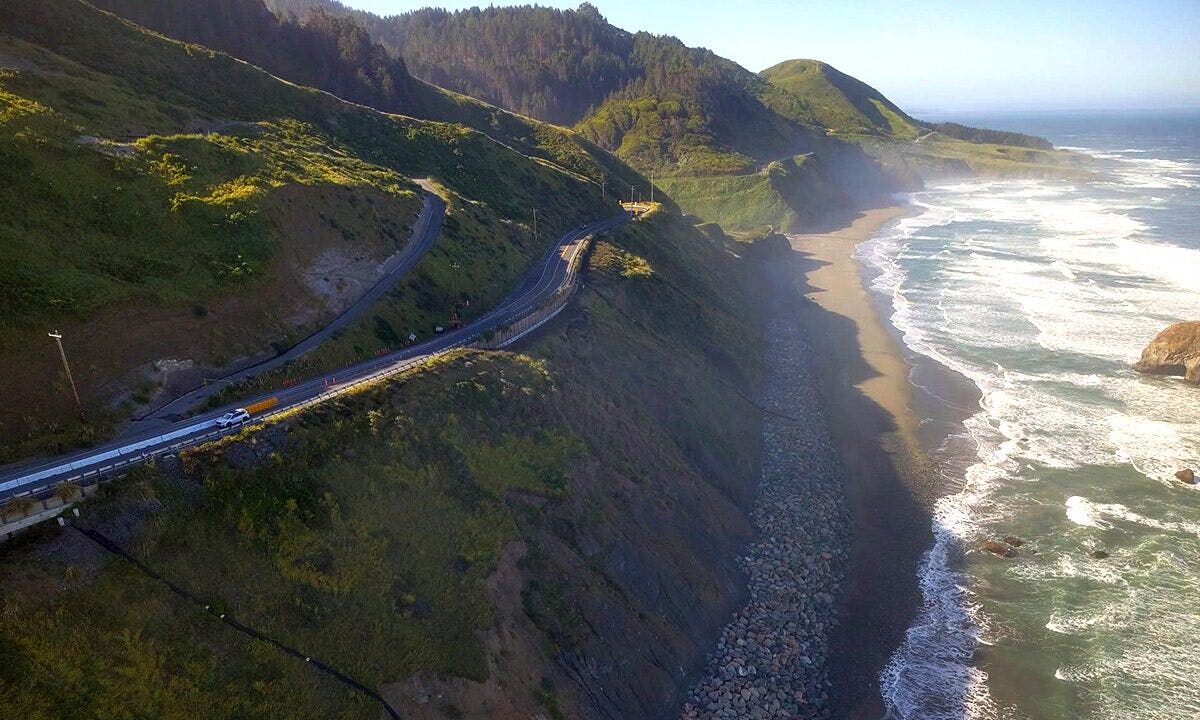
Tribal land transfer: The California Department of Transportation on June 26 approved the tribal land transfer of 136 acres of coastal bluffs and shoreline, including Blues Beach, moving the property from state ownership to Kai Poma, a nonprofit formed by three local Pomo tribes. Caltrans described the decision as the next step in returning stewardship of a culturally significant stretch of the Mendocino County coast while preserving regulated public access. (Caltrans statement: dot.ca.gov/news.)
Tribal land transfer: what happened
Caltrans gave final regulatory approval on June 26 to convey 136 acres of beach and bluff-top parcels to Kai Poma. The property includes Blues Beach just south of Westport on the Mendocino Coast and several adjacent parcels the state acquired in the 1960s related to Highway 1 and a scenic-overlook plan.
Kai Poma is a nonprofit formed by representatives of the Sherwood Valley Band of Pomo Indians, Round Valley Indian Tribes and the Coyote Valley Band of Pomo Indians. Once Caltrans records the deed, Kai Poma will hold title and assume stewardship responsibilities under terms intended to protect cultural and natural resources.
Why the land matters to the tribes
Tribal leaders say the shoreline and nearshore waters are culturally and spiritually significant and part of traditional territory used for gathering seaweed, abalone and other marine resources. The tribes have described using the area for youth cultural camps, ceremonies and the continuation of traditional practices.
“It’s enormous from our tribal perspective that we are basically obtaining the land that our people once lived on before colonization,” Sherwood Valley Band of Pomo Indians Chair J. Carlos Rivera told the Los Angeles Times. (See the Los Angeles Times coverage: latimes.com.) Tribal representatives say returning stewardship will help protect sensitive cultural sites and revive traditional practices tied to the coast.
What changes for visitors and access
The conveyance preserves public access under a Coastal Commission-approved plan that keeps the property open from sunrise to sunset. The public access plan was developed with state regulators and tribal leaders to balance recreational use with protection of cultural and environmental resources.
State planning records and Caltrans notes say the site experienced years of largely unregulated use, including people camping, partying, driving in sensitive habitats, damaging cultural resources and leaving trash. The new stewardship arrangement explicitly bars commercial activity on the property and establishes rules and patrol expectations to reduce harm to natural and cultural resources.
Legal background: how the transfer became possible
The transfer was enabled by a 2021 change in state law. Until that legislation, Caltrans did not have explicit authority to convey state-owned land to tribal governments or tribal entities. Gov. Gavin Newsom signed the bill, which was sponsored by state Sen. Mike McGuire, authorizing such transfers and clearing the path for this conveyance.
The property’s move required review by Caltrans and coordination with the California Coastal Commission; the Coastal Commission also reviewed public-access conditions tied to the conveyance. The Coastal Commission filing and related documents are available through the commission’s records portal: documents.coastal.ca.gov.
Next steps: surveys and long-term stewardship
Kai Poma plans to complete cultural, archaeological and environmental surveys before finalizing a long-term resource management plan. Those surveys will guide protections for cultural sites, sensitive habitats, and coastal resources and will inform enforceable restrictions and monitoring strategies.
Caltrans staff are expected to record the deed transferring title to the nonprofit; after recording, Kai Poma and tribal partners will begin implementing stewardship measures, monitoring visitor use and coordinating with state agencies on ongoing conservation and public-access obligations.
Frequently asked questions
Will the public still have access to Blues Beach?
Yes. Under the Coastal Commission-reviewed public-access plan, the property will remain open to visitors from sunrise to sunset while new stewardship rules aim to reduce damage to natural and cultural resources.
Can commercial activity occur on the site after transfer?
No. The transfer agreement and the applicable legal framework bar commercial activity on the property to prevent development or commercial operations that could harm sensitive sites.
When will the deed be recorded and management plan published?
Caltrans staff are expected to record the deed after completing the agency’s final regulatory steps. Kai Poma has said it will conduct required surveys first; the timeline for the management plan depends on the surveys and subsequent regulatory reviews.
- Caltrans approved the transfer of 136 acres including Blues Beach to Kai Poma on June 26.
- The property will remain open to the public from sunrise to sunset under a Coastal Commission-reviewed plan; commercial activity is banned.
- Kai Poma will conduct cultural, archaeological and environmental surveys and develop a long-term stewardship plan before finalizing management.
Source attribution: Fox News Digital coverage of the transfer (foxnews.com); Los Angeles Times reporting quoted above (latimes.com); Caltrans statement (dot.ca.gov/news); Coastal Commission records portal (documents.coastal.ca.gov).