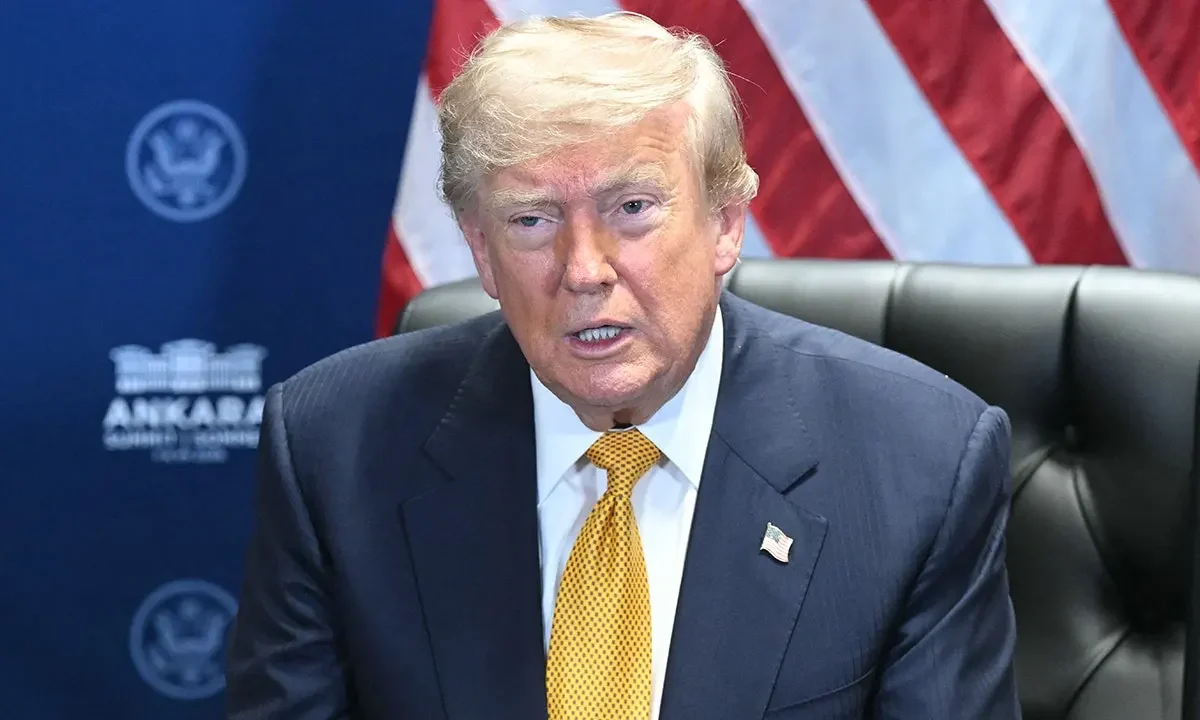
Trump warns Iran the United States would “decimate and destroy” the country if Tehran moved to carry out an alleged assassination attempt against him, the former president wrote publicly and repeated to reporters as officials reviewed intelligence and security precautions.
The comments — posted on Truth Social and repeated in interviews — came after reporting that Israeli intelligence shared material with U.S. officials alleging Iran was considering a new plot to kill the president. Those reports remain allegations and have not been independently verified.
Trump warns Iran — What he said
On Truth Social, Trump posted: “1000 Missiles are Locked and Loaded and aimed at the Islamic Republic of Iran, with thousands of more to immediately follow, should the Iranian Government act on its threat, pronounced in many corners of the Globe, to assassinate, or attempt to assassinate, the sitting President of the United States of America, in this case, ME!”
He added in the post that “Orders have already been given, and the U.S. Military is ready, willing, and able, for a one year period of time, subject to extension, to completely decimate and destroy all areas of Iran – PRAISE BE TO ALLAH!”
Separately, Trump told the New York Post he had left instructions to strike Iran if an assassination attempt succeeded, saying, “I’ve left instructions — if anything happens, to just literally bomb them at levels that they’ve never seen before.” He also told reporters in Ankara that he is “No. 1 on the kill list for Iran.”
Israeli intelligence report
The Wall Street Journal reported that Israeli intelligence officials recently shared information with U.S. counterparts suggesting Iran was considering a new plot to assassinate the president. The Journal characterized the account as intelligence reporting and described it as an allegation that U.S. officials were evaluating, not a confirmed operation.
Officials and outlets have emphasized limits to the public record: the material reportedly shared by Israeli agencies prompted heightened attention in Washington but had not been independently verified by U.S. agencies in publicly available reporting. The Wall Street Journal coverage is central to how the episode entered public awareness.
U.S. security posture and Air Force One
The New York Times reported that the U.S. Secret Service recommended using the older, mission-proven Air Force One rather than the newly retrofitted Boeing 747 purchased with foreign assistance, citing heightened security caution amid renewed tensions involving Iran.
Fox News Digital reported that Secret Service and military officials have been assessing travel risks and force posture. White House Communications Director Steven Cheung told Fox News Digital the new Air Force One “is a state-of-the-art aircraft that has been fitted with high-level security protocols that ensure the safety of the President and his staff.”
Fox’s reporting also cited Trump saying he had directed the U.S. military to be prepared to retaliate if an assassination attempt were carried out. Officials routinely review and rehearse contingency plans for threats to senior leaders; the reporting indicates those reviews intensified after the intelligence sharing described by the Wall Street Journal.
Regional context and recent strikes
Analysts and officials view the comments against a backdrop of increased maritime and proxy tensions between Tehran and U.S. interests. This week, U.S. and international reporting said Iran-linked forces attacked commercial shipping in the Strait of Hormuz, a strategic chokepoint for global oil and trade flows.
U.S. forces have carried out strikes in the region in recent months tied to Iran-backed militias and maritime threats, according to press reporting. Those actions, combined with intelligence-sharing among allies, have raised concerns among officials about the potential for miscalculation and wider escalation.
The Strait of Hormuz is a narrow waterway through which a significant share of the world’s oil transits. Disruptions there can have outsized economic and security impacts beyond the immediate battlefield, amplifying diplomatic stakes for NATO partners and regional navies monitoring shipping lanes.
Why it matters
Public threats of large-scale retaliation increase the risk of rapid escalation in an already volatile region. A declared willingness to “decimate and destroy” a country elevates diplomatic tensions and could complicate back-channel de-escalation efforts between Washington and allied governments.
Presidential safety concerns also carry operational and political implications. Reporting that the Secret Service advised changes to travel plans underscores how intelligence assessments can affect presidential movement, military readiness and allied planning in Europe and the Middle East.
Source attribution
This article is based primarily on reporting by Fox News Digital, which aggregated accounts from multiple outlets and cited direct statements from the former president. Original reporting referenced in coverage includes The Wall Street Journal’s reporting on Israeli intelligence, The New York Times’ reporting on Secret Service travel recommendations and The New York Post’s interviews with the former president.
Key original reporting: Fox News Digital; reporting referenced from The Wall Street Journal, The New York Times and The New York Post.
Editors sought comment from the White House and the U.S. Secret Service; the Fox News Digital piece reported outreach to those offices but did not publish a new formal response from them regarding the specific intelligence allegations at the time of reporting.
Reporting summarized here reflects allegations and official statements available publicly; the intelligence reporting described has not been independently confirmed in the public record.