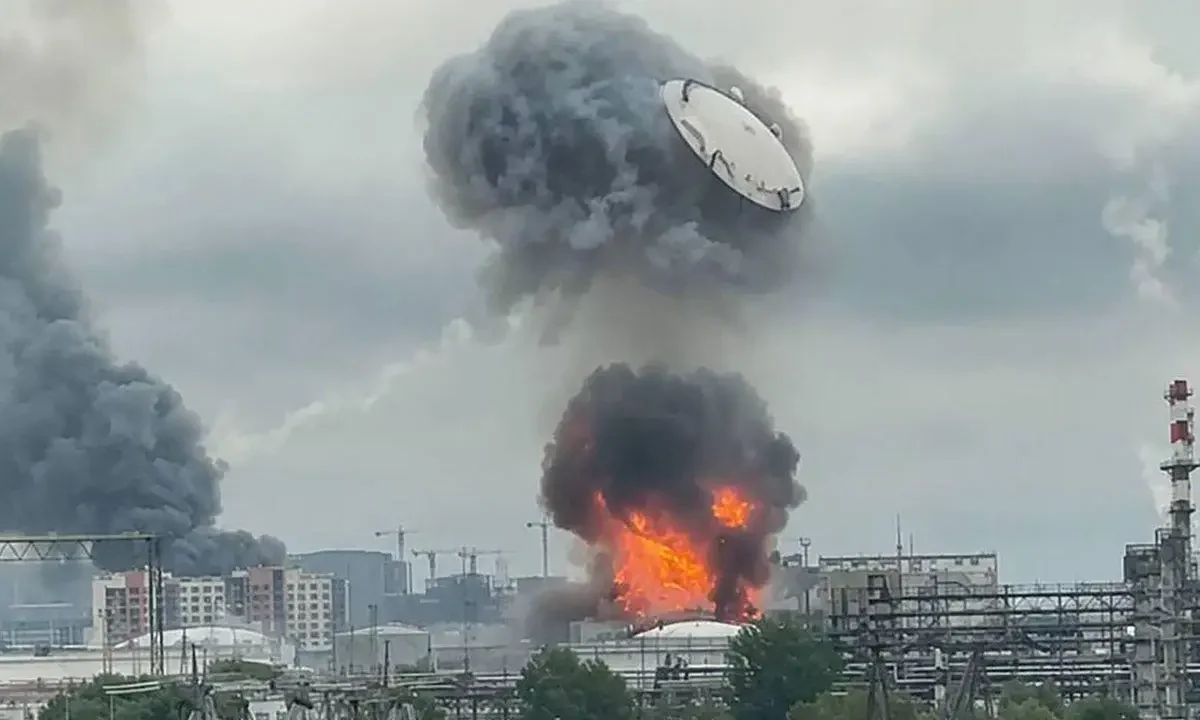
Ukraine energy strike strategy has increasingly targeted Russia’s oil-processing and fuel logistics, forcing unplanned halts at major refineries and prompting emergency policy responses in Moscow, according to Reuters, the Wall Street Journal and interviews cited by Fox News Digital. Attacks on the Omsk and Saratov refineries have translated localized damage into national supply headaches.
What happened: recent strikes and targets
Omsk — Russia’s largest refinery — paused processing after a reported strike, Reuters wrote, while Saratov has been hit and shuttered multiple times this year, according to Reuters and Fox News Digital reporting. Ukrainian drones and long-range missiles have struck storage, tankers and processing units, producing immediate disruptions in regional distribution networks.
Ukraine energy strike strategy: battlefield effects
Operationally, the campaign shows Kyiv can threaten high-value industrial targets far from the front lines. Retired Gen. Philip Breedlove told Fox News Digital that production reductions are “significant — close to a third by some estimates,” a figure he described as an analyst judgment rather than an independently verified count.
Multiple outlets — including the Wall Street Journal and Reuters — reported that U.S. intelligence assistance has aided Kyiv. Those reports cite unnamed U.S. and Ukrainian officials describing help to identify gaps in Russia’s integrated air-defence networks; such attributions are presented by those outlets as officials speaking on background and have not been publicly detailed by U.S. agencies.
Those operational gains force Moscow into tradeoffs: assets that might protect frontline operations are being redeployed to guard infrastructure hundreds of miles from combat zones. Retired commanders note defenses can still repel many attacks, but distribution networks remain vulnerable.
Scale of disruption to Russian fuel supply
The strikes have measurable supply-chain effects in reported data. Reuters said Moscow moved to ban diesel exports through July after unplanned refinery shutdowns. Reuters also reported seaborne exports of diesel and gasoline fell 39% in June versus May and were down 46% year-over-year.
Published reporting places gasoline output roughly 25% lower year-over-year, Reuters reported, and said Moscow has approached Kazakhstan about importing roughly 50,000 metric tons of gasoline to plug shortfalls. These numbers are reported estimates; Reuters and other outlets treat them as provisional and not independently audited by this newsroom.
How Kyiv is penetrating defenses and who is helping
Analysts cite a mix of long-range cruise and ballistic missiles, swarm and loitering drones, improved targeting, and exploitation of gaps in integrated air-defence systems. Retired Lt. Gen. Richard Newton told Fox News Digital some strikes have reached hundreds of miles inside Russia in recent months; other accounts put the maximum operational reach at greater distances depending on the weapons used.
The Wall Street Journal and Reuters, citing unnamed U.S. and Ukrainian officials, reported that U.S. intelligence support has helped Ukraine identify vulnerabilities and plan some strikes. Those outlets attribute the assistance to officials speaking on background; independent public confirmation of specific operational links is limited in the public record.
Political and market implications
The strikes sharpen domestic political risks for the Kremlin. Opposition commentator Maxim Katz told Fox News Digital that visible fuel shortages are among the clearest ways the war has affected daily life in Russia and could influence voter sentiment ahead of the State Duma elections in September.
On markets, outages and export curbs tighten short-term supply. But Russia still generates major export revenue from gas and liquefied natural gas. An Urgewald analysis of Kpler shipping data found the EU received most scheduled Yamal LNG cargoes in early 2026; Urgewald argues those flows remain a significant income source for Moscow and frames the finding as part of its advocacy work.
Analysts stress uncertainty about longer-term political fallout. Some former military officials say sustained pressure on fuel logistics could erode elite and public confidence in economic management; others note Moscow can prioritize fuel for the military while civilian consumers tolerate shortages.
Uncertainties and source notes
Key claims here are drawn from reporting by Reuters and the Wall Street Journal, interviews published by Fox News Digital, and an Urgewald analysis of Kpler data. Where reporting cites unnamed officials, the attribution is noted (for example, “unnamed U.S. and Ukrainian officials” in WSJ/Reuters articles) and those statements are presented as sourced claims rather than independently verified facts.
Production-loss figures and some cargo valuations are estimates reported by news outlets and analysts; this article flags those as reported figures, not independently audited numbers. Forecasts about political effects are interpretive and presented as analyst views rather than established outcomes.
What comes next
If strikes continue at scale, expect Moscow to deepen safeguards around major refineries, press suppliers for rapid repairs, and expand short-term import arrangements while maintaining export controls. Whether that stabilizes domestic supply will depend on the scale and persistence of further damage and on how quickly repair work restores capacity.
Source attribution: reporting and analysis in this piece rely on Reuters reporting; Wall Street Journal coverage citing unnamed officials; interviews and reporting published by Fox News Digital; and an Urgewald analysis of Kpler shipping data. Original Fox News report: Bringing the war to Putin’s front door: Is Ukraine’s energy strike strategy working?