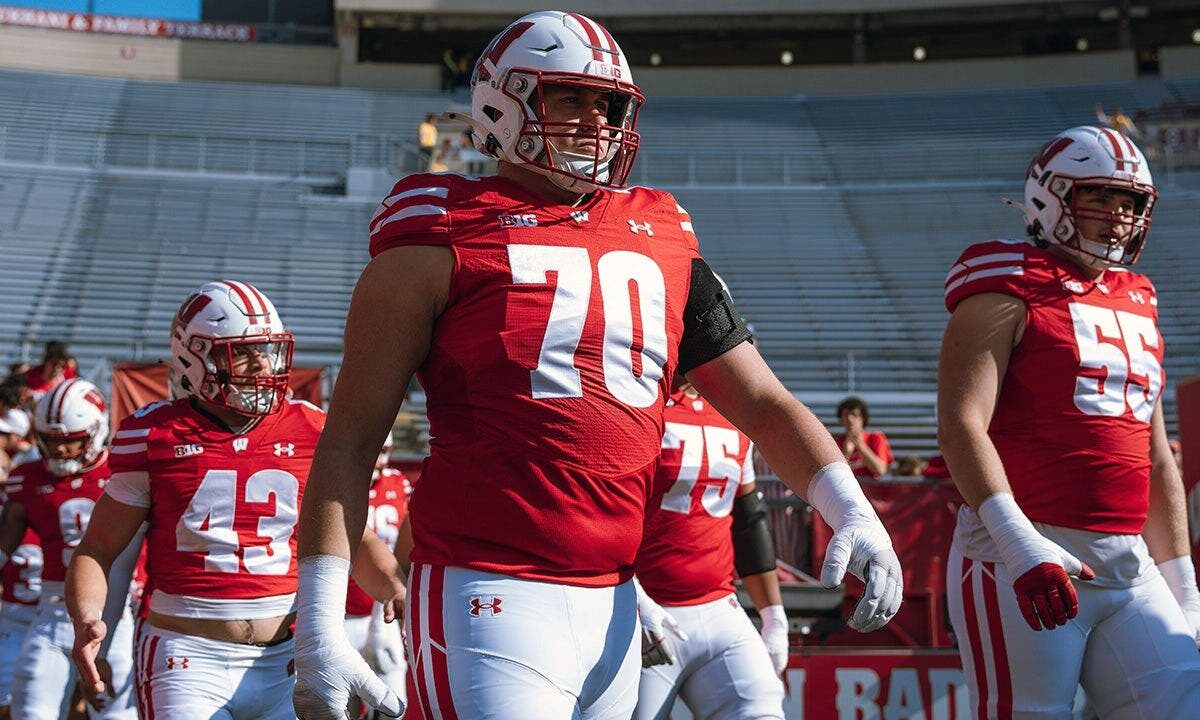
The University of Wisconsin announced a commercial patch from Culver’s on Badgers game jerseys. The Wisconsin Badgers jersey sponsorship quickly became the focal point for debates about tradition, revenue and the future of college uniforms. Reporting shows the sponsor reveal changed the tone among some fans; an Outkick/Fox News story said fan anger “subsided at least 20%” after the Culver’s name was disclosed, a figure the outlet presented without a public polling methodology and that should be treated as unverified.
Quick update: the deal
In short: Culver’s will have a visible patch on game jerseys. Specific financial terms and contract length have not been publicly disclosed; reporting so far describes the treatment as a small patch designed to preserve the team’s cardinal look while allowing a commercial partner to be visible. The university and its athletic department have framed the patch as a revenue opportunity; independent reporting notes the visual and design guidelines were part of early negotiations to limit disruption to the traditional uniform.
Wisconsin Badgers jersey sponsorship: deal details
Key public facts: the sponsor is Culver’s, the patch will appear on on-field uniforms, and the university emphasized efforts to retain the program’s visual identity. Beyond that, the parties have not released full contract terms. Because money figures and revenue allocation were not published at the time of reporting, claims about how funds will be used should be considered provisional until the school provides official details.
Why Culver’s fits the jersey ad model
Culver’s is a regional brand with deep roots in the Upper Midwest, and that cultural connection is central to why the partnership appears less contentious than some earlier hypothetical sponsors. The chain is known locally for the butter burger and its Concrete Mixer dessert — menu items that tie directly to Wisconsin food culture and tailgate traditions. That kind of local resonance makes a sponsor easier to position in marketing and storytelling than a national or international corporation with no local association.
Marketing professionals and athletic departments often favor regional partners for precisely this reason: the brand can be integrated into game-day activations, alumni events and community outreach in ways that feel authentic. That perceived authenticity helps some fans accept a visible commercial mark as part of the broader fan experience instead of as an outside intrusion.
How jersey ads work in other leagues
Jersey sponsorships are a long-standing revenue practice in global sports. In Europe, clubs routinely carry shirt sponsors and sleeve partners as a primary commercial line; the same goes for many lower-division teams. In U.S. minor leagues — from baseball to lower-tier soccer — logos on uniforms are common and an accepted part of revenue models. Those markets demonstrate that sponsorships can deliver steady income that is often directed toward operating costs, player pay and competitive investments.
Sports-business outlets including Sports Business Journal and Front Office Sports have repeatedly covered how sponsorship money helps clubs and teams bolsters budgets and competitive balance. The college patch model translates some of that logic to the university level: additional, predictable revenue can ease pressure on budgets for facilities, recruiting and support staff. That said, the college context also brings alumni expectation and institutional brand considerations that pro clubs face differently.
Fan reaction and how it changed
Initial fan anger centered on perceived threats to tradition and aesthetics. For many Badgers supporters, the idea of any commercial mark on the cardinal-red kit felt like a line crossed. After the sponsor was revealed as Culver’s, however, observers noted a meaningful softening of tone among some fans. The Outkick/Fox News piece reported that fan anger “subsided at least 20%” after the Culver’s reveal; that specific percentage was reported without disclosed methodology and should be treated as an unverified, preliminary measure rather than a rigorous poll result.
Commentators such as Dan Dakich and other media voices emphasized that sponsor selection matters: a local, culturally aligned brand is more palatable than a faceless national logo. Still, opposition remains among a subset of alumni and fans who object on principle or worry about slippery-slope effects if schools accept any patch. The Culver’s example shows how careful partner selection and clear visual limits can reduce the intensity of backlash, but it doesn’t eliminate dissent.
Revenue tradeoffs and roster realities
The core tension for athletic departments is balancing money and mission. Sponsorship payments can fund coaches, facilities, travel, and other competitive levers that help programs recruit and retain talent. Those practical benefits are why many schools are seriously evaluating patches as part of diversified revenue strategies.
But the tradeoff includes reputational considerations: long-term alumni relations, donor sentiment and the perceived commercialization of amateur athletics. Athletic leaders must weigh whether near-term income outweighs possible brand erosion. Using regional partners with authentic local ties can lower reputational risk compared with accepting less relevant national deals.
What this means for other schools
The Culver’s-Badgers example provides a pragmatic template. Universities weighing patches can prioritize partners with strong regional recognition — names frequently suggested as logical fits in coverage include Buc-ee’s in Texas markets or Wawa around Philadelphia — develop strict design rules to preserve colors and marks, and engage alumni and fan groups early to reduce surprises.
Practically speaking, athletic departments should insist on transparency about how revenue will be used, set limits on placement and design, and create review processes for future deals to avoid gradually broadening what is acceptable. If patches become more common, expect an evolving set of best practices drawn from both pro leagues and peer institutions.
FAQs
What happened with Wisconsin Badgers jersey sponsorship?
The university approved a Culver’s patch on game jerseys. Reporting indicated some fans shifted from anger to acceptance after the sponsor was announced; a published figure saying opposition “subsided at least 20%” comes from an Outkick/Fox News report and lacks a public methodology, so treat it as an unverified metric.
Why does Wisconsin Badgers jersey sponsorship matter?
It matters because it shows how sponsor choice, design limits and local fit can influence fan acceptance. The deal is an early example of how colleges might monetize uniform space without triggering the full backlash many feared.
What happens next?
Expect other programs to study the Badgers’ approach: prioritizing regional partners, setting visual rules, and communicating proactively with stakeholders. Official financial terms and allocations will be important to watch once the university publishes details.
Sources: Outkick/Fox News reporting on the Culver’s patch; industry coverage of jersey-sponsorship economics from Sports Business Journal and Front Office Sports; public statements from the university and athletic department reporting referenced in media coverage.