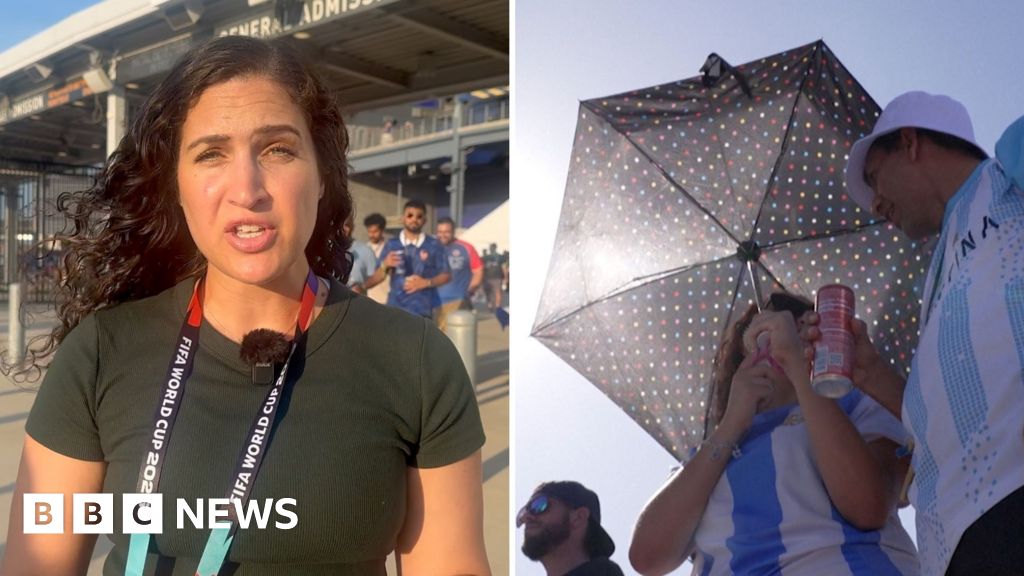
BBC video captured World Cup fans on the US east coast braving intensely hot, stagnant conditions described in the report as a “heat dome.” The footage, combined with fan-shot clips the BBC includes, shows supporters seeking shade, dousing themselves with water and using umbrellas and light clothing to cope as outdoor gatherings continued.
The BBC report is the central source for this article: descriptions such as “heat dome” and the scenes shown are taken from the outlet’s video and on-the-ground reporting. This story summarises what the BBC filmed, explains that label, and lists straightforward precautions for attendees at hot-weather events.
BBC video from the World Cup
The BBC’s short video package includes reporter narration, interviews with supporters and crowd footage from matches and fan zones. Viewers see long lines at concessions, groups clustered under temporary shade and people improvising cooling measures between events.
Scenes in the video show fans using water bottles to splash faces, wearing hats and seeking air-conditioned spaces where available. The BBC footage is the primary record of those moments; this article links to the original clip for readers who want to view the reporting directly.
Link to the BBC video: https://www.bbc.co.uk/news/videos/cq5177z8velo?at_medium=RSS&at_campaign=rss
Heat dome and conditions
The BBC uses the phrase “heat dome” to characterise the unusually hot, stagnant air affecting parts of the US east coast during the World Cup. In this piece, that term reflects the BBC’s reporting and how sources in the video described the weather rather than an independent scientific diagnosis presented in the footage.
The video emphasises bright sun, limited breeze in busy public areas and visible efforts by people to reduce heat exposure. The report and accompanying clips show how the combination of crowds, direct sun and prolonged outdoor activity made conditions uncomfortable for many attendees.
How fans coped and practical safety tips
The BBC footage shows a variety of coping strategies from supporters: seeking shade under trees or temporary canopies, using portable misters and wetted clothing, arriving and leaving at cooler times of day where possible and reducing physical activity. Many fans planned ahead by bringing refillable bottles and coordinating meeting points in cooler areas.
If you are attending outdoor matches or fan zones in hot conditions, consider these practical precautions, adapted from common public-health guidance and the behaviours shown in the BBC report:
- Hydrate frequently with water; avoid waiting until you feel thirsty.
- Wear lightweight, loose-fitting and light-coloured clothing and a wide-brimmed hat.
- Use shade, cooling towels or a small spray bottle to lower skin temperature.
- Take regular breaks in air-conditioned or shaded spaces where available.
- Apply and reapply sunscreen, and protect eyes with sunglasses.
- Know signs of heat illness — headaches, dizziness, nausea, confusion or fainting — and seek on-site medical help if symptoms develop.
- Plan travel and meeting points so companions can find each other if someone needs to cool down or rest.
These steps mirror the practical measures shown in the BBC video and are commonly recommended for large outdoor gatherings in hot weather. The footage demonstrates how simple adjustments — finding shade, topping up water and slowing activity — helped many fans continue to watch matches while reducing immediate discomfort.
What this means for the event and verification
Short-term, visible impacts at matches included attendees visibly managing heat and event staff responding to crowd needs. The BBC video documents these moments but does not supply comprehensive public-health statistics or a full meteorological analysis of the event. For data on hospital visits, ambulance call-outs or official temperature records, organisers and local health or meteorological services would be the authoritative sources.
Organisers of major sporting events commonly monitor conditions and may open cooling stations, supply extra water and remind attendees about sun safety; the BBC footage shows on-the-ground responses but does not function as a complete record of those operational decisions.
Readers should treat the term “heat dome” here as the BBC’s phrasing to describe the conditions seen on the ground. This article preserves the outlet’s characterisation and attributes descriptive claims to the BBC report rather than asserting new scientific conclusions.
Source attribution: BBC News – Top Stories. Original report and video: World Cup fans sweat through US ‘heat dome’.