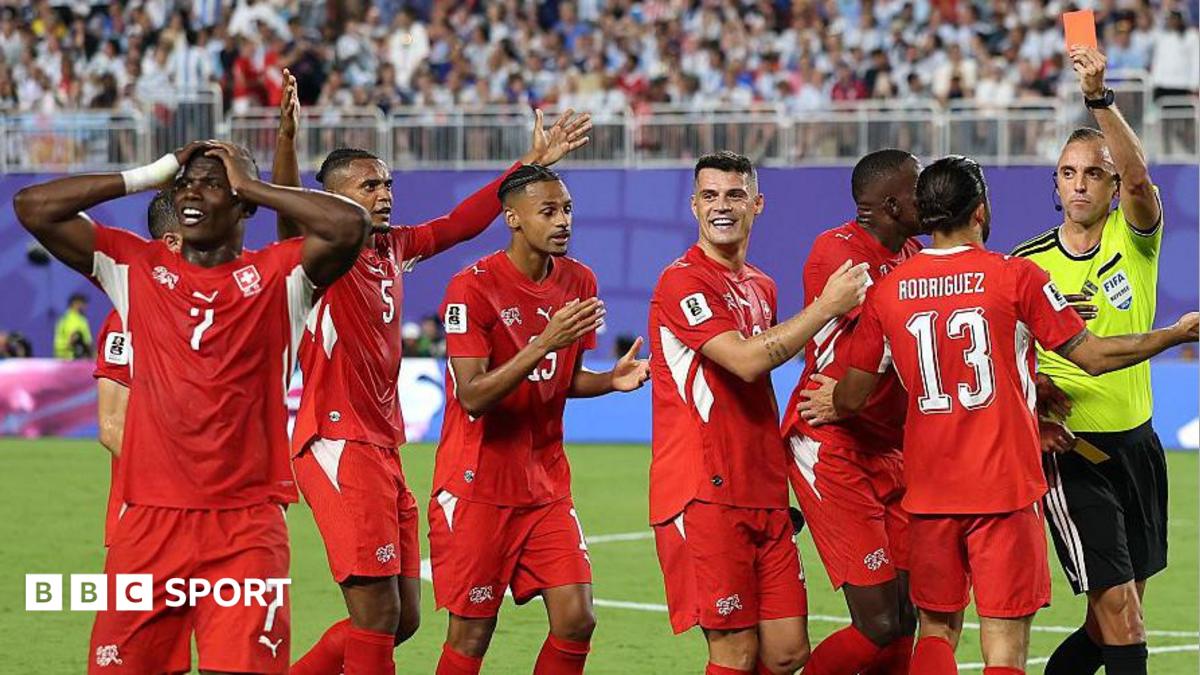
Breel Embolo was sent off at the World Cup after match officials used a new mistaken-identity rule, BBC Sport reports. The decision followed an on-field incident, a review by the referee team and the reassignment of the red card to Embolo — a move BBC Sport describes as the first sending-off at this tournament under the mistaken-identity provision.
Breel Embolo sent off under the new mistaken-identity rule
According to BBC Sport, referees initially identified and disciplined a different player for misconduct during the match. After consulting the review protocols and re-examining footage, the officiating team changed the named offender and issued a red card to Breel Embolo. BBC Sport reports this was the first time the new mistaken-identity procedure led to a sending-off at the World Cup.
BBC Sport’s coverage notes the practical effect: the match record was updated to show Embolo as the dismissed player. The broadcaster framed the development as a direct application of the review mechanism introduced to correct identity errors by officials.

Quick timeline of the incident
- Pre-incident: normal match play with standard VAR/review protocols in place.
- On-field incident: a disciplinary action was recorded and an incorrect player was initially identified by match officials.
- Review: the referee team used the post-incident review process and re-examined the footage.
- Reassignment: the identified sanction was reassigned and a red card recorded against Breel Embolo.
- Post-incident: the red card stands on the match record unless overturned by a formal appeal through the competition’s disciplinary channels.
How the mistaken-identity rule works
The mistaken-identity rule allows match officials to correct the identity of an offending player after a review. In plain terms, if the referee or an assistant names the wrong player when applying a yellow or red card, the review process can be used to attribute the sanction to the correct individual.
Governing-body guidance supports this approach: the International Football Association Board (IFAB) and competition VAR protocols provide for correcting clear cases of mistaken identity so that disciplinary measures are applied to the correct player. That framework aims to reduce unjust outcomes caused by human error in fast-moving situations.
Impact on Switzerland and the match
The immediate consequence for Switzerland was numerical: a dismissal reduces a side to ten players and forces tactical change. In the match itself the team had to reorganise defensively, potentially change substitutions and alter game management for the remaining minutes.
Beyond the single match, a sending-off recorded under a mistaken-identity correction still carries disciplinary consequences — such as suspensions for subsequent fixtures — unless successfully overturned through formal appeal. That can affect squad selection and planning for later tournament stages.
What referees and teams should note
For referees, the incident underlines two practical points. First, accurate identification remains essential at the moment of sanctioning. Second, review tools exist to correct mistakes, and officials should be prepared to use them quickly and transparently to preserve fairness.
For teams and coaches, the key takeaway is that post-play reviews can change match records. Teams should ensure they understand the review process, the evidence that will be considered and the window for submitting appeals if they believe the correction itself was wrong or incomplete.
The mistaken-identity mechanism is intended to increase fairness by addressing human error, but it also places a premium on clear communication from match officials and prompt, well-documented responses from teams if they intend to challenge outcomes.
Source and next steps
This report is based on BBC Sport’s coverage, which states that Breel Embolo became the first player sent off under the tournament’s mistaken-identity rule. BBC Sport’s reporting framed the change as a direct reattribution of an initial sanction after a referee review.
For the governing-text context, IFAB’s Laws of the Game and associated competition VAR/disciplinary protocols set out how mistaken-identity cases may be corrected by match officials and how disciplinary proceedings proceed afterwards. Any formal appeal or review of this specific red card would be handled through the competition’s disciplinary procedures and statements from the relevant organisers.
Readers should watch for an official match report or statement from the tournament organisers and any disciplinary committee decision which could confirm, clarify or — in the event of successful appeal — overturn the match record.
Source: BBC Sport – Top Stories. For governing guidance on correcting mistaken identity, see IFAB: IFAB Laws of the Game.